

More news on this day
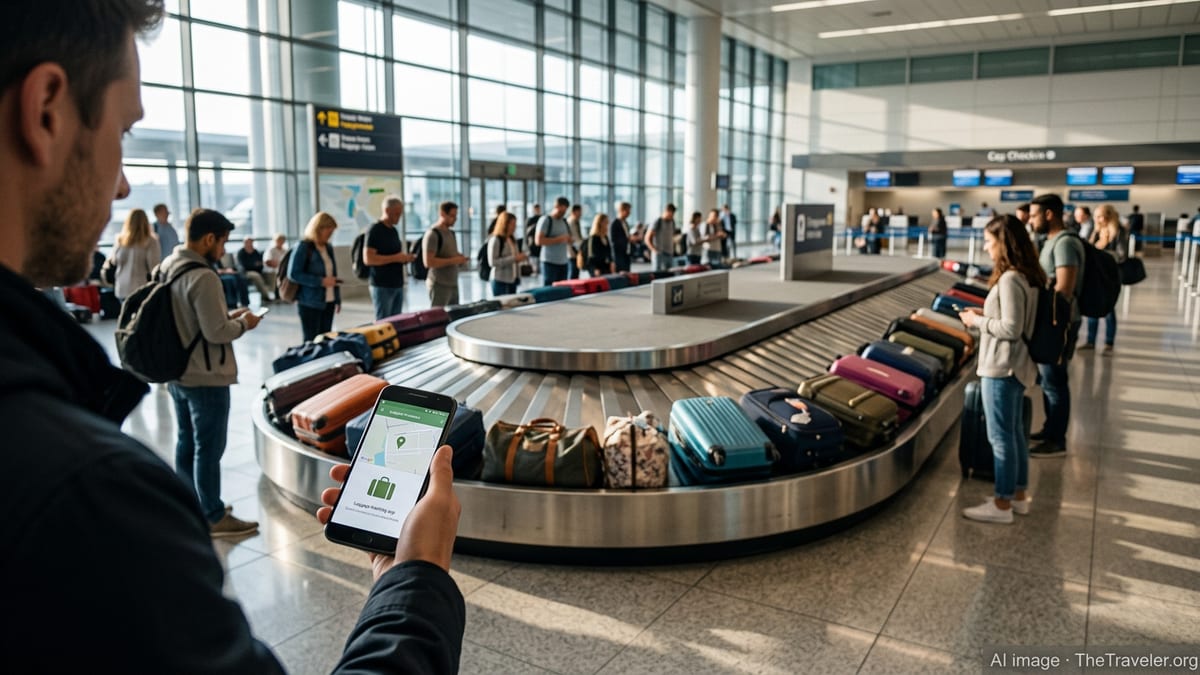
Airline passengers may soon spend less time wondering where their missing suitcase ended up, as aviation IT specialist SITA has integrated Google’s new Find Hub tracking capability directly into WorldTracer, the industry standard platform for tracing delayed and misrouted baggage worldwide.
How the New Tracking Link Fits Into Airline Systems
The integration connects Google’s Find Hub network with SITA’s WorldTracer platform, which hundreds of airlines and thousands of airports use to register, trace and reunite mishandled bags. When a bag goes missing, airline agents typically open a file in WorldTracer, known in the industry as a Property Irregularity Report, and rely on airport scans and routing data to locate it. The new connection allows staff to see an additional, passenger-provided data point: the live location of any Find Hub tag inside that suitcase.
Under Google’s recently launched share item location feature, travelers can generate a secure link in the Find Hub app showing their tracker’s current position. Participating airlines can paste that link into their baggage tracing workflow, where SITA’s integration surfaces the location data within WorldTracer’s existing screens. That means frontline staff do not need to learn a new tool; instead, the consumer signal appears inside the software they already use to hunt for missing bags.
SITA describes this as a way to merge consumer electronics with aviation infrastructure, giving baggage agents near real-time visibility that often outpaces traditional scanning events. When a bag is left behind at a hub, placed on the wrong carousel or sent to the wrong airport, the Find Hub location can help pinpoint the mistake faster than manual tracing alone. In practice, that can translate into shorter delays in reuniting passengers with their belongings.
The Find Hub integration follows SITA’s earlier work connecting Apple’s AirTag and the Find My network to WorldTracer, which has already demonstrated that crowd-sourced location signals can reduce permanently lost luggage and cut recovery times. The Google partnership effectively extends that model to Android users and to a growing ecosystem of Find Hub-compatible tracking tags and smart suitcases.
What Travelers Will Experience at the Airport
For passengers, the process begins much the same way as any other lost bag incident: on arrival, they discover that their checked luggage has not appeared and proceed to the airline’s baggage service counter. After the agent opens a file, travelers who use a Find Hub-compatible tracker can open the app on their phone, select the missing item and tap the share item location option. The app generates a unique, time-limited link that can be provided to the airline.
Once the airline inputs that link into its baggage tracing system, staff can monitor the tag’s reported location alongside traditional information such as routing history and last recorded scan. If the tracker shows the bag sitting in a different terminal, at a connecting hub or even in another country, the airline can coordinate with ground handlers there to retrieve and forward it. This can be especially useful when bags miss tight connections, are left on trolleys near gates or are mistakenly unloaded in the wrong baggage hall.
Because Find Hub is designed to work with a distributed network of Android devices, the tag’s location can update even when it is sitting in a non-public area, such as a sorting room or storage rack, as long as other compatible devices pass nearby. That increases the chances of obtaining a useful signal in environments where fixed scanners are spaced widely apart. The integration with WorldTracer ensures those signals reach the agents actually responsible for getting the bag back on the right flight.
Travelers retain control throughout the process. They can stop sharing the location link from the Find Hub app at any time, and links automatically expire after a limited period, adding an extra layer of privacy protection. Sharing typically also ceases once the phone detects the tag has been reunited with its owner, aligning the technology with the moment the baggage problem is resolved.
Privacy, Security and Industry-Scale Impact
Both SITA and Google emphasize that the new approach was built around privacy and security safeguards. Location data shared via Find Hub is encrypted, and links use randomized identifiers rather than exposing personal details. Only airlines that receive the link as part of an active baggage tracing case can view the approximate position of the tag, and then only for as long as the link remains valid. This means the information functions as a targeted tool for recovery teams, rather than as an open tracking channel.
From an operational standpoint, integrating Find Hub into WorldTracer allows the aviation industry to add richer data without rebuilding its core baggage systems. WorldTracer already serves as a common backbone for lost baggage operations across carriers, and SITA’s role as a shared IT provider makes it easier to distribute new capabilities at scale. Once an airline enables the Find Hub feature, its agents at multiple airports can begin accepting and using passenger-provided links with minimal additional training.
Early experience with SITA’s Apple Find My integration, which has reportedly cut the rate of permanently lost luggage and accelerated recovery times, suggests that overlaying consumer tracking networks on top of existing infrastructure can yield measurable gains. The addition of Google’s Find Hub expands the pool of travelers whose bag locations can be surfaced in this way, particularly in markets where Android phones dominate. As more airlines opt in, SITA expects a network effect, with more tagged bags providing more location data points across the global airport system.
Aviation analysts note that while consumer tags do not replace airline barcodes, RFID tags or automated baggage systems, they offer a valuable independent signal in complex disruptions. During peaks such as holiday seasons or irregular operations caused by weather, having a secondary source of truth about where bags actually are can help airlines prioritize recovery efforts, reduce compensation costs and improve customer satisfaction scores.
Growing Airline and Travel Industry Partnerships
The WorldTracer integration arrives as Google rolls out Find Hub support with a roster of early airline partners. More than 10 major global carriers, including AJet, Air India, China Airlines, Saudia, Scandinavian Airlines, Turkish Airlines and Lufthansa Group airlines, have already committed to accepting Find Hub links as part of their baggage recovery process. Industry observers expect that number to rise as carriers see the operational benefits observed in early trials.
The collaboration extends beyond airlines to other parts of the travel ecosystem. SITA and Google have coordinated with specialist baggage technology firms such as Reunitus, ensuring that Find Hub links also integrate into NetTracer, another widely used tracing platform. In parallel, Google is working with luggage manufacturer Samsonite to embed Find Hub technology directly into certain suitcase models, allowing travelers to activate connected baggage without attaching a separate tag.
For airports and ground handlers, the integration does not significantly change daily routines, but it can influence how quickly problem bags are identified and retrieved. When a bag’s approximate location is visible on a map, staff can search in a more targeted way, rather than combing through large storage areas or relying on occasional barcode scans. Over time, data from these interactions may feed into analytics that reveal patterns in where and why bags go astray, supporting further process improvements.
The SITA and Google partnership also underscores a broader trend toward blending consumer technology with aviation operations. As passengers grow accustomed to tracking everything from food deliveries to ride-hail vehicles in real time, expectations around visibility into checked baggage are rising. By making personal trackers part of the official recovery process, rather than a parallel system, airlines are signaling that they are willing to embrace those expectations.