

More news on this day
San Francisco International Airport has entered a six-month stretch of airfield disruption in 2026, with the closure of a major runway and new federal limits on landings combining to reduce capacity and divert some traffic across the Bay Area.
Get the latest news straight to your inbox!
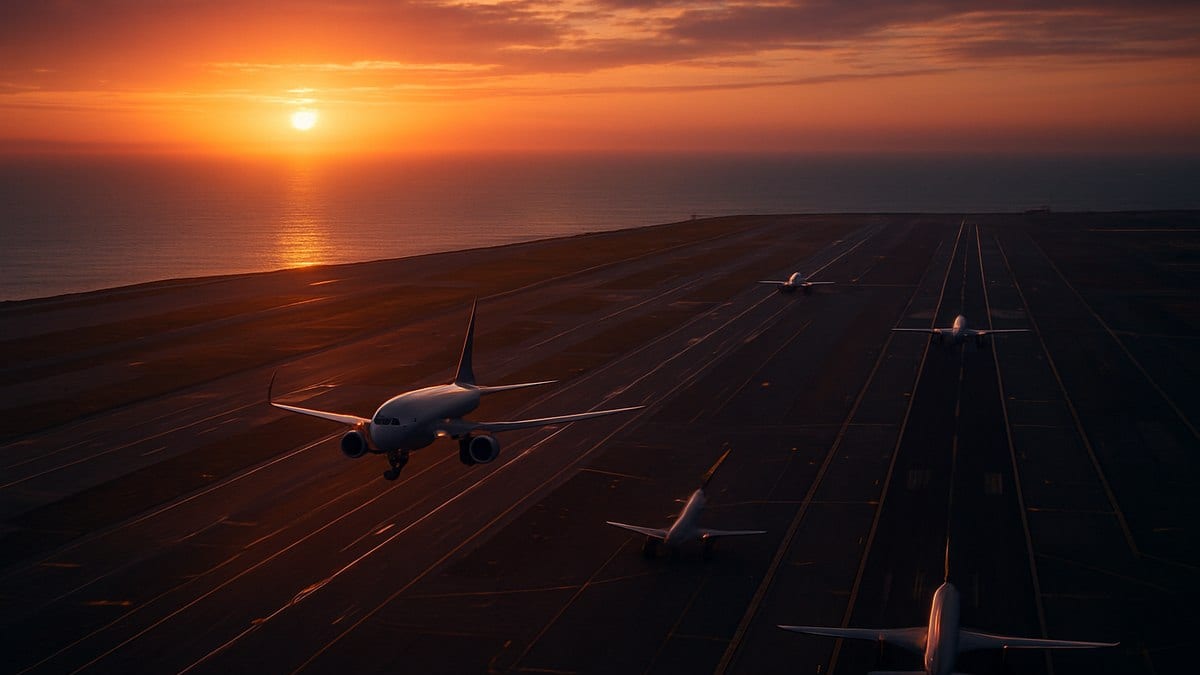
Runway 1R Closure Cuts Capacity Through Early October
Publicly available planning documents show that San Francisco International Airport has shut Runway 1R/19L for an extended repaving and infrastructure upgrade in 2026, a project scheduled to run roughly from March 30 to October 2. The north–south runway, which sits on the eastern side of the airfield near Highway 101, is undergoing full pavement rehabilitation along with lighting, drainage and taxiway connection improvements.
During the six-month construction window, Runway 1R is out of service for takeoffs and landings. Reports indicate that its parallel partner, Runway 1L, is being used in a limited way as a taxiway in the construction zone, further constraining how aircraft can move around the airfield. The combination means San Francisco is temporarily operating with fewer practical runway options during certain wind and traffic configurations.
The runway revamp is part of a multiyear modernization program at the airport, with contract awards and budget approvals dating back to 2025. Estimates published in local coverage put the cost of the 1R project in the range of 180 million to 200 million dollars, with a substantial share supported by Federal Aviation Administration grants. Airport commission materials describe the work as fast paced and highly sensitive because it must be completed between peak travel seasons and within tight safety margins.
New Landing Rules Reduce Arrivals by One Third
The physical closure of Runway 1R coincides with a separate change to air traffic procedures at San Francisco. According to recent national coverage, the Federal Aviation Administration has reduced the maximum number of hourly arrivals at the airport after reassessing the risks of closely spaced parallel landings on the 28L and 28R runways that handle most traffic over San Francisco Bay.
Previously, the airport routinely scheduled simultaneous side by side landings on the two westbound runways to achieve an arrival rate of about 54 flights per hour in good weather. Under the new operating limits, arrivals have been capped closer to 36 per hour during the runway 1R construction period. Publicly available information indicates the change reflects both the temporary loss of flexibility on the north–south pair and updated safety margins for complex Bay Area airspace.
Airport planning documents and recent aviation trade coverage note that some form of arrival reduction tied to the new safety parameters is expected to persist even after Runway 1R returns to service. That prospect has raised concerns among airline schedule planners that San Francisco may face more chronic constraints during peak periods compared with other large hubs.
Delays, Rerouting and Knock-On Effects for Travelers
Forecasts compiled in local news and industry briefings suggest that the combined effect of the runway closure and lower arrival cap will lead to a measurable uptick in delays at San Francisco International Airport through early October 2026. One widely cited estimate indicates that roughly one quarter of arriving flights could experience holds of 30 minutes or more at various points during the construction window, particularly when low clouds or strong winds limit the remaining runway options.
Travelers are already being advised in consumer reporting to plan for longer connection times through San Francisco, especially for morning and late evening banks when the runway system is most constrained. Airlines with large operations at the airport have begun adjusting schedules, swapping aircraft types and, in some cases, rerouting certain flights through alternative West Coast hubs in Los Angeles, Seattle and Denver to maintain reliability.
Some traffic is also expected to shift to other Bay Area airports. Coverage in regional outlets notes that Oakland and San José have positioned themselves as relief gateways during previous SFO construction cycles and could again see incremental increases in domestic and short haul international service while the runway work is underway. Travel analysts point out that the broader Northern California aviation network has limited spare capacity, so any major disruption at San Francisco can quickly ripple across the country.
Noise and Operational Changes Felt Around the Bay
The shift in runway usage patterns is reshaping where aircraft are seen and heard around the peninsula and along the Bay. With the 1R corridor closed, more arrivals and departures are being funneled onto the main 28L and 28R runways, which route traffic across portions of San Mateo County and coastal neighborhoods south of the airport. Local community coverage reports that residents in some areas are preparing for increased overflights while others near Highway 101 may experience a relative lull.
San Francisco International Airport maintains an established noise tracking and outreach program, and public materials show that the airport has been alerting nearby communities to the expected changes in flight paths during construction. Residents are being directed to existing hotlines and online tools to log concerns while the runway closure is in effect. Officials in several peninsula cities have placed the project on meeting agendas as constituents raise questions about both short term disruption and the long term direction of the airport’s growth.
The reconfigured airfield operation is also prompting smaller changes on the ground. Ground handling teams, maintenance providers and cargo operators have had to adjust towing routes and ramp procedures around the inactive runway and work zone. Publicly available meeting minutes from the airport commission indicate that planners expect some short term inefficiencies in aircraft taxi times and gate turns as the new patterns settle in.
What the Closure Means for the Rest of 2026
Travel industry analysts following the project suggest that the most challenging period will run from late spring into the busy summer season, when leisure demand is high and San Francisco’s weather can be unpredictable. If the runway rebuild stays on schedule and Runway 1R reopens in early October, the airport should regain some operational flexibility ahead of the late year holiday peaks, even if the newer conservatively modeled arrival limits remain in place.
For now, publicly accessible forecasts emphasize that the runway closure and related air traffic changes do not signal a reduction in the Bay Area’s role as a major aviation hub. Instead, they represent an intensive phase of maintenance and risk management intended to support long term growth. Once construction is complete, Runway 1R is expected to return with upgraded pavement, lighting and navigation systems designed to handle heavy use and evolving aircraft fleets.
Until then, passengers connecting through San Francisco are likely to experience a more constrained, delay prone operation than in recent years. Industry observers suggest that travelers who have flexibility may want to consider alternative routings or nearby airports during the height of the construction period, while those committed to SFO can mitigate risk by avoiding tight layovers, monitoring flight status closely and preparing for occasional diversions when weather and runway limits collide.