

More news on this day
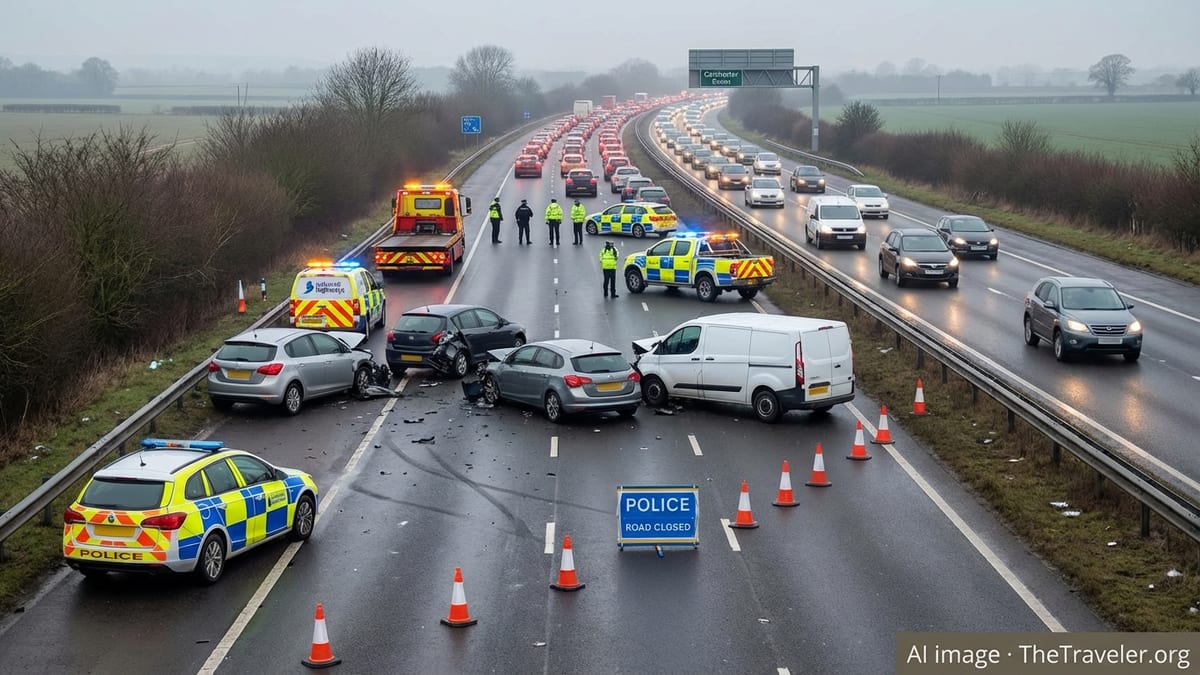
Drivers on the A12 in Suffolk faced severe disruption on Tuesday morning after a multi vehicle crash brought southbound traffic near Stratford St Mary to a standstill, with long queues and extended delays for commuters heading towards Essex.
More News
- TSA Rolls Out $45 ConfirmID Fee for Travelers Without REAL ID at Security
- Flying Blue Launches February 25% Promo Rewards on Transatlantic and Regional Routes
- United Fast-Tracks Starlink Wi‑Fi Across Fleet, Free for MileagePlus Members
Serious multi vehicle collision near Stratford St Mary
The incident occurred on the A12 southbound close to junction 30 for the B1029 at Stratford St Mary during the morning rush on February 3, 2026. Initial reports from traffic monitoring services indicated that several vehicles were involved and that the carriageway was completely blocked for a time, halting traffic on one of the region’s main commuter routes.
Travel and traffic services reported that six vehicles were believed to be part of the collision, which unfolded in busy conditions as motorists made their way towards Colchester and other destinations in north Essex. The force of the crash, coupled with the number of vehicles involved, meant debris and damaged cars were strewn across the southbound lanes, leaving no room initially for traffic to pass.
The A12 is a key strategic route linking Suffolk with Essex and into London, so any serious incident quickly has knock on effects for thousands of drivers. On Tuesday morning, what began as a localised collision rapidly escalated into a region wide travel problem as queues began to build in both directions.
Road closures, lane restrictions and growing queues
Following the crash, Suffolk Police and National Highways closed the southbound carriageway in the affected section, while emergency services worked at the scene and assessed the damage. For a period, all southbound lanes were shut, effectively sealing off access towards Colchester and leaving drivers stationary for extended periods.
By around 8.05 am, one lane was reported to have reopened, but the backlog was already significant. Queues on the southbound A12 stretched back past junction 31 at East Bergholt and towards junction 29 at the Crown Interchange, with traffic moving only intermittently. Sensors showed average speeds dropping to walking pace as vehicles inched forward through the bottleneck.
The collision also had a pronounced impact on the northbound side of the A12. Although the carriageway itself remained open, congestion worsened as drivers slowed to observe the scene on the opposite side, a familiar phenomenon on busy dual carriageways. This so called “rubbernecking” effect further hampered progress, with reports of heavy delays building on the northbound approach towards Stratford St Mary.
National Highways advised that normal journey times were significantly extended, with many motorists facing delays of well over half an hour and some reporting that their usual commute had more than doubled in length. The sheer volume of traffic on this stretch of the A12 meant that, even after a lane reopened, it took considerable time for the queues to begin to clear.
Emergency services response and early injury reports
Police, ambulance crews and traffic officers were quickly dispatched following reports of the collision in the early morning. Their priorities were to secure the scene, attend to casualties and prevent further incidents amid the stationary traffic and limited visibility created by queues and braking vehicles.
Early indications suggested that, while there were injuries among those involved in the six vehicle crash, there were no immediate reports of fatalities. Paramedics assessed drivers and passengers at the roadside, with some people understood to have required further treatment and possible transfer to hospital for observation.
Suffolk Police urged drivers who were not directly involved in the incident but who found themselves temporarily trapped within the closure to remain in their vehicles unless directed otherwise by officers. With emergency vehicles maneuvering through stationary traffic, authorities stressed the importance of leaving lanes clear where possible and following instructions from traffic officers.
Investigators are expected to carry out a detailed examination of the scene, including skid marks, vehicle positions and any onboard camera footage, in order to establish the sequence of events and determine whether factors such as speed, driver error, weather conditions or mechanical failure played a role in the collision.
Knock on effects for regional travel
The closure and subsequent lane restrictions on the A12 southbound quickly reverberated across the wider local road network. As word of the standstill spread via traffic reports and navigation apps, many drivers diverted onto smaller A and B roads around Dedham, East Bergholt and the surrounding villages in an attempt to bypass the congestion.
This sudden surge in vehicles on rural routes, which are not designed to carry motorway scale traffic, created fresh pinch points. Residents reported slow moving queues through local villages, longer waits at junctions and increased journey times for school runs and local deliveries. Bus and coach services using the A12 corridor also experienced disruption, with knock on delays to timetables.
The incident came against a backdrop of other recent collisions and planned works on major roads around Essex and Suffolk, underlining how fragile traffic conditions can become when a single key route is compromised. For many commuters, Tuesday’s disruption served as a reminder of the limited resilience of the region’s transport network and the extent to which daily life relies on the smooth running of the A12 and connecting motorways.
In addition to immediate delays, logistics firms and delivery services using the corridor between the ports of Felixstowe and Harwich and destinations further south faced challenges in rerouting vehicles and maintaining schedules. Some operators warned of minor delays to deliveries into Essex and London as drivers were forced to sit in traffic or take longer diversionary routes.
Advice for motorists and alternative routes
Throughout the morning, National Highways and local media outlets urged motorists to avoid the affected stretch of the A12 where possible and to consider postponing or rerouting non essential journeys. Drivers were advised to use real time traffic information on in car systems and mobile navigation apps to monitor delays and explore alternatives before setting off.
For those already on the road heading south from Suffolk towards Essex, diversion options included leaving the A12 at earlier junctions and using local roads towards Colchester, although authorities cautioned that these routes were quickly becoming congested. Motorists were also reminded to heed any variable message signs and temporary instructions from traffic officers as conditions changed.
Commuters who had yet to begin their journeys were encouraged, where possible, to work remotely, stagger their travel times or switch to rail for certain trips. With the A12 expected to remain busy even after the immediate scene was cleared, spreading demand throughout the day was seen as one way to ease pressure on the corridor.
Travel planners reiterated the importance of building in extra time when using key cross county routes, particularly during winter months and at peak commuting hours, when the consequences of a single incident can quickly ripple out across a large area and cause major delays for thousands of travellers.
Ongoing investigations and calls for road safety
As recovery crews worked to remove damaged vehicles and debris from the carriageway, collision investigators began the process of gathering evidence to determine how the crash unfolded. Witness statements, dashcam footage and telematics data from vehicles may all play a part in reconstructing events in the minutes leading up to the impact.
Local campaigners and road safety advocates pointed out that multi vehicle incidents on fast moving dual carriageways often involve a combination of factors, from tailgating and distraction to sudden braking in heavy traffic. They renewed calls for drivers to maintain safe following distances, reduce speeds in congested conditions and avoid mobile phone use behind the wheel.
The A12 has long been the focus of safety and capacity debates, with some stretches having a record of serious collisions and prolonged delays following incidents. Residents and regular users of the route have periodically pressed for further improvements, including junction upgrades, better signage and enhanced enforcement of speed and lane discipline.
While the full circumstances of Tuesday’s crash remain under investigation, the scale of disruption once again highlighted the vulnerability of busy, largely two lane dual carriageways that carry a mix of heavy goods vehicles, commuter traffic and long distance motorists. Any significant collision can quickly cascade into hours of gridlock for travellers across a wide area.
Impact on local communities and commuters
For many residents of north Essex and south Suffolk, the standstill on the A12 translated into late arrivals at workplaces, missed appointments and disrupted school runs. Social media posts from the region on Tuesday morning described stationary traffic stretching into the distance, with some commuters reporting that they had moved only a few hundred metres in half an hour.
Local businesses that rely on passing trade from the A12, including service stations, cafes and roadside retailers, experienced a mixed picture. While drivers caught in standstill traffic had little opportunity to stop, once movement resumed many took advantage of the first available services to take a break, refuel and regroup after long delays.
Residents in villages near Stratford St Mary also expressed concern about increased traffic on local roads as drivers sought to escape the queues. Narrow lanes and village centres are not designed for sustained surges of through traffic, and parish councillors have previously warned that repeated diversions can create safety risks for pedestrians and cyclists.
Despite the frustration felt by many commuters, there was also widespread recognition that emergency services needed the space and time to work safely at the scene. Local leaders and travel organisations urged patience from drivers and reiterated that the primary focus in the aftermath of any serious collision must be on the welfare of those involved and the safe management of the incident.
FAQ
Q1. What exactly happened on the A12 near Stratford St Mary?
The A12 southbound near junction 30 for Stratford St Mary was brought to a standstill on the morning of February 3, 2026, after a serious multi vehicle collision involving around six vehicles blocked the carriageway and caused long queues in both directions.
Q2. Were there any injuries or fatalities reported?
Emergency services reported injuries among those involved in the crash, and paramedics treated several people at the scene. At the time of reporting, there were no confirmed fatalities, although some individuals were taken to hospital for further assessment.
Q3. How long was the A12 closed following the crash?
All southbound lanes were initially closed while police and ambulance crews responded to the incident. One lane reopened at around 8.05 am, but heavy congestion persisted for several hours as the backlog of traffic was gradually cleared and recovery work continued.
Q4. How far did the queues stretch on the A12?
Queues on the southbound A12 extended back past junction 31 at East Bergholt and towards junction 29 near the Crown Interchange. Northbound traffic also experienced heavy delays as drivers slowed to look at the crash scene.
Q5. Which motorists were most affected by the disruption?
The delays primarily affected commuters and freight traffic heading from Suffolk into Essex, including those travelling towards Colchester and onwards to London. Local residents using the A12 for shorter journeys also experienced significant disruption.
Q6. Were alternative routes available for drivers?
Drivers were advised to avoid the affected section of the A12 where possible and to use alternative routes via local A and B roads around Dedham, East Bergholt and neighbouring villages. However, these diversion routes also became congested as more motorists attempted to bypass the closure.
Q7. What should travellers do if they are planning to use the A12?
Travellers are advised to check live traffic updates before setting off, allow extra time for their journeys and consider alternative modes of transport where practical. Using real time navigation and following official guidance from traffic officers can help minimise delays.
Q8. Do we know what caused the multi vehicle collision?
The precise cause has not yet been confirmed. Police collision investigators are examining the scene, taking witness statements and reviewing dashcam footage to understand the sequence of events and identify any contributing factors such as speed, following distances or sudden braking.
Q9. How does this incident fit into the wider safety record of the A12?
The A12 is a busy strategic route that has seen a number of serious incidents in recent years, and Tuesday’s crash will likely renew calls for ongoing safety improvements, including junction upgrades, clearer signage and continued enforcement of speed and lane discipline.
Q10. Where can drivers find the latest information on A12 traffic conditions?
Motorists can obtain up to date information through official traffic bulletins, radio travel reports and in car or mobile navigation systems that provide live congestion data. Checking conditions before travelling is strongly recommended, particularly during peak hours.