

More news on this day
From its beginnings in the 1950s as a small circle of travel executives, Skål International Bangkok has developed into a leading Asian platform for high-level tourism networking, professional collaboration and industry advocacy.
Get the latest news straight to your inbox!
From Postwar Origins to Regional Influence
Publicly available club records and regional coverage indicate that Skål International Bangkok was founded in 1956, placing it among the earliest Skål clubs in Asia and making it a long-standing pillar of Thailand’s tourism community. Established at a time when international travel was still limited, the club gave Bangkok-based executives in aviation, hospitality and tour operations a rare forum for exchange and business development.
Over subsequent decades, Bangkok’s rapid rise as one of the world’s most visited cities helped to elevate the club’s strategic role. As Thailand built its brand around hospitality and culture, Skål International Bangkok evolved alongside, bringing together senior leaders from hotels, airlines, destination management companies and tourism boards in a neutral setting focused on “doing business among friends.”
The club’s longevity has also mirrored the expansion of Skål International, which today spans hundreds of clubs in more than 70 countries. Bangkok’s chapter has consistently been positioned as one of the most active in the Asia Area, contributing to regional initiatives and serving as a bridge between Thailand’s tourism industry and global partners.
According to information shared by Skål International Thailand, the Bangkok club’s sustained activity for nearly 70 years has made it a reference point for how local chapters can leverage global networks to support destination growth, talent development and industry resilience.
Building a Culture of Business Networking and Friendship
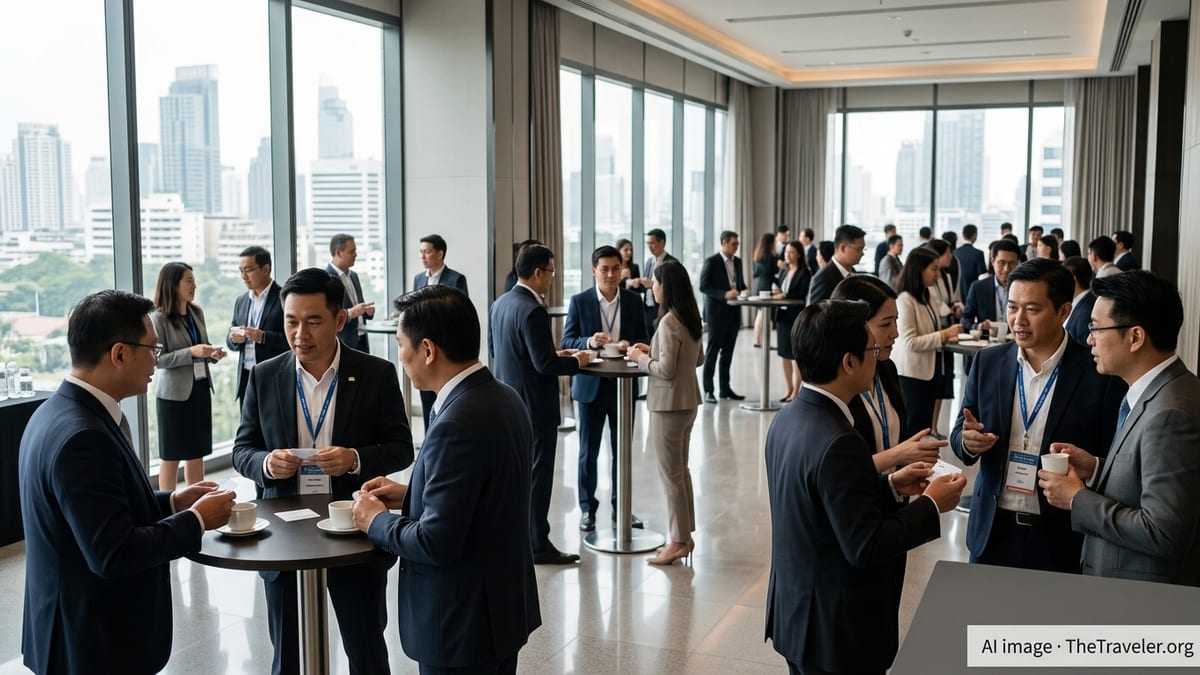
Skål International’s founding principles emphasize professional friendship and ethical business, and Bangkok has translated those values into a structured calendar of events and networking opportunities. The club’s current website highlights a regular program of luncheons, evening cocktail gatherings and an Annual General Meeting that doubles as a high-level industry meet-up, typically staged at leading hotels in the capital.
Recent announcements show events at venues such as Hyatt Regency Bangkok Sukhumvit and major international hotel brands, with formats designed to foster informal discussion alongside structured updates. Attendance is drawn from senior managers and executives across hotels, airlines, attractions, technology providers and tourism marketing firms, positioning each event as a cross-sector forum rather than a single-industry gathering.
Membership information shared by Skål International Asia underscores the wider benefits that underpin these local activities, including access to a global professional database, the annual Skål World Congress and cross-border business events. For Bangkok-based members, this combination of intimate city-level networking and direct links to international contacts has reinforced the club’s reputation as a valuable business development platform.
Reports from Skål publications also note that Bangkok’s club has been recognized within the global organization, including being named Skål International “Club of the Year” during the World Congress in 2019. Observers view these accolades as an acknowledgment of the club’s ability to balance social connection with practical outcomes for tourism enterprises.
Leadership, Digital Transformation and Inclusive Growth
The evolution of Skål International Bangkok has been closely tied to its leadership, particularly during periods of disruption and recovery. Club communications and Skål International news items show that presidents in recent years have come from senior roles in hospitality and tourism marketing, reflecting a trend toward leaders with both operational experience and regional networks.
In 2020, published coverage highlighted the election of Andrew Wood for a second consecutive term as president of the Bangkok club, during which time the chapter strengthened its profile and was active on the international stage. Later, reports on current president James Thurlby’s 2025 vision outlined priorities such as expanding membership, reinforcing partnerships with sponsors and deepening collaboration with industry associations headquartered in Bangkok.
According to those reports, the club has increasingly embraced digital tools to remain relevant to a new generation of tourism professionals. Enhanced online communication, more structured event promotion and a stronger social media presence have been used to complement traditional in-person gatherings, allowing members and prospective members to follow activities and engage with the club’s initiatives more easily.
Another theme emerging from recent updates is a focus on inclusion and diversity. Bangkok’s Skål communications and partner coverage point to initiatives such as Women in Leadership events and targeted outreach to younger professionals through “Young Skål” categories. These efforts are intended to align the club with broader industry priorities around gender balance, skills development and leadership opportunities for the next generation.
Strategic Role in Asia’s Tourism Ecosystem
Within Asia, Skål International Bangkok functions as both a national and regional connector. Thailand’s national Skål structure groups clubs from destinations such as Pattaya, Hua Hin, Chiang Mai and Krabi, while Skål International Asia coordinates activities across a diverse area stretching from South Asia to the Pacific. Regional news coverage and Skål Asia materials highlight the Bangkok club’s contribution to area congresses, membership development and cross-border knowledge exchange.
Bangkok’s status as a global aviation hub and headquarters city for organizations such as the Pacific Asia Travel Association has further enhanced the strategic importance of its Skål club. Industry observers note that events in the Thai capital regularly draw participants transiting through Bangkok for trade shows, association meetings and regional conferences, reinforcing the city’s role as a natural meeting point for tourism professionals.
Recent updates from Skål Asia and affiliated publications point to a wider trend of Asian clubs renewing and deepening their engagement with the regional structure. Examples include the return of long-established clubs in neighboring markets to the Asia Area network, which has been framed as a move to strengthen professional exchange and joint advocacy across borders. In that context, Skål International Bangkok is often cited as a mature, stable chapter that helps anchor regional collaboration.
By maintaining strong links with Skål International’s global leadership while serving as a practical hub for Thai and regional stakeholders, the Bangkok club has positioned itself as an intermediary between local tourism concerns and international best practice.
Looking Ahead: Innovation, Sustainability and Next-Generation Talent
As of 2025 and into 2026, Skål International Bangkok’s publicly communicated agenda points toward a future shaped by innovation, sustainability and talent development. Club and regional Skål documents reference growing emphasis on responsible tourism, alignment with the Global Code of Ethics promoted by international bodies and active participation in programs such as the Skål Sustainable Tourism Awards.
Event schedules published for 2026 show a continued focus on frequent, accessible networking occasions in central Bangkok, with pricing and formats designed to encourage participation from established executives and emerging professionals alike. Observers interpret this as a sign that the club sees regular face-to-face interaction as essential in an era of rapid digital change and shifting traveler expectations.
Regional Skål publications suggest that Bangkok’s chapter is likely to remain a testing ground for new engagement models in Asia, whether through hybrid events, thematic forums on technology and sustainability or closer alignment with educational institutions. With tourism in Bangkok rebounding and diversifying, the club’s long experience in convening decision-makers from across the value chain positions it to continue shaping conversations on issues from workforce challenges to destination competitiveness.
Approaching seven decades since its founding, Skål International Bangkok’s trajectory illustrates how a city-level professional club can evolve into a premier regional platform. By combining local hospitality traditions with global connections, it has become a fixture in Asia’s tourism landscape and a benchmark for industry networking and collaboration.