

More news on this day
A travel influencer’s account of skiing with an unexpectedly heavy and unconventional backpack load has captured attention across social media, with fellow skiers reportedly stunned to learn what he brought down the mountain on a recent trip.
Get the latest news straight to your inbox!
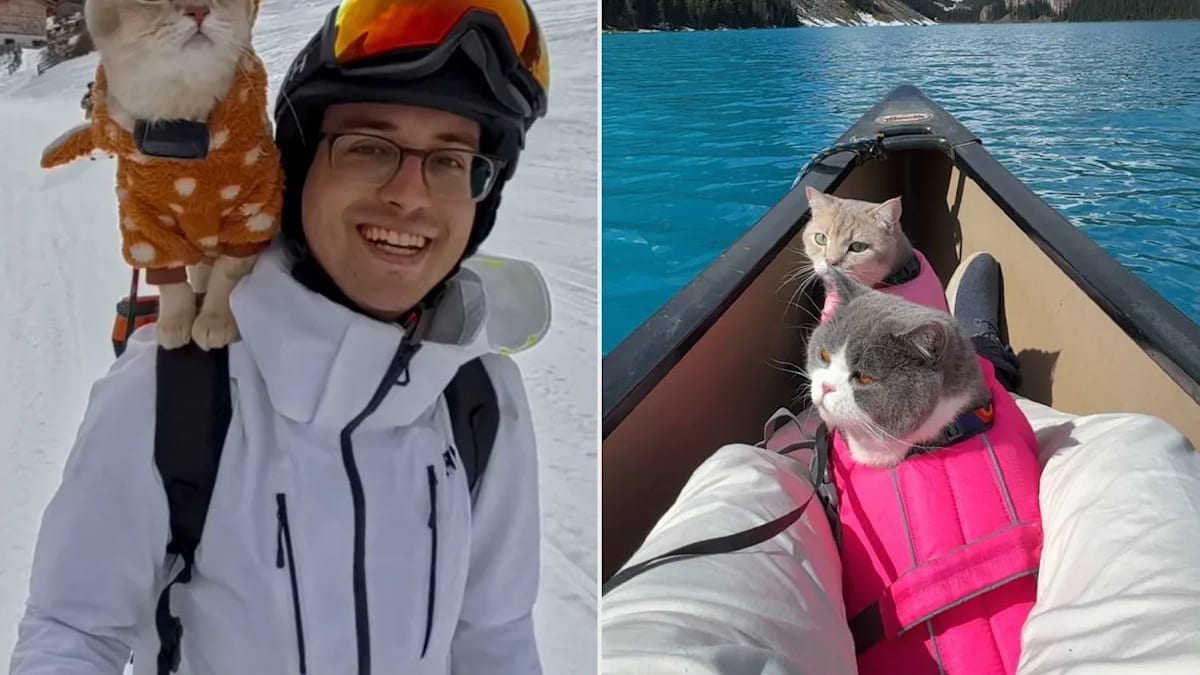
Image by Yahoo News New Zealand
A Viral Moment Born on a Busy Ski Day
According to recent coverage in lifestyle and travel outlets, the content creator filmed his run on a popular resort slope during peak season, documenting what initially looked like a routine day on the mountain. The video showed crowded chairlifts, packed groomers and a typical mix of families, locals and visitors sharing the terrain.
What set the clip apart, reports indicate, was the creator’s decision to carry a fully loaded travel backpack instead of a standard lightweight ski pack. Viewers only learned the details after he reached the base area and revealed what had been inside all along, prompting a wave of comments from surprised skiers and riders.
By the time the clip began circulating more widely, social media users were already dissecting screenshots, pausing frames to examine the pack’s shape and size, and trading guesses about what could justify hauling that much gear down a groomed run. Some observers suggested it was part of a gear test, while others speculated it was a commentary on modern travel habits.
Publicly available footage and descriptions suggest the moment resonated in part because it played out in a setting many winter travelers know well: an in-bounds resort slope, not a remote backcountry face. For regular visitors to major ski destinations, the idea that someone in the next gondola cabin might be carrying far more than spare gloves and snacks was both entertaining and faintly unsettling.
What Was Inside the Pack
Subsequent explanations shared in travel and outdoor coverage describe a backpack loaded less like a minimalist day pack and more like a short-haul travel bag. The influencer reportedly combined camera equipment, charging gear, extra layers, food, drinks and comfort items usually left in a lodge or hotel room.
Accounts of the stunt highlight that the pack included a compact laptop, a full camera setup with multiple lenses, a gimbal, extra batteries, a drone, and a substantial amount of food and water. For many viewers, the presence of a laptop on a ski run proved the most surprising detail, reinforcing the growing overlap between remote work, content creation and traditional vacation activities.
Reports also note that fellow skiers at the base area appeared genuinely taken aback when they saw the contents laid out on a bench. The creator emphasized how the load affected his balance, turns and energy level, positioning the experience as both a practical test of a travel backpack and an illustration of how much modern gear people attempt to carry through active trips.
The reveal aligned with a common theme in contemporary travel storytelling: the tension between packing light and staying fully equipped. For some, the clip underlined how digital work and filming demands follow influencers into environments once associated solely with leisure.
Safety Concerns and Mixed Reactions
As the story spread, reactions from the ski community and broader travel audience were mixed. Comment sections highlighted enthusiasm for the creativity of the stunt, but also raised practical questions about safety and slope etiquette when carrying an unusually heavy pack.
Experienced skiers writing in discussion threads pointed out that a top-heavy or poorly fitted backpack can change a skier’s center of gravity, making falls more likely and recovery more difficult, especially on steeper pitches or in variable snow. Others noted that dense gear in a pack can increase the risk of injury in a crash, both for the wearer and for anyone they might collide with.
Travel-focused analysis also drew a line between controlled resort environments and backcountry terrain. In managed areas with patrol, groomed runs and marked boundaries, the consequences of a heavy load are generally limited to fatigue and handling. In avalanche terrain or remote settings, experts regularly advise that packs be carefully organized and weight balanced to support safe movement, not hinder it.
Despite reservations, many viewers framed the clip as a thought experiment about how far to push multitasking on vacation. For some frequent travelers, the video served as a reminder to separate filming goals from the basic enjoyment and safety of skiing itself.
What the Episode Says About Travel Gear Culture
The incident tapped into a broader conversation about the evolution of travel gear and the expectations placed on influencers to capture every moment. Over the last decade, publicly available market data and brand campaigns show that travel backpacks have become more specialized, with models designed specifically for camera equipment, remote work and action sports.
Outdoor and travel publications have increasingly spotlighted hybrid bags that promise to handle everything from airport security to chairlifts and gondolas. The influencer’s backpack choice, as described in coverage, echoed this trend by attempting to combine gear for filming, editing and personal comfort in one piece of luggage.
Industry observers note that such stunts can double as informal product tests, generating real-world footage of how a pack performs under stress, how it distributes weight and how easy it is to access contents in changing conditions. While not structured like a formal review, the viral run effectively demonstrated both the advantages and trade-offs of carrying a large amount of equipment in active scenarios.
At the same time, the reaction underscored that even as gear becomes more capable, many winter travelers still value the simplicity of a near-empty backpack: a layer, water, and perhaps a snack. The contrast between that minimalist ideal and the influencer’s heavily loaded pack helped drive interest in the story.
Takeaways for Ski Travelers
For travelers planning ski trips in the current season, the story offers several practical considerations around packing and planning. Travel publications frequently recommend separating “on-slope” essentials from general trip luggage, leaving laptops, bulky electronics and non-urgent items in secure accommodations rather than carrying them onto the hill.
Guidance from ski schools, resort FAQs and gear guides typically emphasizes comfort, range of motion and balance when choosing what to wear and carry. A properly sized pack with chest and hip straps, adjusted to sit close to the body, can improve stability, but additional weight still leads to quicker leg fatigue and slower reaction times.
For content creators and travelers who do intend to film on the mountain, commentators suggest planning specific filming windows and minimizing the equipment list to what is truly necessary. Smaller action cameras, compact stabilizers and power banks designed for cold weather can significantly reduce weight compared with full professional setups.
Ultimately, the influencer’s backpack run illustrated how the demands of modern travel storytelling can collide with the fundamentals of mountain sports. While many viewers enjoyed the novelty and were impressed by what he managed to carry, the story also served as a reminder that, on snow, thoughtful packing can be as important as a well-tuned set of skis.