

More news on this day
As conflict and cascading airspace closures grip the Middle East in early 2026, one of the world’s most vital aviation crossroads has plunged into unprecedented disruption, stranding travelers and forcing airlines into costly, improvised detours.
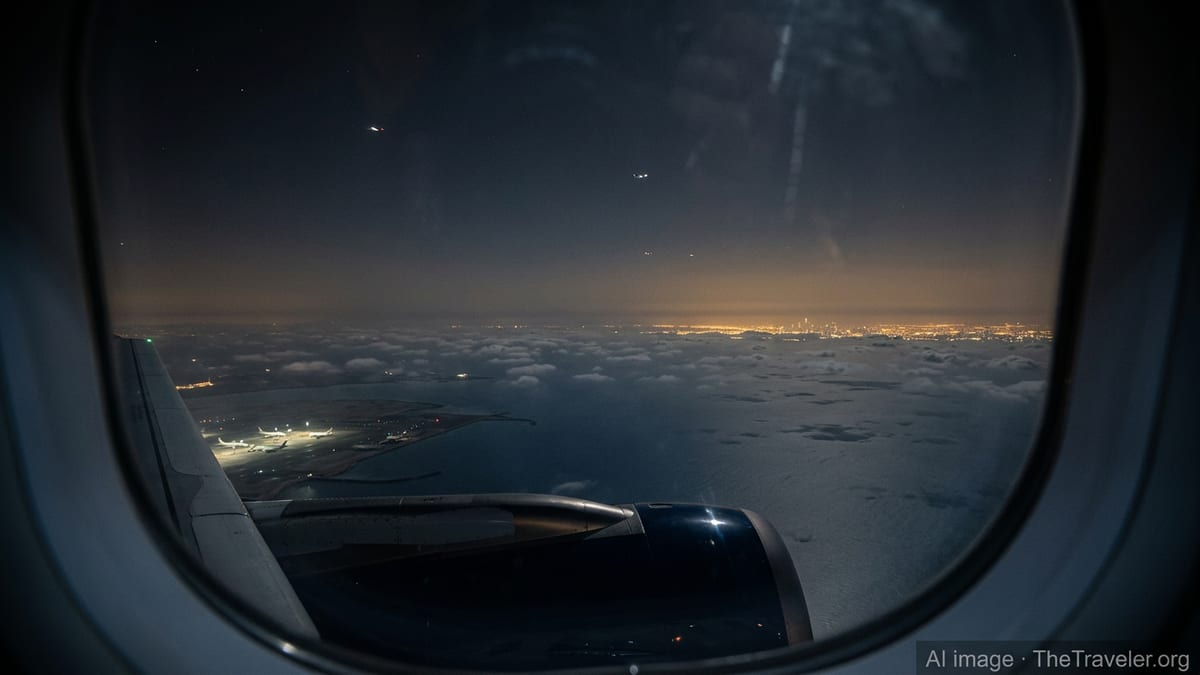
Gulf Hubs Go Quiet as Airspace Closes
The Middle East’s powerhouse hubs in the United Arab Emirates and Qatar, long marketed as seamless global connectors, have been abruptly throttled by sweeping airspace restrictions following strikes involving Iran, the United States and Israel. Authorities in Iran, Iraq, Israel, Kuwait, Qatar, Bahrain and the UAE, among others, have imposed full or partial closures, leaving radar maps showing vast holes where dense webs of flight paths once converged.
Emirates, Etihad and Qatar Airways, normally responsible for moving tens of thousands of connecting passengers each day through Dubai, Abu Dhabi and Doha, have canceled large portions of their schedules and in some cases suspended regular commercial services for days at a time. Industry data compiled late last week showed cancellation rates nearing or exceeding one third of daily operations for several Gulf carriers as they juggled rolling restrictions and last minute NOTAMs.
Instead of the familiar rhythm of round-the-clock departures, terminals in Dubai and Doha have seen banks of grounded widebodies and departure boards dominated by red “canceled” notices. Limited repatriation and cargo flights have continued, but authorities and airlines have made clear that routine connecting traffic linking Europe, the Americas, Africa and Asia through the Gulf will remain severely constrained as long as the conflict persists.
For travelers who counted on Gulf stopovers as the most efficient way to cross continents, the shutdown has upended itineraries that were once considered almost bulletproof. Tourists, expatriate workers and business travelers now face uncertain wait times, abrupt reroutings and the prospect of days-long delays just to clear the region.
Narrow Corridors and Lengthy Detours
With swathes of Middle Eastern airspace off-limits, global airlines have been forced to thread their way through a shrinking set of viable corridors between Europe and Asia. Aviation tracking data in recent days has shown a marked concentration of traffic through a thin band of airspace across the Caucasus and eastern Mediterranean, as carriers attempt to skirt both Russian skies, still largely closed to many Western airlines, and conflict-affected territories further south.
The result has been an intricate patchwork of improvised routings. Some flights from Europe to India and Southeast Asia are dipping further south over the Arabian Sea, adding significant mileage and fuel burn. Others are tracking north and east via Central Asia, often with reduced payloads or additional technical stops to manage fuel and crew duty limits. Airlines that had already been diverting around Russia now find themselves stacking detours on top of detours.
For passengers, the operational gymnastics translate into longer flight times, more en route delays and, in some cases, midair diversions as airspace closures are extended with little warning. Several long-haul services bound for Dubai, Tel Aviv and other regional destinations have been forced to return to their points of origin or divert to alternative airports when airspace shut just as they approached.
Airline executives and route planners warn that even if outright closures are gradually eased, the knock-on effects will linger. Highly congested substitute corridors, elevated fuel costs and tight crew schedules are likely to ripple through timetables for weeks, limiting spare capacity and making it harder to restore pre-crisis frequencies on popular routes.
Global Carriers Cut, Pause or Reprice Routes
The shockwaves from the Middle East airspace crisis extend far beyond regional airlines. Major European and Asian carriers, including Air France, KLM, Lufthansa, Japan Airlines, Cathay Pacific and others, have either suspended flights to key Middle Eastern cities or sharply curtailed frequencies while they reassess risk and routing options.
India’s leading airlines have taken some of the most dramatic steps, halting many services into the Gulf and beyond after their regulator advised avoiding multiple conflict-affected airspaces. That decision has reverberated across one of the world’s busiest labor and tourism corridors, affecting thousands of migrant workers commuting between the Indian subcontinent and Gulf construction, hospitality and energy jobs.
In North America, large carriers have cancelled or temporarily suspended flights to Dubai, Tel Aviv and other regional gateways, issuing broad travel waivers that allow passengers to rebook, reroute or request refunds. Similar measures have been rolled out by European groups as they juggle cancellations to Iran and neighboring states with rerouted services to maintain at least some connectivity for stranded travelers.
Capacity that remains in the market has become both scarce and more expensive. Analysts say that the combined effects of longer routings, higher insurance and security costs, and constrained aircraft and crew availability are feeding through to last minute fares, especially for premium cabins. Some leisure travelers are opting to postpone trips to or through the Middle East altogether, while corporate travel managers are scrambling to rewrite routing policies and risk assessments for staff.
Travelers Face Stranded Journeys and Patchwork Evacuations
As cancellations mounted across late February and early March, hundreds of thousands of passengers found themselves stranded in or near the conflict zone, prompting a patchwork of government-organized evacuations and airline-led repatriation efforts. Foreign ministries in countries including the United States, the United Kingdom, India and several European states have urged citizens to leave affected areas while commercial options still exist, even as those very options narrow by the day.
Charter flights from safer nearby hubs, such as Muscat in Oman and selected airports in Egypt, have emerged as critical lifelines. Governments have quietly worked with airlines to secure slots, aircraft and crews able to operate into and out of these staging points without crossing the most hazardous airspace. For many travelers, that has meant complex journeys involving buses or short-haul hops to reach evacuation flights.
On the ground, scenes at major airports have evoked memories of early pandemic chaos: long queues at ticket counters, families sleeping in departure halls and ad hoc information lines as airlines and consular staff attempt to manage expectations with only partial visibility into how long restrictions will last. Hotels near key hubs have filled with displaced passengers waiting for news of a seat out.
Travel advisers say flexibility has become as important as documentation. Passengers with changeable tickets, robust insurance and access to real-time flight data have fared better than those on rigid itineraries. Yet even well-prepared travelers report being caught off guard by sudden overnight changes, underscoring how volatile the situation has become across the region’s skies.
What This Means for Future Middle East Travel
Aviation analysts caution that the current crisis is likely to reshape how both airlines and passengers think about the Middle East as a transit point, at least in the short to medium term. While Gulf hubs have weathered shocks before, from regional conflicts to health emergencies, the combination of widespread airspace closures and overlapping global route constraints has exposed a structural vulnerability in the global network.
Carriers are already signaling that they will revisit contingency plans, including diversifying long haul routings that have long depended on a narrow band of overflight permissions. Some are exploring increased reliance on southern Africa or Central Asian corridors, while others may accelerate fleet plans that favor ultra long haul aircraft capable of bypassing traditional hubs altogether.
For travelers, the near term outlook points to fewer nonstops into certain Middle Eastern cities, more circuitous connections and continued volatility in schedules and pricing. Industry groups stress that safety remains the overriding consideration, and regulators are unlikely to ease restrictions quickly in the face of ongoing missile and drone activity.
Yet industry veterans also note the resilience of air travel demand and the critical economic role aviation plays for Gulf states and their neighbors. Once the security picture stabilizes, airlines and governments will face intense pressure to reopen corridors and restore confidence. Until then, the Middle East’s usually crowded skies will remain a stark visual reminder of how swiftly geopolitical shocks can ground even the most intricate global travel networks.