

More news on this day
Travelers shuttling between Seattle and Spokane now have a way to bypass Seattle–Tacoma International Airport’s security crowds, with SeaPort Airlines launching fast, TSA-free flights that trade big-hub congestion for small-airport convenience.
Get the latest news straight to your inbox!
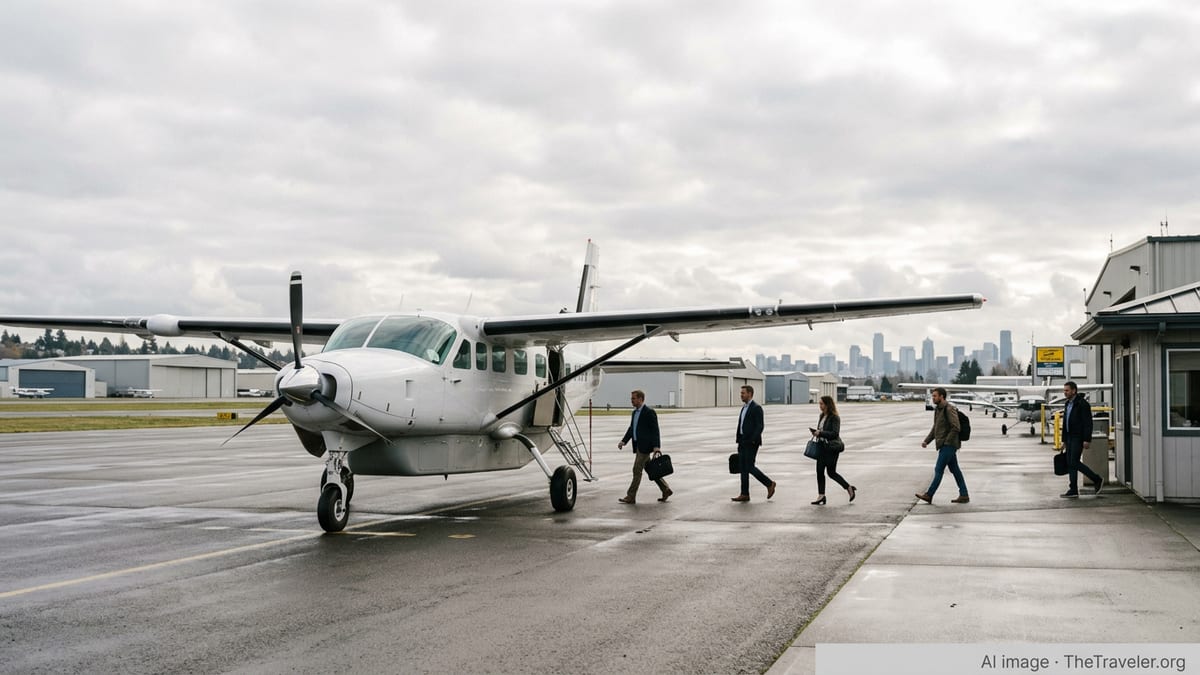
A New Seattle–Spokane Option Built Around Convenience
SeaPort Airlines has introduced a regional shuttle linking Seattle’s Boeing Field with Spokane’s historic Felts Field, positioning the new route as an antidote to the stress and unpredictability of major-hub flying. The service, operated with nine-passenger aircraft, focuses on frequent, short-haul trips tailored to business travelers, medical commuters and weekend visitors who value time savings over frequent-flyer perks.
Beginning service this month, SeaPort is operating multiple daily frequencies between the two cities, complementing its growing portfolio of Pacific Northwest routes. The airline already connects Boeing Field with Portland and is betting that a similar small-airport strategy will resonate along the busy east–west corridor between Puget Sound and the Inland Northwest.
By avoiding Seattle–Tacoma International Airport and Spokane International Airport, the carrier can use compact terminals and general aviation facilities that are typically far less crowded. That operating model allows SeaPort to promise a radically different ground experience from curb to cabin.
Skip TSA Lines With Small-Airport Boarding
The biggest differentiator for SeaPort’s Seattle–Spokane flights is the absence of traditional Transportation Security Administration screening. Passengers depart from general aviation facilities at both Boeing Field and Felts Field, where they are processed through the airline rather than standard airport checkpoints. That setup enables travelers to arrive as little as 20 minutes before departure, a fraction of the two hours commonly recommended for domestic flights at large hubs.
At Seattle–Tacoma International Airport, travelers often face long and variable waits at one of six TSA security checkpoints, even with programs such as PreCheck, CLEAR and the SEA Spot Saver reservation system designed to smooth demand. While average waits hover around 20 minutes, peak periods and staffing disruptions can push lines far longer, prompting many travelers to build in generous time buffers.
SeaPort’s model removes that uncertainty for passengers on its Boeing Field route. Without the need to queue for security screening or navigate a sprawling terminal, the airline emphasizes a streamlined arrival-to-boarding timeline, which it argues is particularly attractive to frequent travelers accustomed to losing productive hours at checkpoints.
From Boeing Field to Felts Field: Airports That Fit the Trip
SeaPort’s Seattle operation is based at King County International Airport, better known as Boeing Field, a facility traditionally used by cargo carriers, corporate aviation and aircraft manufacturers. Located closer to downtown Seattle than Sea–Tac, Boeing Field offers quick access for travelers coming from the city’s core or nearby employment hubs, reducing both transit time and parking headaches.
On the Spokane side, SeaPort uses Felts Field, a smaller airfield on the Spokane River that has long served general aviation and flight training. For the new commercial service, the airline highlights the ability for passengers to park within a short walk of their aircraft, sidestepping the multi-level garages, shuttles and crowded curb fronts common at larger airports.
Both airports allow SeaPort to create a low-friction experience on the ground: simplified check-in, minimal walking distances and boarding directly from compact terminals or fixed-base operator facilities. While amenities such as extensive dining or retail are limited compared with major hubs, the airline is banking on passengers prioritizing time savings and predictability over a broader menu of concessions.
Competing With Sea–Tac and the Open Road
The Seattle–Spokane corridor is already served by mainline and regional carriers flying from Seattle–Tacoma International Airport to Spokane International Airport, with multiple daily departures. For many travelers, however, the journey can be dominated by the airport experience rather than the short flight itself. Between security queues, parking or rideshare logistics and crowded gate areas, the total door-to-door time can erode the speed advantage of flying.
Driving remains a popular alternative along Interstate 90, with a typical trip between the two cities taking four to five hours depending on traffic and weather. For those traveling with families or substantial luggage, or making stops en route, the highway can still be appealing. SeaPort is targeting travelers who might otherwise drive alone or endure a major-airport experience for what is, in the air, a brief hop.
Regional business travelers, medical patients and university communities in both cities are being courted as early adopters, with SeaPort framing its flights as a reliable shuttle that can turn a full-day commitment into a quick out-and-back. The airline is also eyeing connections with other regional services, positioning Boeing Field as a niche hub for short-haul trips that avoid the constraints of Sea–Tac.
What Passengers Can Expect Onboard
SeaPort operates small, nine-seat aircraft on the Seattle–Spokane route, creating an experience that is closer to private aviation than a typical commercial jet. Cabins are single-class, with no middle seats and quick boarding and deplaning. While overhead bin space is limited, bags are typically loaded a few steps from the aircraft, and the airline encourages streamlined packing to match the short-haul nature of the flights.
Inflight service is minimalist, reflecting the route’s duration and the aircraft size, but travelers benefit from a quieter, more personal environment. With only a handful of passengers and a small flight crew, boarding announcements, safety briefings and taxi times are compressed, further reducing the total time required for each trip.
For travelers who have grown accustomed to crowded concourses, long TSA queues and tight connections, SeaPort’s Seattle–Spokane flights offer a contrasting model built on small-airport efficiency. Whether that approach can scale while maintaining its core promise of convenience will depend on demand, operational reliability and how many travelers decide that skipping the TSA lines is worth changing where and how they fly.