

More news on this day
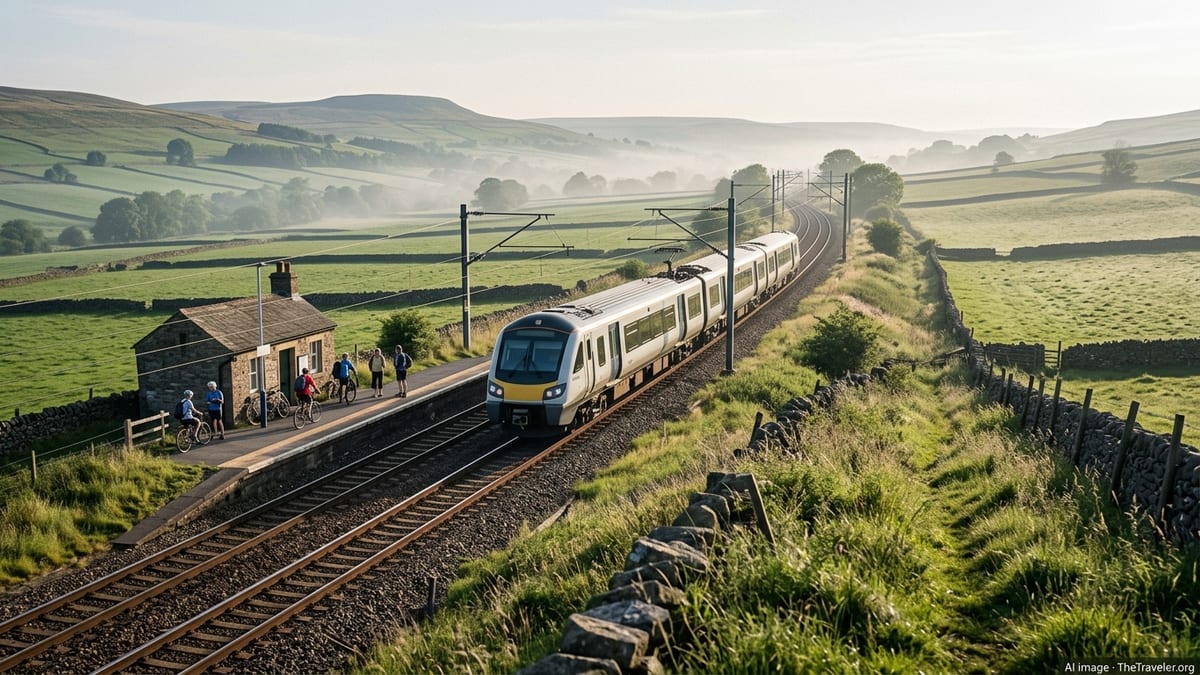
A long‑running campaign to reinstate the 12‑mile rail line between Skipton in North Yorkshire and Colne in Lancashire is being recast as a flagship sustainable tourism corridor, with advocates arguing that the project could transform the United Kingdom’s northern gateway into a model for low‑carbon, rail‑based travel.
Get the latest news straight to your inbox!
A Strategic Missing Link Across the Pennines
The former Skipton–Colne line, closed in 1970, has come to be viewed by transport planners and local campaigners as one of northern England’s most significant missing links. Publicly available information shows that the disused 11.5 to 12‑mile route would reconnect East Lancashire with Skipton’s junction on the Airedale Line, providing through rail access to Leeds, Bradford and the wider Transpennine network.
Recent material from the Skipton–East Lancashire Rail Action Partnership (SELRAP) describes the scheme as a regional connector that would tie together communities, employment areas and visitor destinations on both sides of the Pennines. The restored line is envisaged as a fast, electrification‑ready spine that could integrate with wider rail upgrades across the North, strengthening east–west links that have historically lagged behind north–south routes.
A technical business case developed with Department for Transport and Network Rail input is reported to show strong benefit‑cost ratios, with projections that reopening in the early 2030s could support passenger and freight operations while easing pressure on congested road corridors. Although funding is not yet committed, the project remains in long‑term planning pipelines as a candidate for future investment.
North’s Tourism Economy in Focus
Advocates increasingly frame the Skipton–Colne project as a tourism catalyst as much as a transport scheme. Published coverage from local authorities and regional media highlights its potential to serve the Yorkshire Dales, Pendle Hill, the Forest of Bowland and heritage market towns as part of a single, rail‑accessible “northern gateway” for visitors arriving from major cities.
Skipton, already branded as a gateway to the Dales, would gain a direct rail catchment extending deep into East Lancashire, while Colne and surrounding communities would gain through services toward Leeds and beyond. Reports indicate that this could encourage more weekend and short‑break travel by train, linking canal towpaths, walking routes and heritage attractions without reliance on private cars.
Tourism strategies in both Lancashire and North Yorkshire stress the need to disperse visitor numbers more evenly and extend stays outside traditional hotspots. A reopened rail corridor is seen as a way to channel visitors towards lesser‑known villages and landscapes, supporting small hospitality businesses and cultural venues that currently depend on car‑borne trade.
Low‑Carbon Transport and Sustainable Travel Goals
The Skipton–Colne link is being presented as a test case for how rail reopenings can support national climate and net‑zero targets. Government data consistently show that surface transport remains a major source of UK emissions, with medium‑distance car journeys a particularly difficult segment to decarbonise. A continuous rail route between East Lancashire and West Yorkshire would directly target this travel market.
Campaign documents and council transport reports emphasise the route’s potential to shift both commuting and leisure travel away from cars toward electrification‑ready rail. The alignment is largely intact, reducing construction impacts compared with building a new corridor. Proposals also reference opportunities for integrated cycle access, making stations into hubs for “rail plus bike” trips to nearby countryside.
Regional transport plans for the North underline a wider policy pivot toward sustainable mobility, from the Transpennine Route Upgrade to devolved city‑region transport strategies. Within that context, observers suggest that the Skipton–Colne line could function as a demonstrator for combining rail enhancement, active travel links and destination marketing into a single low‑carbon tourism package.
Political Momentum and Funding Challenges
Cross‑party political interest has kept the scheme on the national agenda despite shifting funding programmes. In late 2024 and 2025, members of Parliament representing constituencies along the proposed corridor met with SELRAP representatives in Westminster to restate support for the project and underline its strategic value for both passenger and freight movements.
At the same time, ministerial written answers and industry commentary point to a difficult funding climate. The Restoring Your Railway fund, which had provided seed money for several reopening projects, has been discontinued, and senior rail figures have publicly described the Skipton–Colne scheme as having a strong business case but no allocated capital at present. Cost estimates around the £400 million mark place it in competition with other major rail and road schemes.
Recent transport pipeline documents nevertheless list preparatory work associated with the line, including references to future tendering for design and enabling works. Observers interpret this as a sign that the project is being kept “shovel‑ready” so that it can advance quickly if a future spending review frees up investment for northern rail priorities.
Gateway Concept Extends Beyond the Rails
Even before any construction begins, local planning strategies are being shaped around the possibility of a reopened line. Lancashire and North Yorkshire policy papers refer to Colne–Skipton connectivity when discussing tourism zones, business parks and new housing, suggesting that land‑use decisions are already factoring in potential rail access.
Destination management organisations and councils have floated ideas for coordinated branding that would present the corridor as a single northern gateway, linking canal heritage in Skipton, cultural festivals in Colne and outdoor recreation across the Pennine hills. The aim, according to published tourism plans, is to make it as easy as possible for visitors to move between attractions by sustainable modes, with the railway acting as the backbone for local buses, walking and cycling routes.
For now, the Skipton–Colne rail link remains a proposal rather than a funded project. Yet the way it is being narrated has shifted noticeably, from a purely transport‑engineering case to a broader vision of how the North of England might welcome visitors in a low‑carbon future. As debates continue over national infrastructure spending, the scheme is likely to serve as a barometer of how far the United Kingdom is prepared to go in using rail to underpin a new era of sustainable tourism.