

More news on this day
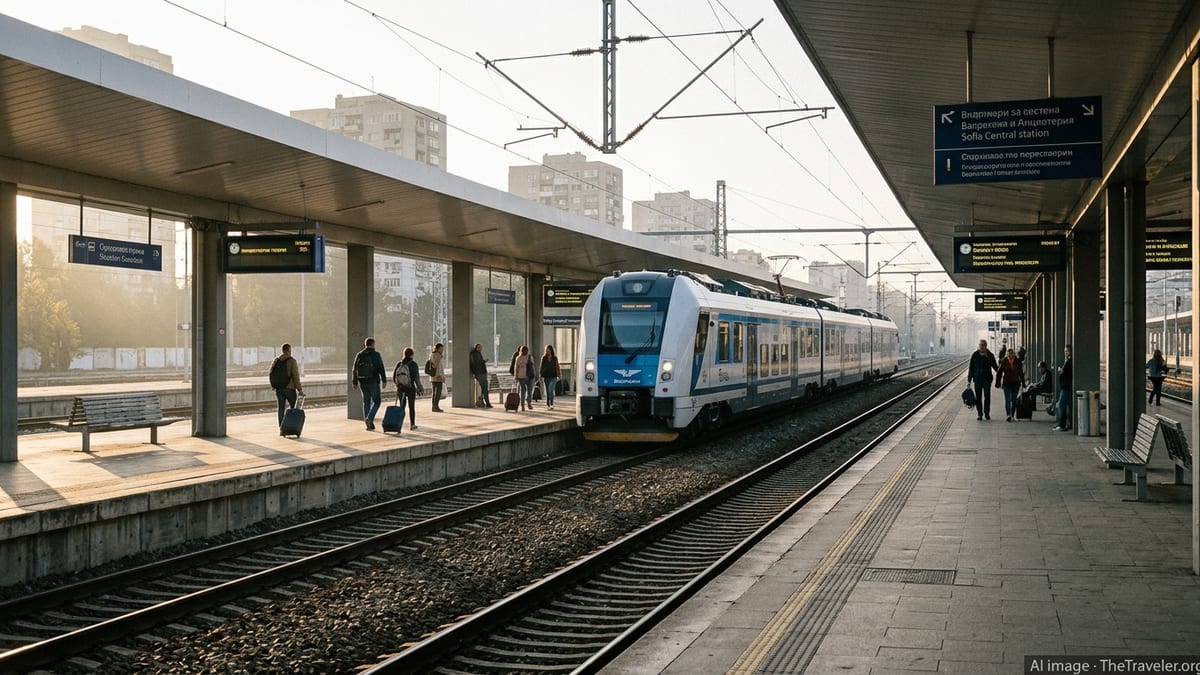
Bulgaria’s long-awaited rail modernization is taking a decisive step forward as Škoda Group readies its first fleet of new electric trains for the country, promising faster, greener and more comfortable journeys on some of its busiest intercity corridors.
Get the latest news straight to your inbox!
New Fleet Marks a Milestone in Bulgaria’s Rail Overhaul
Publicly available information shows that in September 2024 Bulgaria’s Ministry of Transport and Communications signed a major contract with Škoda Group for the supply of up to 25 new electric multiple units, along with long-term servicing. The deal is part of a broader push to upgrade rolling stock and attract more passengers back to rail after decades of underinvestment.
According to published coverage and company documentation, the new trains are based on Škoda’s proven RegioPanter platform, adapted for Bulgaria’s network and long-distance patterns. The four-car sets are intended for flagship routes linking Sofia with Black Sea hubs Burgas and Varna, as well as the important Danube corridor to Ruse, where today’s services are typically hauled by older locomotives and coaches.
Industry reports indicate that production has advanced quickly. Škoda materials describe the first complete Bulgarian train already assembled, with a further batch of units in an advanced stage of completion and scheduled to follow over the coming months. This timeline keeps the project aligned with Bulgaria’s wider national recovery and resilience plan, which ties rail improvements to European Union funding and decarbonization targets.
For Bulgarian passengers, the arrival of these units is expected to be one of the most visible signs yet that the country’s rail network is entering a new era, with a contemporary fleet that matches the scenic potential of cross-country journeys.
Faster, More Comfortable Journeys on Key Intercity Routes
The RegioPanter-derived electric units ordered for Bulgaria are designed for higher speeds and quicker acceleration than the locomotive-hauled formations they will replace. Publicly available technical descriptions highlight maximum speeds of up to 160 to 200 kilometers per hour, depending on configuration, alongside modern traction systems that allow rapid starts and smooth braking on routes with frequent stops.
The trains are configured as low-floor, barrier-free units, which represents a significant step forward for accessibility. Passengers are expected to benefit from level boarding at compatible platforms, wider doors, and interiors laid out to accommodate travelers with reduced mobility, bicycles and bulky luggage. This is particularly important on long-distance lines to coastal destinations, which see heavy holiday and seasonal traffic.
On board, the design prioritizes amenities that have increasingly become standard elsewhere in Europe but remain uneven across Bulgaria’s existing fleet. Reports on the project describe air conditioning throughout, power outlets and USB ports at seats, real-time passenger information systems, and bright, open interiors with modern seating. Quiet, vibration-reduced running is also a focus, supported by the latest bogie and suspension technology.
These features position the new trains as a flagship product intended to change perceptions of rail travel in Bulgaria from a slow, utilitarian option into a competitive, comfortable alternative to highway travel and short-haul domestic flights.
Greener Technology Aligned With European Climate Goals
Bulgaria’s investment in new electric rolling stock is closely tied to climate and energy-efficiency objectives set at both national and European level. According to public ESG reporting from Škoda Group, the company has concentrated recent development spending on low and zero-emission traction technologies, advanced train control systems and energy-saving onboard equipment.
The new electric units for Bulgaria are expected to deliver lower energy use per seat-kilometer compared with older locomotive-hauled trains, in part thanks to regenerative braking systems that return power to the grid and lightweight construction that reduces overall mass. The move to fully electric intercity operation on more corridors also supports the gradual phase-out of diesel traction on key passenger routes.
By pairing this fleet renewal with ongoing projects to modernize tracks, signaling and power supply, Bulgaria aims to shift more medium-distance travel onto rail. European transport policy frameworks identify such shifts as one of the most effective ways to cut transport-related carbon emissions, especially where modern electrified rail can compete directly with private cars on travel time and comfort.
The project also fits into Škoda Group’s broader expansion in Central and Eastern Europe, where demand is rising for rolling stock that can meet increasingly strict environmental standards while remaining cost-effective for national rail operators.
Competitive Procurement Underscores Bulgaria’s Modernization Drive
The Škoda contract forms part of a wider series of procurements aimed at renewing Bulgaria’s passenger fleet. Public tender information indicates that the Ministry of Transport and Communications has recently commissioned new trains from multiple European manufacturers, reflecting a competitive process shaped by the country’s national recovery plan and by European funding conditions.
Earlier decisions saw Bulgaria turn to Stadler for dozens of single-deck electric trains, while the September 2024 award to Škoda Group focused specifically on long-distance services. Reports indicate that other major suppliers, including PESA and Alstom, also took part in bidding rounds, underscoring how strategic the Bulgarian market has become for the rail industry.
For Bulgaria, diversifying suppliers while standardizing around modern electric multiple units is intended to reduce maintenance costs and improve reliability over time. Long-term servicing elements embedded in the Škoda agreement are designed to ensure stable availability of spare parts, technical support and digital diagnostics over a 15-year horizon.
Observers of the region’s rail sector view these moves as part of a late but accelerating catch-up, bringing Bulgaria closer to the rolling-stock standards already visible in neighboring EU member states and supporting cross-border interoperability on key TEN-T corridors.
What Travelers Can Expect as the Trains Enter Service
Once the first Škoda electric trains enter regular operation, travelers in Bulgaria are likely to notice changes not only in comfort but also in timetable performance. Faster acceleration and higher top speeds create potential for shorter journey times between Sofia and the Black Sea, as well as more reliable connections to regional hubs along the way, provided infrastructure upgrades keep pace.
Digital passenger information systems inside the trains are expected to offer clearer updates on next stops, connections and delays, aligning the on-board experience more closely with what travelers encounter in Western and Central Europe. The improved accessibility features could also open up rail travel for passengers who previously found older rolling stock difficult to use, particularly on long-distance trips.
From a tourism perspective, the new fleet is well timed. Bulgaria has been promoting its coastal resorts, mountain regions and historic cities to international visitors seeking lower-cost European destinations. Modern, comfortable trains running on scenic routes between Sofia, the Black Sea and the Danube could become part of the country’s appeal, especially for travelers who prefer to avoid domestic flights or long highway drives.
As additional units roll out and more routes are assigned to the new stock, Bulgaria’s rail system is expected to look and feel markedly different from the one many passengers remember. For a country whose landscapes have long been a highlight of cross-border rail journeys, the arrival of Škoda’s electric fleet signals that the travel experience inside the train is finally catching up with the views beyond the window.