

More news on this day
In northern Italy’s Bergamo, a new generation of low-floor trams from Skoda Group is moving from factory floors to the foothills of the Alps, promising to redefine how residents and visitors move across the city and its surrounding valley communities.
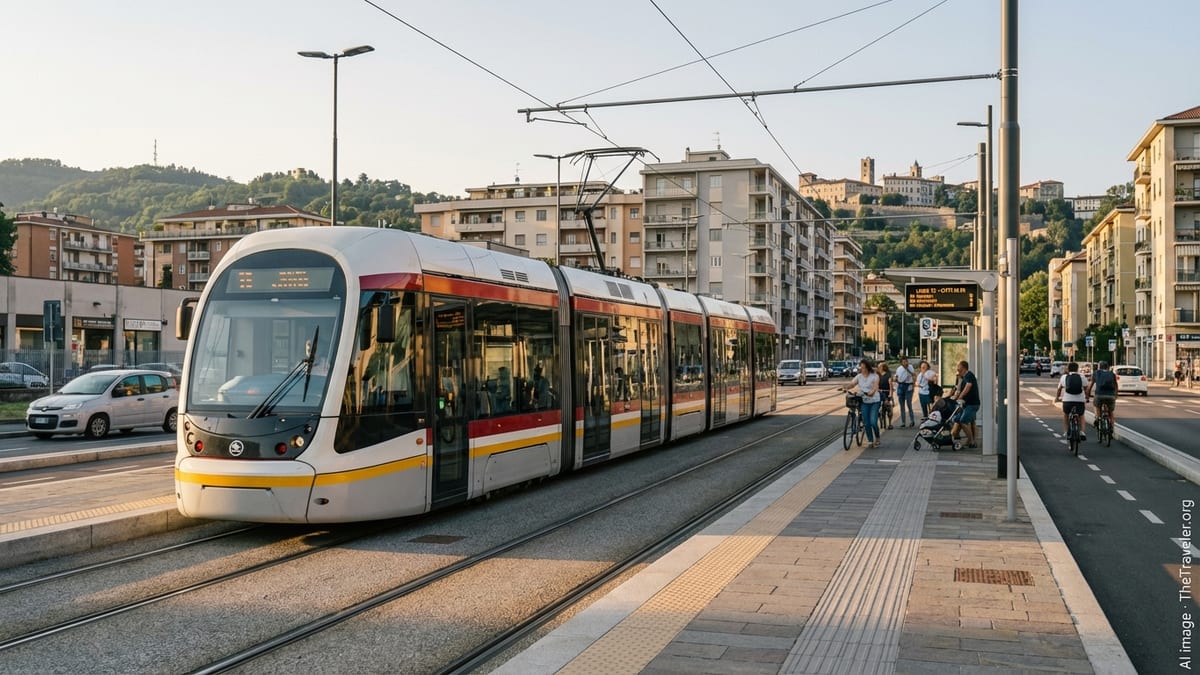
A Strategic Leap for Bergamo’s Public Transport Network
The arrival of Skoda’s new low-floor trams is part of a broader mobility overhaul centered on the T2 Bergamo–Villa d’Almè tramway, one of Italy’s most closely watched light rail projects. Developed by local operator Tramvie Elettriche Bergamasche, the new line is scheduled to open in September 2026, directly linking Bergamo’s railway hub with fast-growing suburban towns along a former railway corridor.
The T2 route will stretch roughly 11.5 kilometers and include 17 stations, nine of them within Bergamo and the rest serving neighboring municipalities such as Ponteranica, Sorisole, Almè and Villa d’Almè. Designed as a high-capacity, high-frequency spine, the line is expected to cut travel times between the city and valley communities to around 30 minutes, while offering a more reliable alternative to car and bus travel through congested corridors.
For city officials and regional planners, the investment represents much more than a new tramway. It is a test case for how mid-sized Italian cities can reclaim former railway alignments for modern, low-emission transport, while integrating tram, regional rail, buses and cycling infrastructure into a single, coherent network.
The project’s total investment is estimated at more than 200 million euros, financed by a combination of national, regional and municipal funds. This financial backing underscores how central the T2 corridor and its new rolling stock have become to Lombardy’s wider strategy for decarbonising transport and easing pressure on road networks.
Skoda’s ForCity Classic: A New Generation of Low-Floor Trams
At the heart of the transformation is a fleet of 10 ForCity Classic trams from Skoda Group, purpose-designed for Bergamo’s topography, streetscape and passenger needs. Skoda finalised the contract in mid-2023 and has since moved into full series production at its facilities in the Czech Republic, with the first units now in advanced stages of assembly.
Each tram will be approximately 32 meters long and composed of five articulated sections carried on three bogies, two of which are powered. Crucially for Bergamo’s mixed urban and suburban operations, the trams are 100 percent low-floor, eliminating internal steps and creating a continuous level surface from end to end. This configuration improves passenger flows at busy stops and makes boarding significantly easier for people with strollers, luggage or mobility aids.
Technically, the trams are designed for a maximum operating speed of around 70 kilometers per hour, giving the T2 line the performance needed to compete with private cars on longer cross-city journeys. Inside, the vehicles are fully air-conditioned and equipped with a modern passenger information system, reflecting standards already seen in other European networks that Skoda serves in Germany, the Czech Republic and beyond.
The trams are being tailored not only to the physical constraints of Bergamo’s tracks and platforms but also to the city’s visual identity. Design work has focused on creating a vehicle that feels contemporary while fitting comfortably into historic streets and the alpine foothill landscape, a balance that Italian cities increasingly demand from new transport infrastructure.
Accessibility and Safety at the Core of the Design
One of the most striking aspects of the Bergamo order is the emphasis on accessibility. The fully low-floor layout is complemented by wide, multi-leaf doors positioned close to dedicated spaces for passengers with reduced mobility. At these doorways, Skoda is equipping the trams with automatic retractable ramps that bridge the gap between vehicle and platform, allowing wheelchair users, elderly passengers and travelers with prams to board with minimal assistance.
This hardware is paired with interior layouts that provide generous standing areas, handrails at multiple heights and clear visual cues to priority seating. Combined, these elements are intended to deliver a step-change in inclusivity compared with traditional high-floor or partially low-floor tram designs still in service across much of Europe.
Safety has received similar scrutiny. The Bergamo trams will be the first in Skoda’s production portfolio to feature an advanced anti-collision system, using sensors and onboard processing to detect obstacles ahead and support the driver in preventing accidents. The technology is designed to reduce the risk of collisions with vehicles, pedestrians and cyclists, especially at busy intersections and in mixed-traffic sections.
Remote diagnostics and continuous monitoring systems add another safety layer. The trams will stream technical data back to a central control center, allowing operators to identify emerging issues before they lead to service disruptions. This predictive maintenance approach, still relatively new in smaller European networks, is expected to improve reliability and extend component lifecycles.
T2 Line: A Backbone for Sustainable Urban Mobility
The Bergamo–Villa d’Almè route is being conceived as more than a simple rail link. Alongside the tracks, planners are constructing a 10 kilometer cycling path that will connect seamlessly with existing bike networks, creating a continuous sustainable mobility corridor from San Fermo through to the valley terminus. Park-and-ride facilities with more than 500 parking spaces are also planned near key stations, giving commuters the option to leave their cars on the periphery and switch to tram for the last leg of their journey.
Within Bergamo itself, the T2 line will interface with the city’s existing T1 tramway, which opened in 2009 along a separate former railway alignment. The two lines will share infrastructure over a short section between Bronzetti and the main railway station, transforming the area into a multimodal hub with connections to regional trains, buses and, via shuttle, to Orio al Serio Airport.
Centralising operations is another pillar of the project. The existing Ranica control center, currently managing the T1 line, will be upgraded to oversee both tramways, allowing for integrated dispatch, energy optimisation and coordinated service planning. A new depot near the Petosino stop will house, wash and maintain the Skoda trams, providing a purpose-built base for the expanded fleet.
City leaders see the T2 as a way to shift thousands of daily trips from private vehicles to high-capacity electric rail. By offering more predictable journey times, quieter vehicles and higher comfort levels, the line is expected to attract both daily commuters and visitors exploring the Bergamo valleys, reducing congestion and emissions along some of the region’s most heavily used corridors.
Smart Traffic Management to Prioritise Trams
To maximise the benefits of the new rolling stock, Bergamo is pairing the T2 investment with a citywide upgrade of traffic management systems. A centralised smart traffic light control project is now being rolled out along the future tram corridor, using an advanced digital platform to coordinate intersections and give priority to approaching trams.
The system will see the installation of dozens of new-generation traffic light controllers and hundreds of LED signal heads for vehicles, pedestrians and trams. Sensors and communication equipment will allow the control platform to monitor traffic conditions in real time, detect faults and adjust signal timings dynamically to keep trams moving smoothly through busy junctions.
Accessibility is a feature here as well. Crossings along the route are being equipped with audible and tactile devices for visually impaired pedestrians, along with redesigned ramps and surfaces that improve safety for all users. A dedicated IT backbone, complete with secured servers and diagnostic tools, will support continuous operation and remote maintenance of the traffic management network.
By tightly integrating tram operations with adaptive traffic control, Bergamo aims to deliver a level of reliability more often associated with fully segregated metro systems, even where trams run at street level and interact with other road users. This integration is viewed as essential for convincing residents to leave their cars at home.
Skoda’s Expanding Footprint in Italy and Europe
For Skoda Group, the Bergamo contract marks a significant milestone in its strategy to strengthen its position in Western Europe, and in Italy in particular. The company previously supplied a small fleet of trams to Cagliari on Sardinia, but Bergamo represents its largest Italian light rail project to date and a reference that could open doors in other cities considering tramway expansions.
In recent years, Skoda has invested in local market knowledge by opening an office in Florence and tailoring its ForCity platforms to the specific demands of different European networks, from the long multi-section trams ordered for Germany’s Rhine-Neckar region to ongoing fleet modernisation in Prague. The Bergamo ForCity Classics benefit from this broader experience, combining proven components with new safety and accessibility features introduced for the Italian market.
The contract includes not only vehicle delivery but also three years of full-service maintenance, tying Skoda’s performance directly to the reliability of Bergamo’s new line during its crucial early years. This arrangement aligns with a growing European trend in which manufacturers assume greater responsibility for life-cycle costs and uptime, rather than simply handing over trains and stepping back.
Industry observers note that success in Bergamo will be closely watched by other medium-sized Italian cities examining options for tramway revival or expansion, particularly as national and European funding streams continue to reward projects that reduce emissions and promote multimodal integration.
What Passengers and Visitors Can Expect
When the T2 line begins service, daily users and tourists can expect a markedly different experience from existing bus routes in the area. Level boarding at all doors will shorten dwell times at stops and make it easier to board with luggage, an important consideration for passengers connecting to regional trains or heading toward the airport. Spacious interiors, clear signage and real-time information screens should make navigation simpler for those unfamiliar with the city.
The line’s alignment along a former railway corridor means many sections will benefit from smoother, faster running than trams constrained to narrow, congested streets. At the same time, carefully designed stops in town centers aim to keep walking distances short and preserve access to local shops, schools and services, supporting the economic life of the communities along the route.
For visitors, the T2 promises a convenient way to explore beyond Bergamo’s historic core and into the surrounding valley landscapes without relying on a car. By linking tram, cycling infrastructure and park-and-ride facilities, the project reflects a shift in how Italian destinations are rethinking visitor mobility, reducing pressure on narrow historic streets while still enabling access to key sights and natural areas.
As the first complete Skoda tram fleet to enter service in an Italian mainland city, the Bergamo vehicles will also serve as a visible showcase of the manufacturer’s latest technology. From their distinctive exterior styling to quiet operation and refined interiors, they are intended to signal a new era in the city’s public transport story.
A Testbed for Italy’s Next Urban Mobility Chapter
While civil works and systems installation will continue into 2026, the outlines of Bergamo’s future transport network are already taking shape. Rails are being laid, stations are being fitted out, and Skoda’s low-floor trams are progressing through production and testing, moving steadily closer to their first passenger journeys.
The combination of modern rolling stock, integrated bike paths, park-and-ride facilities and smart traffic control means the T2 project is being watched well beyond Lombardy. Transport planners from other Italian regions, as well as international observers, see Bergamo as a testbed for how smaller metropolitan areas can deliver high-quality, rail-based mobility without the scale or cost of a full metro system.
If the project meets its ambitious goals on reliability, ridership and emissions reduction, it could accelerate similar investments across the country, from valley towns in the Alps to coastal cities in the south. For Skoda Group, a successful launch would further cement its role as a key supplier in this next chapter of Italian public transport, potentially leading to follow-on orders and partnerships.
For Bergamo’s residents, however, the measure of success will be simpler: trams that arrive on time, are easy to board, comfortable to ride and seamlessly integrated into their daily routines. As the new low-floor vehicles prepare to roll out, the city is betting that this blend of technology, design and planning will fundamentally change how people move through its streets for years to come.