

More news on this day
Skukuza Airport, the tiny bush terminal inside South Africa’s Kruger National Park, has been named the most beautiful airport in the world by Forbes, reinforcing the park’s growing reputation as a high-end safari gateway rather than a purely rugged wilderness escape.
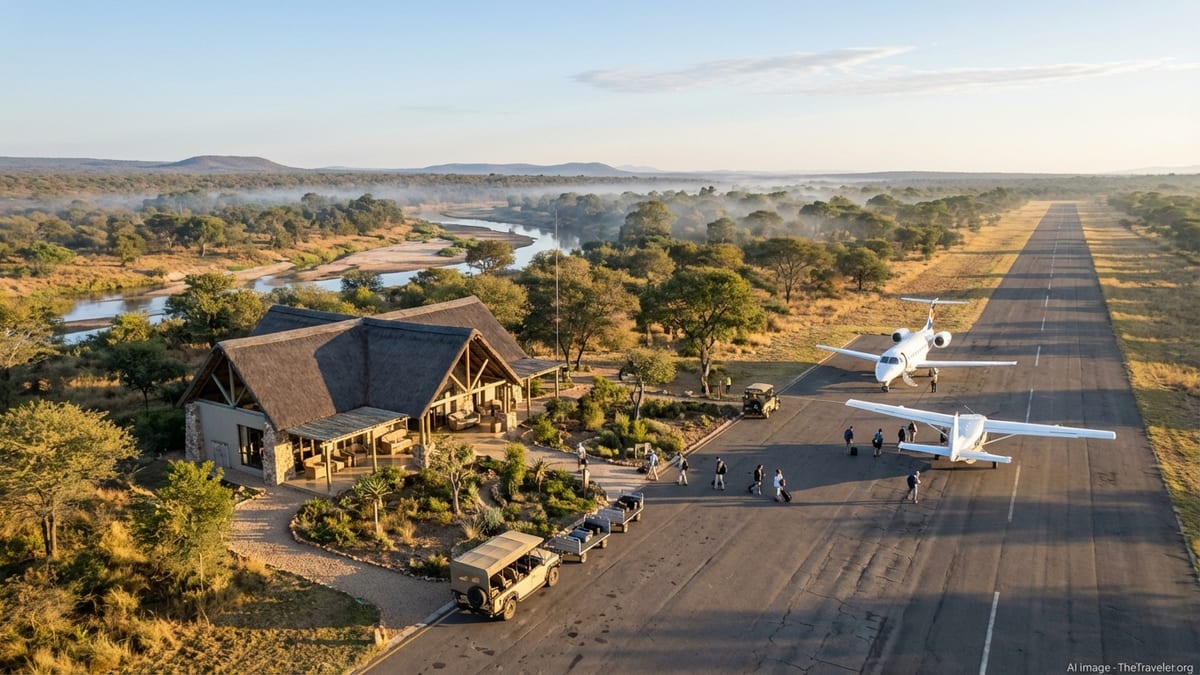
A Boutique Bush Airport Crowned World’s Most Beautiful
The latest recognition, highlighted this week by South African travel and lifestyle outlets, marks the second time Forbes has spotlighted Skukuza as the world’s most beautiful airport, following an earlier accolade eight years ago. The renewed attention puts the Mpumalanga airfield back on the global map at a time when affluent travelers are seeking more intimate, design-led access points to nature.
Unlike traditional international hubs, Skukuza handles a modest flow of passengers, with capacity for about 400 travelers a day spread across roughly 20 incoming and outgoing flights. Scheduled services are currently dominated by South African regional carrier Airlink, which operates direct connections from Johannesburg and Cape Town, while charter operators continue to use the airstrip for bespoke safari itineraries.
The airport sits just minutes from Skukuza main camp, administrative heart of Kruger National Park, and near the acclaimed private reserves of the adjoining Sabi Sand conservancy. This positioning has turned what was once a functional bush runway, first opened in the late 1950s and revived for scheduled traffic a little over a decade ago, into a coveted first touchpoint for high-spend safari visitors.
Design That Blends Luxury With the Lowveld Landscape
Forbes originally praised Skukuza for abandoning the anonymous, industrial aesthetic of many global terminals in favor of a warm, lodge-inspired atmosphere. The terminal’s thatched roof, timber beams and open-sided spaces are designed to echo the surrounding bushveld, with textures, colors and forms drawn directly from the Lowveld landscape.
Branding and interior design work by Johannesburg-based agency Grey Africa focused on neutral tones, organic shapes and a sense of continuity between the building and its setting. Designers have described their brief as making the airport feel as though it had grown out of the veld, rather than being imposed upon it, an approach that resonates with travelers arriving for conservation-conscious stays.
Inside, finishes such as polished wood, stone floors and tactile fabrics soften the usual airport experience. A life-sized rhino sculpture anchors the arrivals space, underscoring both the safari narrative and the region’s focus on wildlife protection. Expansive windows and outdoor views further diminish the sense of being in transit, making the terminal feel more like a small luxury lodge than an aviation facility.
With modest traffic and no overnight aircraft parking, operations remain on a human scale. Travelers typically disembark directly onto the tarmac, with the sounds of cicadas and bird calls audible over the hum of turboprops, adding to the impression of stepping immediately into the wilderness.
Fast-Tracking Travelers Into High-End Safari Experiences
The elevated profile of Skukuza Airport is closely tied to the evolution of Kruger National Park and its surrounding private reserves as a luxury safari destination. Direct flights from Johannesburg and Cape Town allow visitors to bypass the two-hour road transfer from larger regional hubs such as Mbombela, landing instead within minutes of riverside camps and exclusive lodges.
Nearby properties, including high-end offerings such as Kruger Shalati and lodges in the Sabi Sand reserve, promote seamless connections between runway and riverbank. Complimentary transfers from Skukuza Airport are increasingly packaged into safari stays, meaning guests can be sipping a welcome drink on a deck overlooking the Sabie River within an hour of landing.
This convenience has become a significant lure for time-pressed international travelers who are prepared to pay a premium for efficient access and a sense of immersion from the moment they touch down. Tour operators report that the ability to connect directly to Kruger’s interior supports shorter but more intensive itineraries, often combining a few nights in the park with Cape Town or the Winelands.
At the same time, the airport’s design cues help set expectations for the style of experience that awaits. The spa-like calm, curated decor and intimate scale serve as a soft introduction to the high levels of comfort offered by many of the region’s camps, which blend fine dining and private plunge pools with twice-daily game drives.
Boost for Regional Tourism and Conservation Narratives
Local tourism stakeholders say the global spotlight on Skukuza arrives at a critical moment for South African safari tourism, which has been working to rebuild long-haul markets after the shocks of the pandemic years. A widely shared accolade from a major international media brand is expected to support renewed marketing of Kruger as both a bucket-list wildlife destination and a sophisticated, design-forward escape.
Airlines and lodge operators are likely to leverage the “world’s most beautiful airport” label in campaigns targeting key source markets in Europe and North America, where travelers increasingly seek experiences that combine aesthetic appeal with environmental credibility. Kruger’s long conservation history and expansive protected landscapes give the airport’s recognition a deeper narrative weight than a purely urban design award.
The public-private partnership that manages Skukuza Airport, involving South African National Parks and private-sector partners, has previously framed the terminal’s relaunch as a way to enhance access for higher-yield visitors while keeping environmental impacts contained. Concentrating arrivals through a small, centrally located gateway can help reduce vehicle traffic on park roads, while also supporting investment in conservation and community initiatives dependent on tourism revenue.
For Mpumalanga province and nearby communities, increased visibility is expected to translate into higher occupancy at lodges, more demand for guided safaris and cultural excursions, and greater spend on local crafts and services. Industry analysts note that such accolades can have a halo effect across the wider region, encouraging travelers to extend trips to other parks and scenic routes in South Africa.
Shaping Expectations for the Future of Safari Travel
As Skukuza Airport’s latest recognition circulates globally, travel experts suggest it reflects broader trends in how modern travelers want to encounter wild places. Rather than purely rustic gateways, there is growing demand for access points that are comfortable yet contextually sensitive, with architecture and service that amplify rather than overshadow the surrounding environment.
By pairing a refined, resort-like terminal with immediate proximity to big-five game viewing, Skukuza may offer a template for future small-scale safari airports across the continent. The challenge, specialists caution, will be to retain the airport’s intimate feel as demand grows, ensuring that visitor numbers and infrastructure remain aligned with Kruger’s ecological limits.
For now, the accolade signals that the world is paying fresh attention to how travelers first arrive in Africa’s wild spaces. At Skukuza, the journey from runway to riverbank is increasingly part of the story, turning a once-ordinary transfer into a defining chapter of the luxury safari experience.