

More news on this day
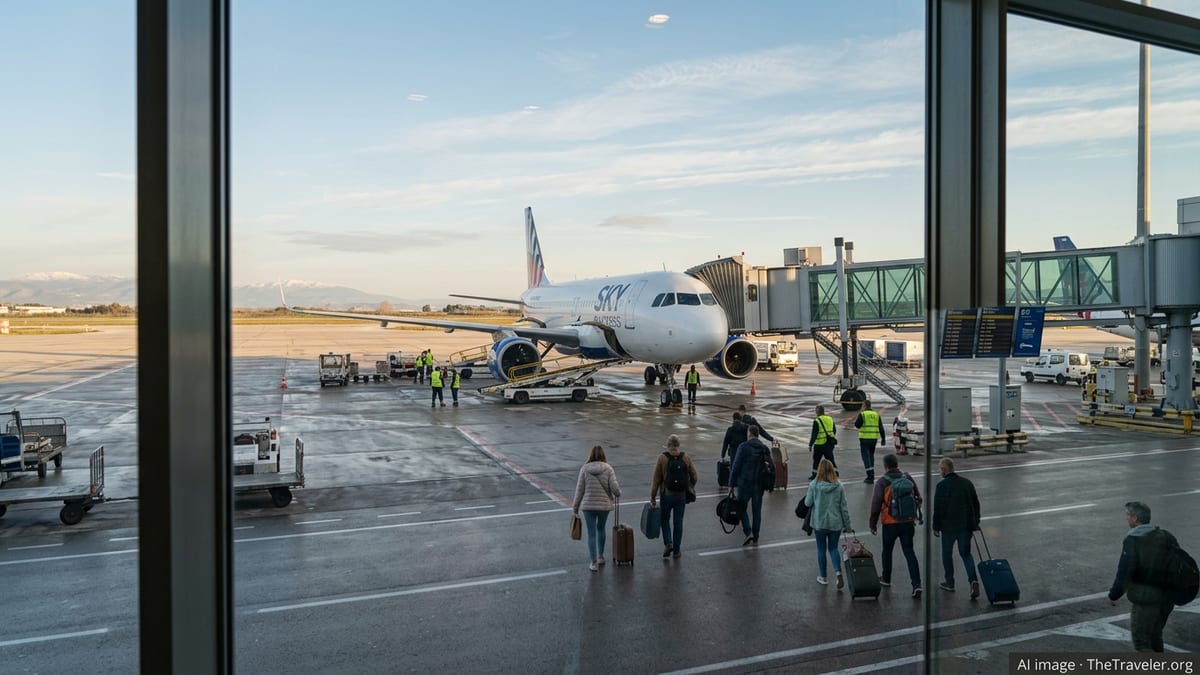
Greek airline SKY Express has moved to lock in Easter airfares across a network of routes linking Greece with Germany, Italy, and France, introducing a time-limited price-freeze initiative that aims to shield families, tourists, and budget-conscious travelers from surging ticket prices in one of Europe’s busiest holiday periods.
Get the latest news straight to your inbox!
Price-Freezing Strategy Targets Peak Easter Demand
The Easter travel window, which in 2026 spans late March and early April for much of Europe, is traditionally one of the most expensive times to fly, with leisure demand, school holidays, and constrained capacity pushing prices sharply higher. Industry travel advisories for the current season highlight Easter as a period when fares can jump significantly above average, particularly on intra-European routes serving major city pairs in Germany, Italy, France, and Greece.
Against this backdrop, SKY Express is promoting an Easter-focused price-freeze on selected routes, effectively capping advertised fares for bookings made within a defined sales period. Publicly available fare displays on the carrier’s booking channels show stable, pre-announced price levels on key origin markets such as Germany and Italy to Greek destinations, even as independent fare trackers report upward pressure on comparable routes operated by competitors.
While the airline has not framed the initiative as a long-term structural change to its revenue model, it is positioning the price-freeze as a tactical response to seasonal volatility. The move reflects a broader trend in European aviation where regional and hybrid carriers experiment with targeted fare protections to stimulate demand among travelers who might otherwise be priced out of peak holiday travel.
Market data from recent years indicates that travelers who delay Easter bookings often face steep last-minute price escalations. By communicating fixed fare bands early in the booking cycle, SKY Express is aiming to convert price-sensitive shoppers into confirmed passengers weeks ahead of departure, while also signaling that there will be a ceiling on what families and small groups will pay for essential holiday flights.
Greece Joins Core EU Markets in Network Push
SKY Express has spent the past several seasons broadening its footprint beyond domestic island links and key Greek trunk routes to include direct services from cities in Germany and Italy, as well as growing connectivity with France. Current schedules and booking engines list itineraries from airports such as Berlin and other German gateways into Athens and popular island entry points, underlining the airline’s ambition to compete for inbound tourism as well as outbound Greek traffic.
The price-freezing initiative explicitly ties these European origin markets together, presenting Greece, Germany, Italy, and France as a connected Easter travel corridor. For German and Italian travelers, the focus is on accessible flights to Greek leisure destinations, while French and Greek travelers benefit from more predictable pricing on city-pair services that feed both tourism and visiting-friends-and-relatives traffic.
Industry reports note that competition on these corridors is intense, with legacy carriers, low-cost operators, and regional airlines all vying for share. SKY Express’s decision to rely on a price-freeze rather than a simple headline discount differentiates the promotion in a crowded marketplace, particularly for travelers comparing multiple carriers and itineraries on meta-search platforms.
The airline’s network strategy also aligns with wider tourism patterns. Recent European travel barometers show Greece, Italy, France, and Germany consistently among the continent’s most sought-after destinations for spring and early summer holidays. By linking these markets through a clearly framed Easter offer, SKY Express is tapping into established demand flows while pitching itself as a budget-conscious alternative to larger competitors.
Families and Budget Travelers at the Center of the Offer
Publicly available marketing materials for the Easter promotion place families and small leisure groups at the center of the campaign, emphasizing predictability, early booking, and total-trip budgeting. With school holidays clustered around Easter in many European countries, multi-person itineraries can become disproportionately expensive when per-seat fares surge in the final weeks before departure.
Travel behavior research in Europe suggests that family travelers are particularly responsive to simple, transparent pricing signals and are more likely than solo travelers to lock in trips earlier if they believe current fares will not drop substantially. A price-freeze mechanism responds to this dynamic by assuring bookers that the advertised level is not a teaser that will be withdrawn as departure nears.
Budget travelers, including younger tourists and flexible remote workers, are also a key audience. For these groups, small differences in base fares and ancillary costs can determine whether a trip is feasible at all. With broader reports indicating that aviation taxes and operational costs are contributing to upward pressure on airfares across France, Germany, and Italy, targeted promotions from smaller carriers can materially influence route choices for cost-conscious passengers.
At the same time, travel analysts caution that even under price-freeze initiatives, total trip costs will still depend on factors such as baggage fees, seat selection charges, and airport transfers. SKY Express is presenting the Easter offer primarily as a stabilizer of headline fares on selected flights, and travelers are being encouraged by consumer advocates to review full fare conditions before purchase.
Context: Rising Airfare Pressures Across Europe
The SKY Express move comes amid a broader seasonal backdrop of rising airfares on many European routes. Various industry publications and travel news outlets have highlighted a combination of factors influencing prices, including higher fuel costs in previous years, increased airport charges, and, in some markets, additional environmental or aviation-related taxes that affect both budget and full-service carriers.
In countries such as France, Germany, and Italy, airlines have publicly referenced tax and fee structures as constraints on their ability to keep ticket prices at pre-pandemic levels, particularly on short-haul intra-European routes. Some large low-cost operators have already announced capacity adjustments or network changes in response to these cost pressures, which can further tighten supply on popular routes and contribute to higher average fares during peak periods.
Against this environment, fare promotions that directly address seasonality stand out. While some carriers focus on off-peak sales or limited flash discounts, an Easter-specific price-freeze on a set of cross-border routes offers a different proposition: insulating a defined travel window from the most severe price escalations, rather than simply discounting shoulder-season flights.
Travel industry commentators note that initiatives of this kind can also serve a reputational function. By highlighting a consumer-focused measure in a period characterized by widespread fare complaints, SKY Express is positioning itself as attentive to budgetary concerns, especially for travelers who might traditionally rely on larger low-cost brands for value.
What Travelers Should Know Before Booking
For travelers considering the Easter promotion, the most important element is timing. Price-freeze initiatives typically operate within a specified booking window, with fares guaranteed only for tickets purchased before a cut-off date. Once that window closes, the underlying flights may revert to standard yield-managed pricing, which could be higher if demand has been strong.
Prospective passengers are also being advised by consumer travel platforms to compare total journey times, connection patterns, and airline policies alongside the headline fare. SKY Express combines point-to-point flights with itineraries that require self-connection or interline arrangements via hubs such as Athens, which may affect minimum connection times and disruption risk during a busy holiday period.
Another factor is flexibility. Price-freeze offers often apply to specific fare classes that may carry more restrictive change and cancellation conditions than fully flexible tickets. Travelers prioritizing maximum flexibility may find that slightly higher fares on other products still better match their needs, particularly if travel plans are not yet firm.
Finally, observers caution that capacity during Easter remains finite across the European network, regardless of pricing strategies. Travelers who intend to take advantage of price-frozen fares on SKY Express between Greece and major markets in Germany, Italy, and France are being encouraged by published guidance to book early, confirm documentation requirements, and monitor any schedule updates as the holiday period approaches.