

More news on this day
Regional airline Skytrans has launched a new Sydney–Cobar service, adding fresh capacity on one of western New South Wales’ most critical regional air corridors and strengthening access for residents, workers and visitors to the remote mining town.
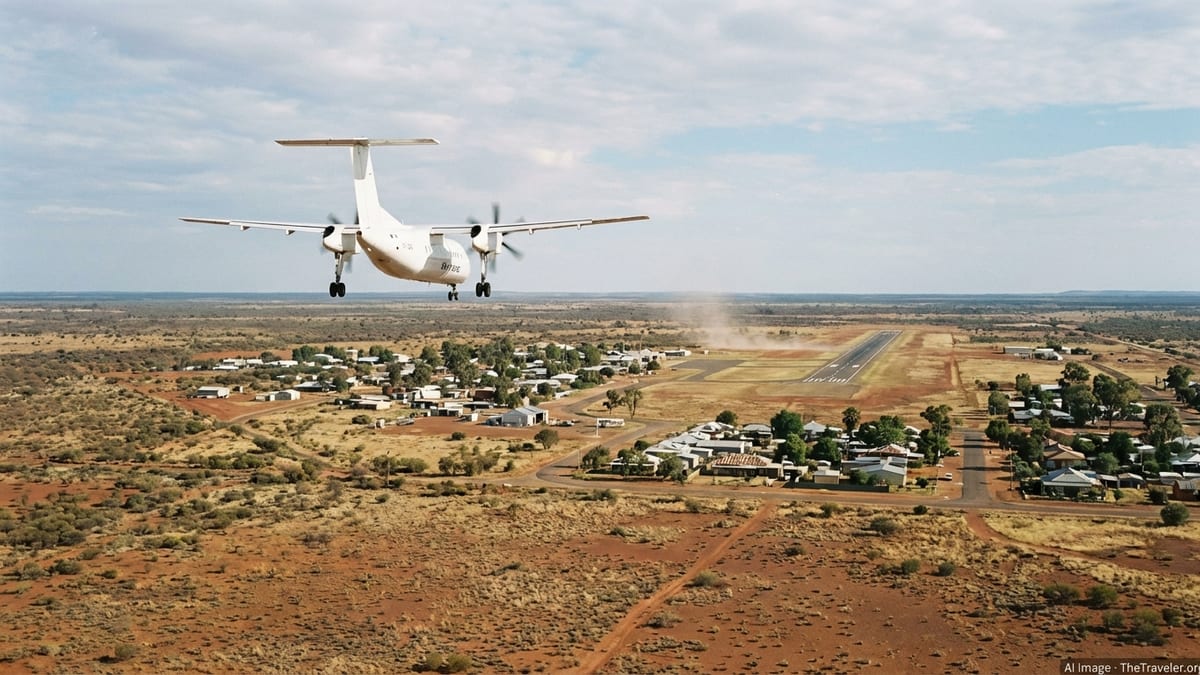
New Route Extends Skytrans’ Regional Footprint
Skytrans, part of global aviation services group Avia Solutions Group, has begun operating charter services between Sydney and Cobar, further embedding itself in Australia’s regional aviation landscape. Weekly flights on the new route commenced on 19 January 2026, with the initial phase scheduled to run through to mid May 2026, according to the airline.
The service is operated by 36 seat Dash 8 200 turboprop aircraft based in Sydney. These aircraft are the same type Skytrans uses on its growing portfolio of regional operations, including its recently launched flights linking Sydney with Lord Howe Island under a long term licence arrangement.
The new Cobar flights are currently offered as charter services, but Skytrans is positioning the route as part of a broader national expansion strategy. The carrier, which has traditionally focused on Queensland and specialist charter work, is increasingly using its turboprop fleet to target underserved regional markets around Australia.
Skytrans says the move reflects its commitment to long term, sustainable growth in regional aviation, with an emphasis on reliable and affordable services into communities that depend heavily on air links for business, health care access and social connection.
Stronger Connectivity for a Remote Mining Hub
Cobar, known as the Copper City for its rich mining history and ongoing resources operations, sits more than 700 kilometres northwest of Sydney by road. For residents, fly in fly out mine workers and visiting specialists, air services can mean the difference between a same day round trip and a full day or more spent driving.
The Skytrans flights add additional capacity on a corridor already recognised by the New South Wales Government as vital to the economic and social health of the far west. State authorities have in recent years subsidised commercial air services linking Sydney with Cobar to ensure continuity of operations for remote communities that rely on regular connections for essential workers and services.
Local leaders have repeatedly highlighted the importance of dependable air links in reducing the effects of distance and isolation on small communities. Extra seats and additional operators on routes such as Sydney–Cobar are expected to give travellers more choice and potentially more flexibility in scheduling, particularly for those whose trips are tied to shift patterns, medical appointments or time sensitive business commitments.
The new Skytrans operation also aligns with a broader trend toward using regional turboprops to bridge long overland distances where jet services are not commercially viable, but demand for fast and reliable travel remains strong.
Turboprop Fleet Growth Underpins Expansion
The Sydney–Cobar launch is the latest step in Skytrans’ ongoing fleet and network expansion. Over the past year the airline has added Dash 8 200 aircraft to its existing Dash 8 100 and Dash 8 300 operations, while also moving into jet powered ACMI work with Airbus A319s to meet rising passenger demand in other parts of the country.
These smaller turboprops are particularly suited to regional runways and thin routes, where operating economics and performance matter as much as passenger comfort. The aircraft type enables Skytrans to open or support routes like Sydney–Cobar and Sydney–Lord Howe Island, where runway constraints and fluctuating demand limit the appeal of larger jets.
Industry observers say Skytrans’ strategy of combining charter, contracted and scheduled flying gives it flexibility to respond quickly to community needs and resource sector demand. By basing aircraft in Sydney and rotating them across multiple regional routes, the airline can improve aircraft utilisation while maintaining regular frequencies for remote locations.
For Avia Solutions Group, Skytrans’ parent company, the growing Australian footprint adds to a global aviation portfolio that spans aircraft leasing, maintenance, crew training and airline operations across several continents. The Sydney–Cobar route is being framed as a showcase of how that broader platform can be used to reinforce essential air links in underserved regions.
Regional Aviation Under Pressure and in Transition
The arrival of Skytrans on the Sydney–Cobar corridor comes at a time of significant change in Australia’s regional aviation market. Several carriers have adjusted their networks in response to shifting demand, higher operating costs and ongoing workforce challenges, with some routes in New South Wales scaled back while others have been bolstered.
Government assistance has become an important tool in keeping remote communities connected, particularly across western New South Wales. Subsidy programs have supported services linking Sydney and regional centres such as Cobar, while local councils and regional organisations continue to advocate for long term solutions that balance commercial realities with community needs.
Within this environment, additional operators and aircraft on key routes can help spread risk and improve resilience. If one carrier reduces capacity, another may be able to step in more quickly to maintain coverage, whether through charter, ACMI arrangements or scheduled services. Skytrans’ increasingly diverse fleet and leasing expertise position it as a potential partner for such arrangements as governments and local stakeholders look to secure critical air corridors.
The Sydney–Cobar service also illustrates how regional airlines are blending tourism, business and essential services traffic on single routes. While mining and government travel are expected to form the backbone of demand, Skytrans is also marketing the connection as an opportunity for leisure travellers to explore a distinctive outback town rich in heritage and landscapes.
Economic and Community Benefits for Western NSW
Additional air capacity into Cobar is expected to support the region’s mining sector by making it easier to attract and retain skilled workers who rely on frequent and predictable flights for their rosters. Faster connections to Sydney can reduce travel fatigue and improve safety by cutting the need for long drives on remote highways before or after extended shifts.
Local businesses in accommodation, hospitality and tourism are also likely to benefit from more regular visitor flows. Easier access for corporate travellers, contractors and government agencies often leads to increased spending in regional towns, particularly when trips are extended overnight rather than compressed into same day journeys.
For residents, the added option of Skytrans services may improve access to metropolitan health care, education and specialist services that are not available locally. More flight options can make it simpler to coordinate appointments and reduce the time and cost of essential trips, especially for families and older travellers.
As the first phase of the Sydney–Cobar operation runs through mid May 2026, Skytrans will be closely watching demand and community feedback to determine future plans for the route. For now, the new service marks a vote of confidence in the long term importance of regional aviation in western New South Wales and underlines the continuing role of smaller carriers in keeping remote Australia connected.