

More news on this day
Winter travel plans were thrown into disarray at Aspen–Pitkin County Airport on Saturday as regional carrier SkyWest suspended 10 flights and triggered a wave of delays across its network, disrupting key connections to Houston, Dallas–Fort Worth, Atlanta, Charlotte, Denver and other major hubs at the height of ski season.
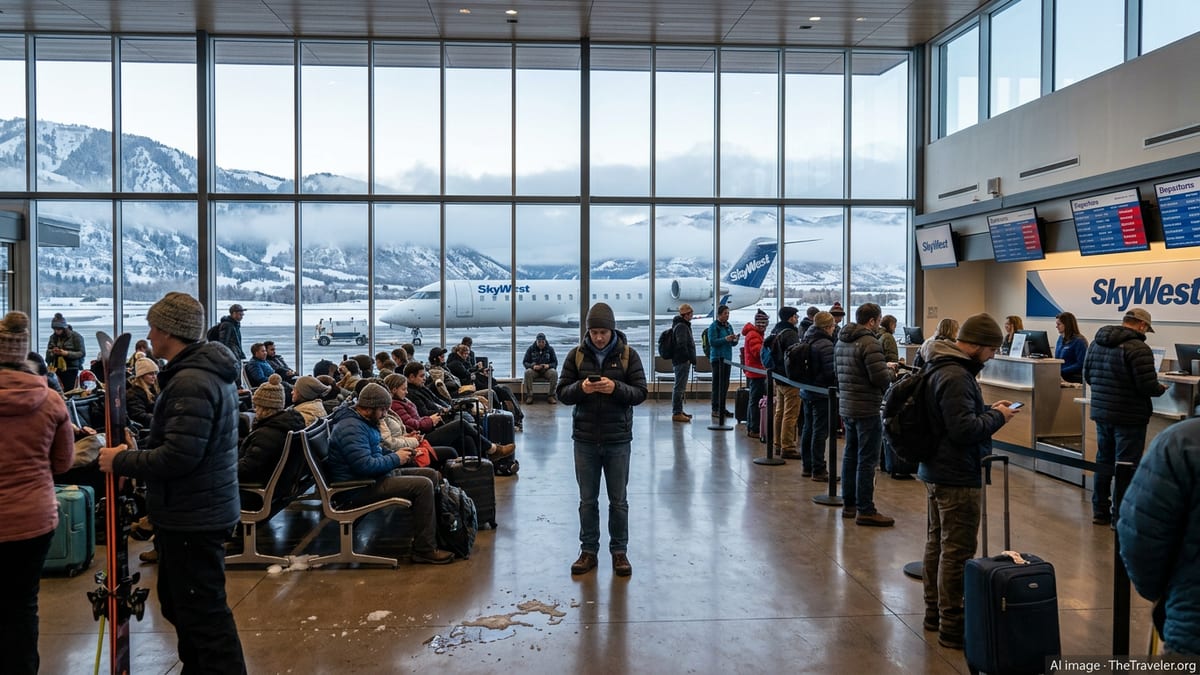
Resort Gateway Hit by Sudden Schedule Shock
The disruption comes at a critical moment for Aspen, when peak-season visitors rely heavily on tightly timed connections to reach the mountain resort. Aspen–Pitkin County Airport, constrained by its short runway, high elevation and variable mountain weather, depends largely on SkyWest’s regional fleet to maintain commercial links with the rest of the country.
With 10 SkyWest-operated departures and arrivals suspended in a single day, terminal screens quickly filled with cancellation notices and rolling delays. Passengers bound for or connecting through major hubs such as Houston, Dallas–Fort Worth, Atlanta, Charlotte and Denver faced missed onward flights, lengthening layovers and, in some cases, forced overnight stays.
Check-in counters saw growing lines as travelers sought rebooking options or refunds, while local ground transport operators reported a spike in last-minute inquiries from stranded visitors looking for alternate ways out of the Roaring Fork Valley. Hotels and short-term rentals also began fielding extension requests from guests unable to depart as scheduled.
Airport staff urged passengers to arrive early and stay in close contact with their airlines, warning that conditions could remain fluid throughout the day as carriers attempted to reset their operations.
Ripple Effects Across Houston, Dallas–Fort Worth, Atlanta and Charlotte
Because SkyWest operates flights for multiple major airlines under codeshare agreements, the suspension in Aspen had an outsized impact on downstream hubs. In Houston, Dallas–Fort Worth, Atlanta and Charlotte, arriving and departing passengers encountered delayed regional connections, gate changes and last-minute aircraft swaps as airlines reshuffled schedules to accommodate displaced travelers.
At these large hubs, the Aspen legs typically serve as critical feeders, shuttling high-yield leisure travelers into national and international networks. When several of those flights are removed at once, seat availability on remaining departures tightens quickly, limiting options for same-day rebooking and forcing some passengers to wait for later services.
For travelers headed to Aspen, the cancellations meant vacation plans abruptly cut short or postponed. Some reported being offered reroutes through other mountain gateways, only to find that onward ground transfers in winter weather were expensive, time-consuming or fully booked. Others opted to abandon ski trips altogether rather than risk additional uncertainty.
Airline customer-service centers and digital channels were quickly saturated, with hold times stretching and rebooking tools struggling to keep pace with demand, especially for peak-time departures to and from the busiest hubs.
Denver Feels the Strain as Primary Connection Point
Denver, the primary connecting airport for many Aspen itineraries, experienced its own wave of operational pressure as SkyWest’s reduced schedule collided with seasonal congestion. With fewer regional jets cycling between Denver and Aspen, available seats evaporated on remaining departures, and standby lists swelled with displaced passengers hoping to secure a last-minute spot.
In the concourses, departure boards showed strings of delayed regional flights as airlines worked to reposition aircraft and crew. The reduced frequency between Denver and Aspen complicated connections for travelers arriving from other cities, including those coming from the East Coast and Midwest who rely on a single-day itinerary to reach the resort town.
Travel advisors noted that Denver’s role as a central hub for both domestic and mountain-region traffic means that even a handful of suspended flights on a specialized route like Aspen can have network-wide consequences. A missed connection at Denver can easily cascade into missed flights onward to Houston, Dallas–Fort Worth, Atlanta or Charlotte later in the day.
Some travelers resorted to renting cars for the four-hour drive between Denver and Aspen, a journey that can be particularly challenging in winter conditions over high mountain passes. Authorities reminded motorists to check road conditions carefully and carry appropriate winter gear if attempting the drive.
Passengers Face Rebooking Challenges and Added Costs
For many affected passengers, the immediate challenge was simply finding an alternative way to complete their journey. With multiple flights off the board and high seasonal demand, rebooking often required flexibility on both dates and routing, with some travelers accepting connections through secondary hubs or off-peak departure times just to secure a seat.
Those who had booked nonrefundable lodging, lift tickets or tours in Aspen and surrounding resorts found themselves negotiating cancellation policies or seeking travel insurance claims. Meanwhile, outbound passengers whose return flights originated in Aspen were forced to weigh the cost of added hotel nights and meals against the likelihood of securing a firm departure window.
Consumer advocates again emphasized the importance of understanding airline policies around cancellations and delays, particularly when disruptions stem from factors within the airline’s control as opposed to weather or air-traffic restrictions. While carriers typically offer refunds for canceled flights, coverage of incidental expenses such as accommodation and meals can vary significantly.
Locally, businesses in Aspen expressed concern that repeated disruptions could discourage future visitors from relying on air travel into the resort, pushing more traffic onto already busy mountain highways and shifting demand toward competing ski destinations with more robust air service.
Guidance for Upcoming Travelers to Aspen and Major Hubs
With schedules unsettled and winter still in full swing, travel experts urged anyone planning flights to or from Aspen, as well as through Denver, Houston, Dallas–Fort Worth, Atlanta and Charlotte, to prepare for possible changes. Building longer connection times into itineraries, avoiding the last flight of the day where possible and keeping travel apps updated were among the key recommendations.
Travelers were also advised to monitor their flight status closely in the 24 hours before departure, as last-minute schedule adjustments remain common when airlines are attempting to recover from a day of extensive disruption. In some cases, carriers may add larger aircraft or consolidate flights to move more passengers once operations stabilize.
For those with flexible plans, shifting travel to less crowded midweek periods could improve the chances of smooth journeys and easier rebooking options. Others may consider alternative airports or multimodal combinations, such as flying into Denver or Grand Junction and completing the trip to Aspen by road, while factoring in the risks associated with winter driving.
As airlines and airport authorities work to restore normal operations after SkyWest’s suspension of 10 flights at Aspen–Pitkin County Airport, travelers across the network are being reminded that even small-market disruptions can quickly ripple outward, reshaping the experience of flying into and out of some of the country’s most important hubs.