

More news on this day
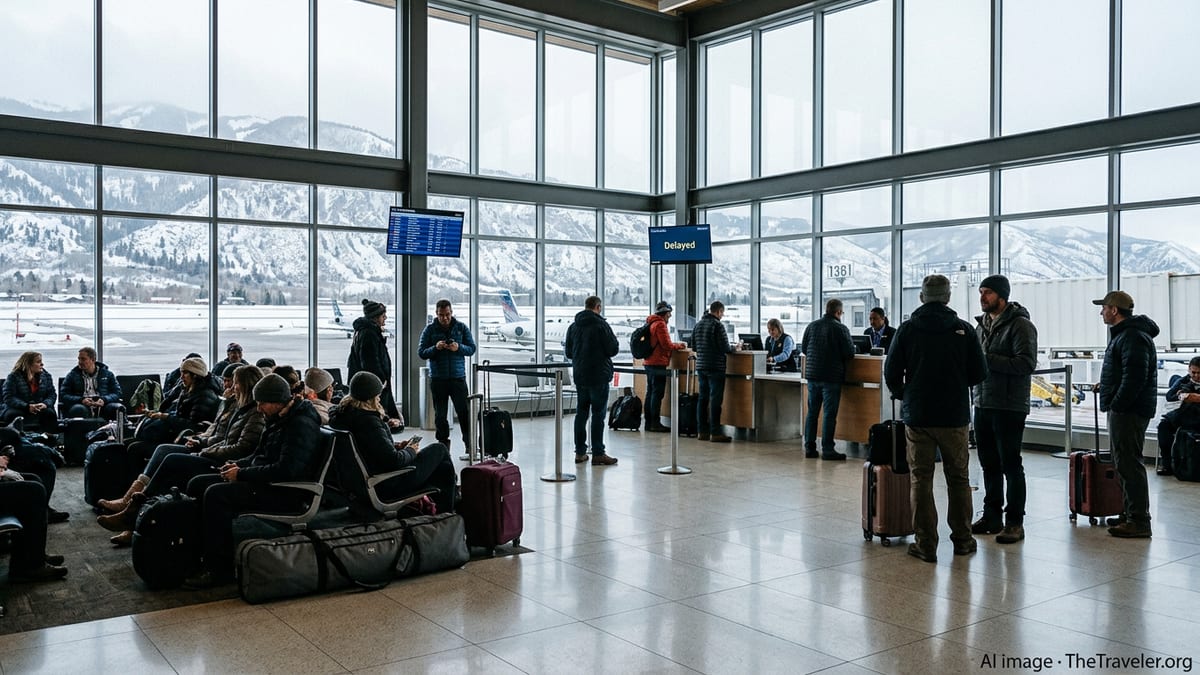
Travelers moving through Aspen–Pitkin County Airport on March 7 faced mounting frustration as regional carrier SkyWest suspended 10 flights and triggered widespread delays, stranding passengers and disrupting vital connections to Denver, Houston, Dallas–Fort Worth, Atlanta, Charlotte and other major hubs across the United States.
Ground Stops Ripple Through Aspen’s Only Commercial Carrier
The disruption hit particularly hard because SkyWest is the sole commercial operator currently qualified to fly scheduled airline service into Aspen–Pitkin County Airport, meaning even a modest number of cancellations can severely constrain options for travelers. With 10 SkyWest-operated flights suspended in a single day, Aspen’s already limited schedule shrank rapidly, leaving many passengers with few or no same-day alternatives.
Flights serving Denver, the primary connective hub for Aspen, bore the brunt of the operational strain, and knock-on effects reached longer-haul connections to Houston, Dallas–Fort Worth, Atlanta and Charlotte. Travelers who had relied on tight banked connections at major hubs suddenly found their itineraries unraveling as missed links cascaded throughout the day.
Airport staff reported jammed customer service counters and long hold times on airline call centers as visitors scrambled for rebooking options, often being told that the next available seat out of Aspen was not until the following day or later. For skiers at the tail end of winter vacations and business travelers on fixed schedules, the prospect of unplanned overnight stays in the Roaring Fork Valley quickly became a reality.
While SkyWest worked to reset its schedule, aircraft and crew imbalances contributed to rolling delays even on flights that remained on the departure board. Average hold times in Aspen stretched close to an hour, and some departures to Denver and other hubs left passengers sitting on the ground as the carrier worked through air traffic and operational constraints.
Weather, Congested Hubs and Regional Network Strain
The Aspen disruption comes amid a broader spell of operational stress across the United States air network, with winter weather, ground-delay programs and high passenger volumes converging to strain regional carriers. Major hubs including Denver, Atlanta, Dallas–Fort Worth, Houston and Charlotte have all reported elevated levels of delays and cancellations, and SkyWest’s role as a key feeder for multiple large airlines has amplified the knock-on effects.
In mountain airports such as Aspen, Montrose and Rifle, winter storms and low visibility can quickly erode schedule reliability, and carriers must operate within stricter performance margins tied to terrain and approach procedures. When a carrier like SkyWest is forced to cancel a block of flights at a small resort airport, the impact is more severe than at a larger field with multiple competing airlines and more frequent service.
Travel analysts note that Aspen’s reliance on regional jets to connect to far-flung hubs means every delayed or canceled departure can jeopardize dozens of onward connections. A scrubbed flight to Denver may strand travelers bound for Houston or Charlotte, while even a short delay on a departure to Dallas–Fort Worth or Atlanta can cause missed evening banks to international and cross-country destinations.
With multiple airports across the country managing weather-related ground delays, carriers have also been prioritizing aircraft and crews for high-volume trunk routes, at times leaving thinner resort markets to absorb a disproportionate share of the disruption.
Passengers Face Scramble for Alternatives and Limited Backup Plans
For passengers, the immediate fallout at Aspen–Pitkin County Airport has been a scramble to rebook, reroute or even reimagine their journeys home. Many travelers turned to nearby regional airports such as Eagle County and Grand Junction, hoping to find open seats on flights less affected by SkyWest’s schedule cuts or on different carriers altogether.
Local shuttle companies reported an uptick in last-minute bookings as stranded visitors arranged ground transport out of the valley to catch replacement flights. Some travelers banded together to share rides to Denver, undertaking a multi-hour drive over high mountain passes in winter conditions rather than risk further delays waiting for limited seats out of Aspen.
At the airport itself, lines formed early at ticket counters as travelers sought rebooking options, meal vouchers and hotel accommodations. While airlines are required to refund passengers when flights are canceled, coverage for incidental expenses such as lodging, meals and ground transport depends on whether the disruption is deemed within the carrier’s control, leaving some visitors to shoulder unexpected costs.
Families with children, travelers with medical needs and those on international itineraries faced particular stress as they weighed whether to stay in Aspen and hope for restored flights or leave by road to larger hubs. For many, the lack of clear and timely information about when normal operations would resume added to the uncertainty.
Economic Jolt for a High-Value Mountain Destination
The wave of cancellations has implications that extend beyond individual itineraries, touching the broader tourism-driven economy of Aspen and surrounding resort communities. During peak travel periods, Aspen’s hotels, short-term rentals, ski areas and restaurants depend on consistent air service to move high-spending visitors in and out efficiently.
Local businesses reported guests requesting late check-outs, extended stays and last-minute bookings as flights disappeared from departure boards. While some lodging operators welcomed the additional nights, others warned that repeated travel disruptions could discourage future bookings, especially from guests on tight vacation windows who may perceive the destination as hard to reach reliably.
Service workers, many of whom rely on predictable turnover days to manage room cleaning schedules and staffing, also felt the strain as unexpected stay-overs collided with new arrivals. Transportation providers from ride-share drivers to private shuttles faced rapidly changing demand patterns as visitors adjusted their plans on the fly.
Tourism officials and local leaders have long highlighted the importance of robust, reliable air links to keep Aspen competitive with other Western mountain resorts. Episodes like the current SkyWest disruption underscore the community’s vulnerability when a single carrier shoulders nearly all commercial air service into the valley.
What Travelers Through Aspen Should Do Now
Travel experts recommend that anyone scheduled to fly into or out of Aspen–Pitkin County Airport in the coming days take a proactive approach to managing their plans. Checking flight status early and often via airline apps, enrolling in text or push alerts and monitoring for gate changes can provide critical minutes of advance warning if a flight is retimed or canceled.
Passengers with essential trips are being advised to consider building extra buffer time into itineraries that connect through hubs such as Denver, Dallas–Fort Worth, Atlanta, Charlotte or Houston, where broader network disruptions may still be working through the system. In some cases, travelers may find more stable options by flying into alternative regional airports and completing the final leg of their journey to Aspen by car.
Those already in Aspen and facing canceled flights are encouraged to contact their airline through multiple channels simultaneously, including apps, websites and phone support, while also speaking with airport agents in person when possible. Flexible travelers may have better luck securing seats on earlier or later departures, even if it means rerouting through a different hub than originally planned.
As SkyWest and its major-airline partners work to realign aircraft and crews, conditions at Aspen–Pitkin County Airport are likely to remain dynamic. For now, travelers can expect that the combination of regional network strain, busy hubs and Aspen’s unique operational challenges will continue to test the resilience of air travel to and from one of Colorado’s marquee mountain destinations.