

More news on this day
Allegations that SkyWest Airlines chief executive Russell “Chip” Childs used his influence to delay a regional flight so his daughter could make the departure are igniting fresh scrutiny of airline culture, executive privilege and the limits of customer protections in the United States.
Get the latest news straight to your inbox!
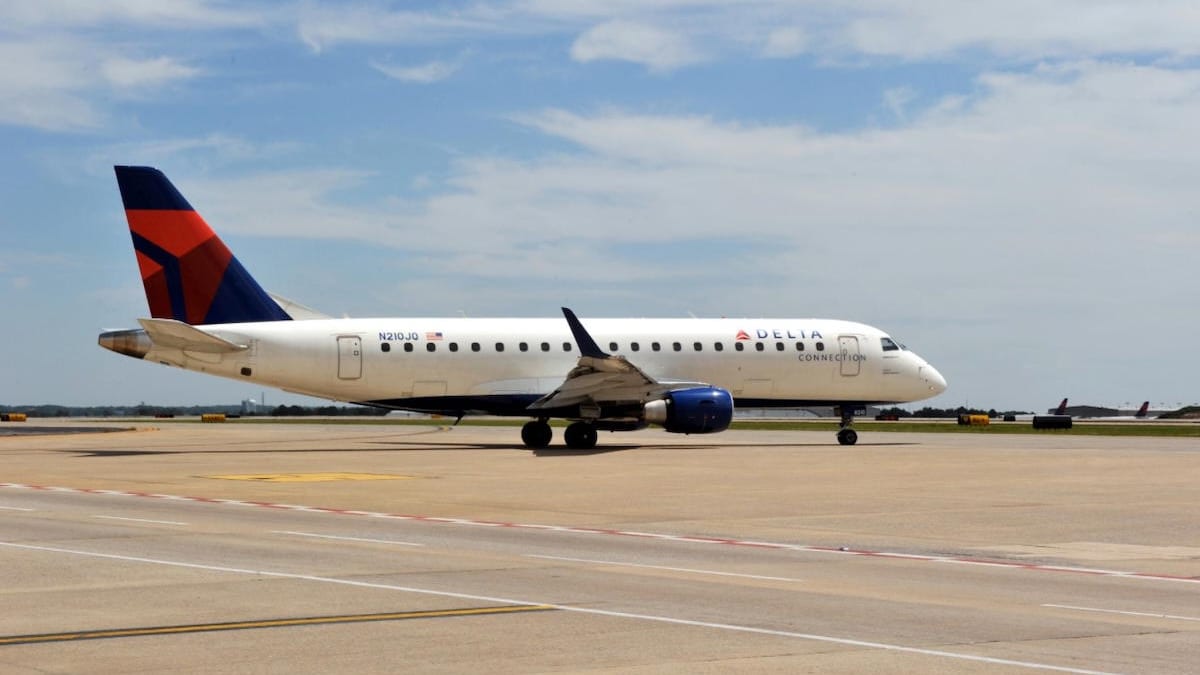
Image by One Mile at a Time
Allegation Centers On Late-Night Regional Departure
Recent online accounts describe a SkyWest-operated regional flight, reportedly the final departure of the night from a hub airport to a smaller destination, that departed significantly behind schedule after waiting for a late-arriving passenger said to be the daughter of SkyWest chief executive Russell “Chip” Childs. Commenters claim the aircraft remained at the gate for an extended period while other passengers were already on board, fueling frustration and speculation about the reason for the holdup.
The posts do not identify the specific flight number in most descriptions, but one widely circulated account references a SkyWest flight from Salt Lake City to a smaller regional airport in late March 2026. In that version of events, the late departure and arrival were initially attributed by some travelers to ordinary operational causes until rumors spread that a senior executive’s family member had been accommodated.
Publicly available corporate information confirms that Childs, who has led SkyWest Inc. since 2017, is married with three sons and a daughter. That detail has been repeatedly cited by online commentators attempting to link the alleged delay to the chief executive’s family, even as no official record has yet substantiated that the passenger in question was in fact related to him.
SkyWest, which flies under major-carrier brands such as Delta Connection, United Express, American Eagle and Alaska Airlines, has not publicly issued a detailed explanation of the specific delay that triggered the controversy. In the absence of an official incident report, the narrative has been shaped primarily by passenger anecdotes and social media discussion boards, complicating efforts to separate fact, assumption and rumor.
Defense From Supporters Raises New Questions
In response to the growing online backlash, a parallel wave of commentary has emerged from individuals who say similar delays are not unusual in regional operations and can occur for reasons unrelated to executive influence. Some travelers have posted that SkyWest held flights for them or for other connecting passengers in the past, sometimes for 30 minutes or more, framing the practice as a customer-friendly decision rather than favoritism.
That line of argument has formed the main defense of the company’s handling of the reported incident. Supporters contend that a delay to protect misconnecting passengers is common across the industry, especially for the last flight of the day to a small city where rebooking options are limited. They argue that, without direct evidence, concluding that the delay was ordered solely to assist an executive’s family member risks unfairly maligning the airline and its leadership.
However, critics say this defense sidesteps the core concern. They note that what distinguishes the current allegation is not the existence of a delay itself, but the suggestion that the decision may have been influenced by a personal relationship with senior management. Even if some passengers benefit from similar discretion in other circumstances, consumer advocates argue that any perception of preferential treatment for executives’ relatives can damage trust across the customer base.
The absence of a transparent, point-by-point account of the operational decision has left both sides leaning heavily on inference. As a result, the defense, while plausible in general industry terms, has been characterized by some observers as incomplete or even suspicious, because it emphasizes how such delays could be legitimate without directly addressing whether this particular delay followed standard criteria.
On-Time Performance, Metrics And Executive Incentives
The controversy is amplified by the prominent role that on-time departures play in SkyWest’s own performance metrics and executive compensation. Recent proxy materials show that the airline tracks a measure described as “controllable on-time departures,” defined as flights that leave the gate at or before scheduled departure when delays are within the airline’s control, excluding factors such as weather.
Those filings indicate that controllable on-time performance carries explicit weight in the evaluation of top executives, including the chief executive. SkyWest reports that strong results on these measures have translated into enhanced vesting of performance share awards for senior leaders. The company’s pay documents highlight how operational reliability is positioned as a core performance goal for management.
That linkage has prompted some aviation analysts and consumer advocates to question how discretionary delays for individual passengers are counted and justified. If a flight is held at the gate to accommodate a late-arriving traveler who is not delayed by airline-controlled factors, such a decision could work against on-time performance metrics, at least on paper. The suggestion that this discretion might be exercised for an executive’s relative, rather than for a broader group of misconnecting customers, intensifies the debate about how consistently policies are applied.
At the same time, regional airlines operate in a tightly constrained environment, with thin schedules, shared gates and pressure from major-carrier partners to maintain network connectivity. Operational experts note that dispatchers and station managers sometimes make calculated trade-offs, accepting a short departure delay if it avoids leaving multiple customers stranded overnight. The dispute over the SkyWest incident illustrates how opaque those trade-offs can appear from the cabin, where passengers are rarely briefed on the full decision matrix.
Passenger Rights And The Limits Of Accountability
The allegations against SkyWest’s chief executive arrive as regulators in the United States move to strengthen passenger protections around delays and cancellations. New federal rules now require airlines to provide automatic cash refunds when flights are significantly delayed or canceled for reasons within their control, expanding obligations beyond traditional rebooking and voucher policies. Consumer advocates say those changes reflect public frustration with disruptions that can feel arbitrary and one-sided.
Yet the SkyWest controversy highlights a different type of frustration, one rooted less in direct financial loss and more in perceived inequity. A delay granted to accommodate a single late passenger, even if the airline regards it as operationally justified, can feel deeply unfair to travelers who arrived on time and face missed connections, lost sleep or additional expenses. When rumors suggest that the favored customer has ties to the executive suite, the sense of grievance can escalate rapidly.
From a legal standpoint, short gate holds for passengers are generally permissible as long as they do not lead to extended tarmac delays that trigger federal penalties. Airlines retain broad discretion to adjust departure times within the bounds of safety, slot rules and crew duty limits. As a result, much of the accountability in cases like the reported SkyWest incident plays out in the reputational arena rather than in courtrooms or regulatory proceedings.
Aviation consumer groups argue that, in this environment, transparency becomes a critical tool for maintaining public confidence. Clear explanations of why specific flights are held, and whether such decisions are guided by written criteria applied consistently to all travelers, can help defuse speculation about favoritism. Without that transparency, even routine operational decisions risk being interpreted through the lens of privilege and unequal treatment.
Broader Questions About Culture And Governance
Beyond the immediate dispute over one delayed flight, the allegations against Chip Childs feed into larger conversations about airline culture, governance and the relationship between executives and front-line operations. SkyWest, one of the largest regional carriers in North America, sits at the center of a complex web of contracts with major airlines, airport authorities and local communities that rely on its routes for essential connectivity.
Corporate biographies and industry reports portray Childs as a hands-on leader with deep experience in regional aviation. Under his tenure, SkyWest has expanded its flying for major partners and navigated the upheaval of the pandemic era, labor shortages and shifting demand patterns. Supporters say the airline has sustained an important role in connecting smaller cities to the national air network, even as economic pressures have forced some competitors to retrench.
However, the public reaction to the alleged flight delay underscores how quickly perceptions can shift when questions arise about whether senior figures are subject to the same constraints as ordinary passengers. For some travelers and employees, the story resonates with broader concerns about power imbalances within the industry, from scheduling practices and staffing levels to contract terms for pilots and flight attendants.
Whether or not firm evidence ultimately confirms that a SkyWest flight was delayed specifically to accommodate the chief executive’s daughter, the controversy has already become a touchpoint in discussions about fairness and accountability. It illustrates how a single disputed decision on a regional ramp can reverberate far beyond one night’s departure, shaping debates over how airlines wield their discretionary power in an era of heightened public scrutiny.