

More news on this day
Hundreds of travelers across the United States faced unexpected overnight stays, missed connections and extended airport waits after a major disruption involving SkyWest Airlines left a combined 746 flights canceled or delayed across multiple hubs.
Get the latest news straight to your inbox!
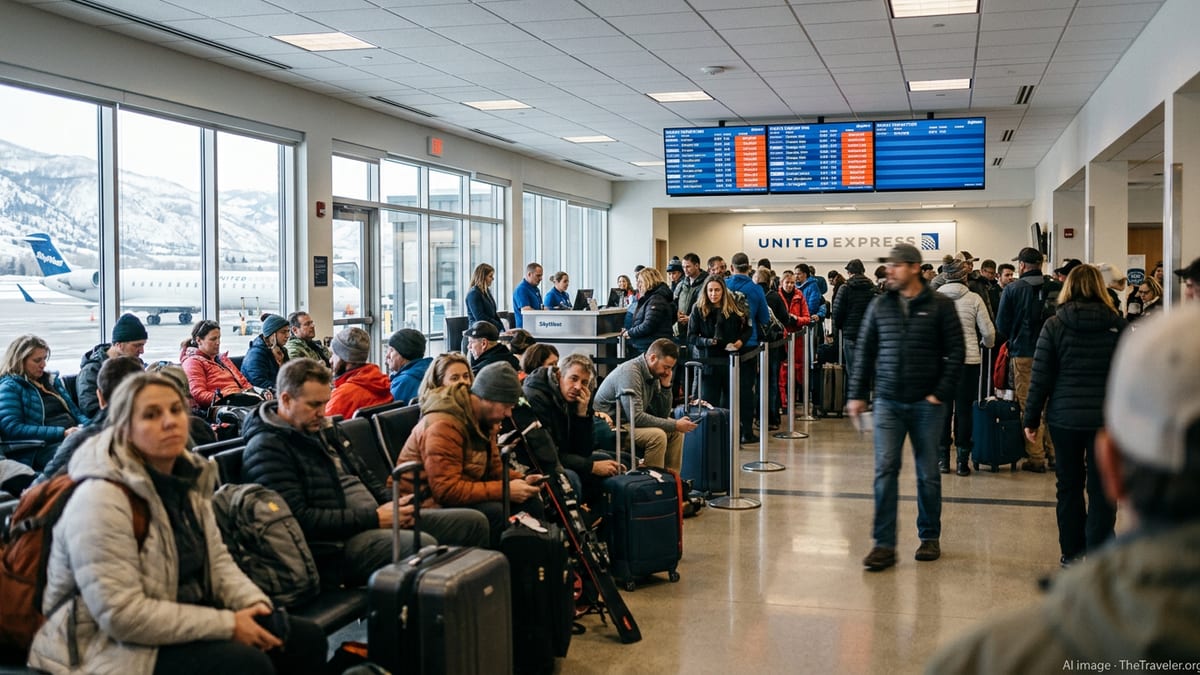
Widespread Disruption Ripples Across Regional Hubs
Published coverage indicates that SkyWest’s latest disruption unfolded across at least 27 airports, affecting routes in Arizona, California, Colorado, New York, Texas and several other states. Reports describe a patchwork of cancellations and lengthy delays that began building through the day as operational issues cascaded through the regional carrier’s network.
Travel and aviation industry reports point to more than 20 outright cancellations and roughly 300 delayed SkyWest-operated flights in one recent event, with hundreds of passengers left waiting for updated departure times or alternative routings. In aggregate with additional knock-on delays and cancelations tied to related air traffic management and IT problems, the disruption touched roughly 746 SkyWest movements across the system.
Publicly available data shows that SkyWest, which operates flights on behalf of major brands such as United, Delta, American and Alaska, plays an outsized role in connecting smaller and mid-size cities to national hubs. When its schedules are significantly disturbed, travelers at regional airports often face limited backup options, intensifying the impact of each cancellation.
Recent U.S. flight performance tallies underscore how quickly such disruptions can escalate. On some of the most turbulent travel days in March 2026, flight-tracking data pointed to hundreds of cancellations and several thousand delays nationwide, with regional operators like SkyWest prominently represented in the statistics.
Technical Strains and Airspace Glitches Behind the Chaos
Analysis of recent events suggests that the SkyWest disruption is part of a broader pattern in which regional carriers are highly exposed to both airline-specific technology issues and failures in the wider air traffic system. One widely reported national outage in 2025 linked to equipment problems near Dallas, for example, triggered more than 300 cancellations across multiple airlines, including SkyWest, and snarled traffic at major hubs such as Dallas Fort Worth, Kansas City, Houston, Pittsburgh and Detroit.
In a separate incident later that year, all SkyWest flights were briefly halted nationwide after the carrier requested a ground stop while addressing a technology problem. According to reports based on Federal Aviation Administration advisories, the system-wide pause lasted roughly 20 minutes before being lifted, but lingering delays persisted as crews and aircraft were repositioned.
SkyWest’s own regulatory filings highlight how vulnerable the regional model can be to these kinds of shocks. The company notes that interruptions at key hubs arising from weather, system malfunctions, air traffic control issues or airport constraints can rapidly affect a substantial portion of its schedule. Because nearly all of its flights feed into major partner hubs, a breakdown in one part of the chain can quickly propagate across the network.
Industry observers also link recent SkyWest disruptions to broader technology and cybersecurity concerns across aviation. A series of IT failures and cyber-related incidents affecting airlines and critical aviation software providers in 2024 and 2025 prompted widespread ground stops, underscoring how dependent modern flight operations are on stable digital systems.
Passengers Face Long Waits, Limited Alternatives
The latest SkyWest disruption translated into hours-long waits for many passengers, especially at smaller airports where the airline provides the majority of scheduled service. Reports from affected airports describe travelers stuck overnight, scrambling for hotel rooms and attempting to rebook on later flights or alternative carriers.
At some regional facilities, SkyWest cancellations halted nearly all departures for the day, leaving passengers to rely on infrequent bus services or long drives to larger airports. Families reported missed cruises, sports tournaments and international connections as the chain reaction from the 746 impacted flights rippled through their itineraries.
Travel advisories published in the wake of recent disruptions recommend that passengers use airline apps and text alerts, keep detailed records of schedule changes and receipts, and prepare for extended recovery times as airlines reposition planes and flight crews. For regional travelers, the advice often includes checking nearby larger airports for alternative routings and being flexible with departure times and even destinations.
Consumer advocates point out that compensation and rebooking rules can vary depending on whether a disruption is deemed controllable by the airline or attributed to national airspace issues, severe weather or external IT failures. Passengers affected by SkyWest’s latest problems are being urged, in public guidance, to document interactions and review their rights under both airline policies and federal regulations.
Regulatory Scrutiny and Structural Vulnerabilities
The strain on SkyWest’s operation comes as the carrier faces heightened attention from federal oversight bodies. A recent government report assessing the Federal Aviation Administration’s monitoring of SkyWest’s maintenance practices drew renewed focus to the airline’s size and critical role as the largest regional operator in the United States.
Regulatory documents from SkyWest emphasize that a significant interruption at one of its partner hubs, whether from weather, technology failures or infrastructure problems, can have a material impact on operations. The company has warned investors that storms, air traffic disruptions and other external shocks can lead to large clusters of cancellations and missed performance targets.
Industry analysts note that structural factors amplify the effects of such events. Pilot availability, already a challenge for regional carriers in recent years, can complicate recovery, while tight aircraft utilization means there is limited slack to absorb cascading delays. When multiple regional airlines simultaneously face disruptions, mainline partners like United, Delta, American and Alaska also experience scheduling pressure as inbound and outbound feeder flights fail to align.
Policy discussions in Washington, highlighted in transportation department publications, have increasingly focused on how to strengthen resilience in the regional segment, given its importance for air service to smaller communities. Suggestions range from improved data-sharing on disruptions to investments in more robust IT infrastructure and clearer passenger communication standards.
What Travelers Can Expect in the Days Ahead
Following the disruption that hit 746 SkyWest flights, recovery efforts are expected to extend beyond the initial day of cancellations and delays. Aviation performance data from similar past events indicates that residual disruptions often linger for several days as carriers work through displaced aircraft, crew scheduling backlogs and airport congestion.
Travelers connecting through major SkyWest partner hubs may continue to see retimed flights, gate changes and last-minute equipment swaps even after headline cancellation numbers begin to fall. Airports that depend heavily on regional feeders, particularly in the Mountain West, Midwest and parts of the South, are likely to experience uneven service while schedules are rebalanced.
Experts cited in recent travel industry coverage advise passengers with upcoming trips to build additional time into connections, monitor flight status frequently and consider early-morning departures, which are often less affected by the previous day’s delays. Travelers with critical time-sensitive plans are also being encouraged to evaluate contingency options, including alternative routing or date changes, when significant regional disruptions are unfolding.
For SkyWest and its major airline partners, the latest wave of cancellations and delays serves as another stress test of regional aviation’s resilience. As technology, weather and air traffic systems grow more complex, the challenge of keeping smaller communities reliably connected to the national network is likely to remain a central issue for carriers, regulators and travelers alike.