

More news on this day
Hundreds of travelers across the United States faced cascading cancellations and delays after a significant disruption involving regional carrier SkyWest left as many as 746 flights affected across partner networks.
Get the latest news straight to your inbox!
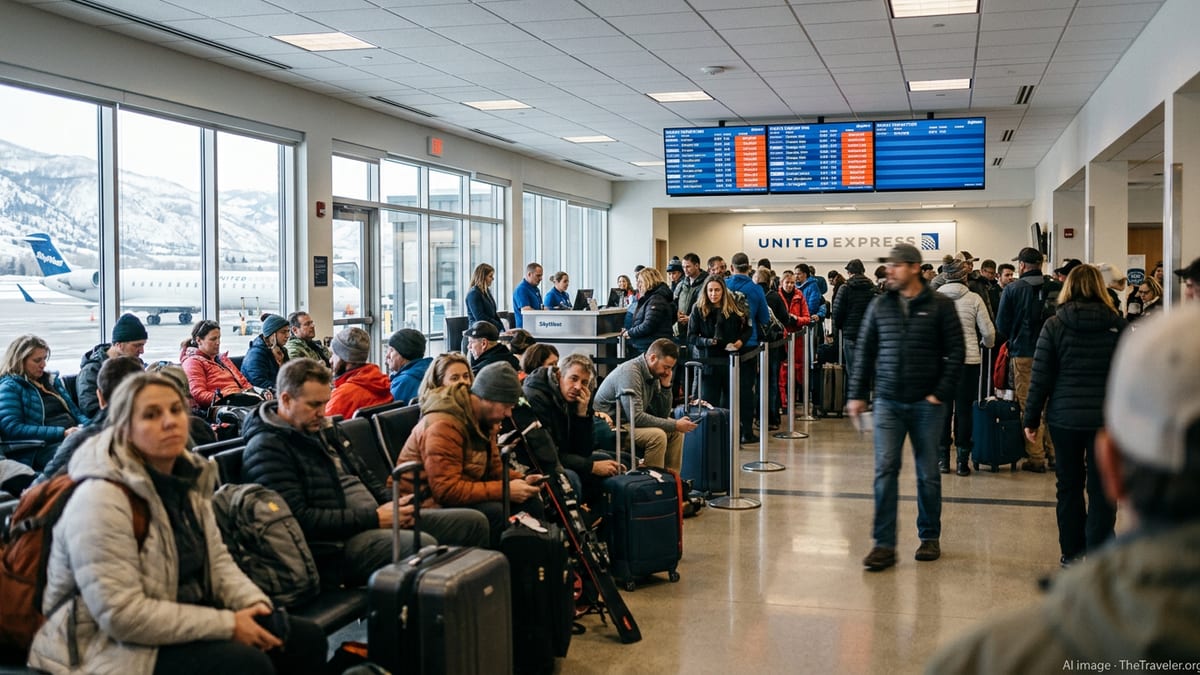
Regional Disruption Ripples Across Major U.S. Hubs
The latest disruption tied to SkyWest operations unfolded against an already fragile U.S. air travel environment, where capacity limits, weather disturbances, and infrastructure strains have left little room for error. Reports from flight-tracking services and aviation commentary indicate that SkyWest, which operates flights for major brands such as United, Delta, American, and Alaska, saw hundreds of its regional services delayed or canceled in a short time window.
Publicly available tracking data and traveler accounts describe passengers stranded at key hubs including Chicago, Denver, Houston, and Salt Lake City, where regional jets connect smaller communities to the national network. With 746 flights reported as affected across schedules, the disruption quickly expanded beyond any one airport, as missed connections and equipment reassignments compounded the initial wave of problems.
Because SkyWest flights typically appear under multiple mainline airline codes, the scale of the fallout was not immediately obvious to travelers scanning departure boards. Many passengers learned only at the gate that their flight was operated by the regional carrier, meaning the impact of the disruption was spread across several large-brand networks rather than confined to a single airline name.
Travel advisors monitoring the episode noted that a disruption of this size in the regional sector can be especially destabilizing, given the tight turn times and limited spare aircraft that characterize these short-haul operations.
Weather, System Strains and Tight Schedules Combine
The disruption coincided with a broader stretch of unsettled operations across the United States, where severe storms and operational slowdowns have fueled elevated cancellation totals. Recent coverage of nationwide travel conditions has highlighted rounds of storms moving across the central and eastern states, causing thousands of cancellations and delays in mid-March and late March as carriers including SkyWest worked through weather-related constraints.
SkyWest’s own regulatory filings in recent months underline how vulnerable regional operations are to external shocks, noting that severe weather, air traffic control initiatives, and third-party technology outages can quickly lead to widespread schedule disruptions. Those warnings appeared to materialize on a large scale this week, as multiple factors converged to overwhelm recovery plans and strand travelers far from their final destinations.
Operational data show that regional carriers often operate with tighter buffers than mainline fleets, relying on quick turns, shared crews, and limited spare aircraft at smaller stations. When weather or an upstream delay breaks that rhythm, the resulting chain reaction can be difficult to unwind, especially during peak travel periods when flights are already near capacity.
Observers tracking performance metrics noted that once the number of affected flights approached the mid-hundreds, the disruption began to resemble previous high-impact events in the regional sector, where a flurry of cancellations over 24 to 48 hours created multi-day recovery challenges.
Stranded Passengers Face Rebookings and Limited Alternatives
For travelers on the ground, the numbers translated into crowded gate areas, long customer service lines, and limited rebooking options. Many of the affected SkyWest-operated flights connect smaller regional airports that have only a few daily departures, leaving stranded passengers with scarce alternatives when an entire rotation is scrubbed.
Publicly shared traveler experiences describe overnight stays, missed family events, and complicated reroutings through unfamiliar hubs. In some smaller markets, the cancellation of a single regional jet departure effectively shut off that city’s connection to a major hub for the day, forcing travelers to accept next-day itineraries or multi-stop journeys.
Because the disruptions occurred across multiple mainline brands, some passengers reported confusion over which carrier was responsible for rebooking and care, particularly when flights were marketed by a major airline but operated by SkyWest. Consumer advocates frequently urge travelers on such codeshare services to verify the operating carrier in advance so they know whose policies will govern changes and assistance during irregular operations.
Standard airline practice in such events typically involves offering rebooking on the next available flight, meal vouchers in some cases, and hotel accommodations when overnight stays are unavoidable. However, when disruptions are widespread and hotel inventory around major hubs tightens, travelers often find themselves competing for limited rooms and must weigh whether to stay in the airport or venture into nearby districts.
Broader Questions Over Regional Reliability
The SkyWest disruption has renewed attention on the resilience of regional flying in the United States, a sector that has already faced pilot shortages, shifting partnerships, and changing demand patterns in the years since the pandemic. Industry analyses have noted that some mainline carriers have reduced or reshaped their reliance on regional partners, particularly on marginal routes where repeated service irregularities undermine traveler confidence.
At the same time, regional flights remain essential to connectivity for dozens of smaller cities that do not have sufficient demand to support larger mainline aircraft. When a carrier like SkyWest experiences an event affecting hundreds of flights, those communities can be disproportionately affected, highlighting the delicate balance between cost-efficient regional operations and the need for operational resilience.
Investor and regulatory documents from recent months have emphasized that regional operators are working to modernize fleets, upgrade technology, and refine crew scheduling practices in an effort to strengthen reliability. However, the latest disruption demonstrates that even with those efforts, a combination of weather volatility, infrastructure constraints, and tightly wound schedules can still generate large-scale interruptions.
Travel industry analysts suggest that frequent fliers who rely on regional connectors build in extra buffer time for key connections, particularly during storm-prone seasons, and keep backup plans in mind when traveling through smaller markets that have limited daily frequencies.
What Travelers Can Do During Similar Events
For passengers caught up in large disruptions involving regional carriers, preparation and quick action can make a difference. Travel experts generally recommend checking flight status through both the marketing airline and the operating carrier, since updates on regional flights sometimes appear on one channel before the other.
When hundreds of flights are affected, same-day rebooking options can disappear quickly. Many frequent travelers advise moving swiftly to secure new itineraries via mobile apps or airline websites rather than waiting in line at the airport, using phone support only as a backup. In situations like the SkyWest disruption, where 746 flights were reported as impacted, those who acted early often had more choices for alternate routings.
Flexibility with routings, willingness to connect through secondary hubs, and openness to nearby airports can also improve the odds of getting moving again. Some passengers may find that renting a car for the final leg or repositioning to a different departure airport is faster than waiting for the next available regional jet out of a constrained station.
As U.S. air travel heads into busier spring and summer periods, the SkyWest episode serves as a reminder that regional operations remain a critical, yet vulnerable, link in the national network. Travelers planning complex itineraries through smaller markets may benefit from building in time cushions and considering trip insurance or flexible tickets to better navigate future disruptions of similar scale.