

More news on this day
Travelers in and out of Aspen-Pitkin County Airport faced major disruption on Tuesday as SkyWest-operated regional flights racked up 33 cancellations and 21 delays, severing or snarling vital connections to major hubs including Denver, Los Angeles, Chicago, Dallas and Houston at the height of the winter tourism season.
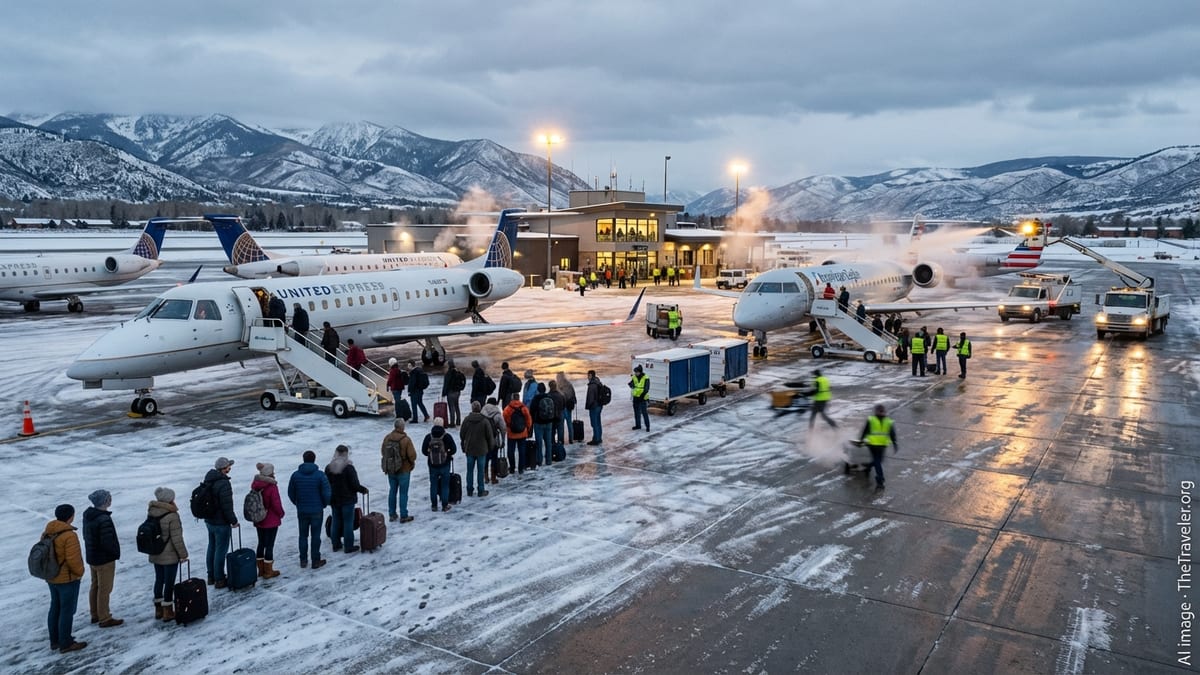
Wave of Disruptions at a Critical Mountain Gateway
The day of disruption unfolded at one of the country’s most infrastructure-constrained mountain airports, where flight schedules are tightly choreographed around terrain, weather and limited runway capacity. With a large share of Aspen’s commercial service operated by SkyWest on behalf of major airlines, the cluster of cancellations and delays rapidly cascaded across the network, affecting both local passengers and those connecting through major U.S. hubs.
Departures and arrivals were hit unevenly, but together the 33 cancellations and 21 delays represented a substantial portion of Aspen’s typical daily schedule of just over 100 flights. Many of the affected services linked Aspen with critical domestic hubs that feed visitors to the Roaring Fork Valley, including Denver International Airport, Chicago O’Hare, Los Angeles International, Dallas-Fort Worth and Houston’s airports.
Although conditions at Aspen remained largely manageable in terms of weather and visibility, operational knock-on effects at hub airports, tight turn times for regional jets and crew-availability issues all played a role in compounding the disruption. For travelers, the nuances of airline scheduling were less important than the immediate reality of missed connections, lengthening lines and shrinking options to complete their journeys.
The timing could scarcely be worse. Mid-February falls squarely in Aspen’s peak winter travel period, when ski resorts are nearing capacity, hotel rates are elevated and visitors have limited flexibility to shift itineraries. A localized spike in cancellations therefore has an outsized impact on both individual plans and the broader tourism economy.
Denver, Los Angeles, Chicago, Dallas and Houston Among Hardest Hit
SkyWest’s role as a feeder operator for several large U.S. airlines meant that the disruptions at Aspen reverberated far beyond Colorado’s high country. Denver, which functions as the primary gateway for many travelers accessing Aspen, was among the first hubs to feel the strain, with passengers suddenly stranded between the mountain town and one of the nation’s busiest airports.
Flights linking Aspen with Los Angeles and Chicago also experienced a mix of cancellations and prolonged delays, disrupting coast-to-coast itineraries that rely on seamless regional connections. For travelers from Southern California and the Midwest, Aspen’s nonstop links to these cities are often central selling points, allowing skiers and business visitors to avoid backtracking through Denver. On Tuesday, those advantages evaporated as multiple rotations were scrubbed or pushed back.
Dallas and Houston, major hubs for both domestic and international itineraries, saw their own feed from Aspen sharply curtailed. Passengers heading to or from Texas reported extended waits and a scramble to rebook limited remaining seats, particularly on evening departures when options to reroute through other cities narrowed as the day wore on.
Secondary U.S. cities that rely on connections through these large hubs also came under pressure, as missed onward flights prompted a chain reaction of rebooking and reassignments. What began as a regional airline issue on a relatively short runway in Aspen quickly turned into a national inconvenience for travelers spanning multiple time zones.
Passengers Confront Long Lines, Missed Connections and Housing Scrambles
Inside Aspen-Pitkin County Airport’s compact terminal, the operational stress translated into a distinctly human drama. Lines at ticket counters and gate podiums grew as cancellation notices stacked up on departure boards, and travelers sought out scarce alternative routings on already busy winter flights.
Families returning from ski holidays, business travelers and seasonal workers all found themselves competing for the same limited inventory of remaining seats. For many, the primary concern was simply getting off the mountain and back into the broader U.S. network before work, school or other commitments made extended delays untenable.
Those who had already reached hub airports faced a different but equally vexing challenge. Missed connections in Denver, Los Angeles, Chicago, Dallas and Houston left passengers marooned far from their planned destinations, searching for last-minute hotel rooms near terminals that were already under strain due to broader national disruptions. In some cases, travelers reported being rebooked a full day or more later, compressing vacation time or cutting into critical business schedules.
Local hospitality providers in Aspen and Snowmass also felt the impact. Same-day cancellations by departing guests collided with unexpected requests for additional nights from visitors who suddenly had no way out. For hotels already running near capacity, finding spare rooms or accommodating late checkouts turned into a complex logistical puzzle layered on top of high-season operations.
Operational Pressures at a Challenging High-Altitude Airport
Behind the scenes, Tuesday’s turmoil highlighted the operational vulnerabilities that have long defined Aspen-Pitkin County Airport. Situated at high altitude and surrounded by steep mountain terrain, the airport operates with only one runway and a narrow margin for recovery when things go wrong in the schedule.
Aircraft performance at Aspen is highly sensitive to temperature, weight and wind conditions, and pilots are required to adhere to some of the most specific approach and departure procedures in the domestic U.S. system. Any operational hiccup, whether caused by weather, air-traffic spacing, ground-handling delays or crew timing constraints, can quickly ripple through the tightly packed arrival and departure banks.
SkyWest, which flies regional jets into Aspen for large mainline carriers, must also navigate intricate crew-scheduling rules across multiple hubs. Disruptions elsewhere in the system on the same day, including weather challenges and airspace constraints across the United States, complicate the picture further. A delayed inbound aircraft or crew from another city can leave an Aspen departure with no viable backup, especially in peak periods when spare capacity is minimal.
Aspen’s own modernization plans speak to the structural nature of these challenges. County officials and airport management have been working with federal partners on a multi-year overhaul that will include a reconstructed runway and a new, more efficient terminal. Those projects remain several years away, leaving current operations to function within existing constraints during some of the busiest travel seasons on the calendar.
Tourism Economy Feels the Shock in the Heart of Ski Season
The economic importance of reliable air service to Aspen and the broader Roaring Fork Valley became starkly visible as the day’s disruptions unfolded. Winter visitors, particularly those flying in for short stays, rely on predictable flight schedules to maximize time on the slopes and minimize lost days at either end of their trips.
Local tourism officials and business owners have long argued that every canceled flight during peak season represents more than just a temporary inconvenience. When cancellations cluster and travelers lose confidence in the reliability of air access, they may choose alternative destinations with more robust flight options and redundancy, especially for high-spend leisure trips where time is a critical factor.
Ski resorts, restaurants, retailers and service providers from Aspen to Basalt all benefit from strong air connectivity. Many visitors arrive via connecting flights through Denver, Dallas or Houston, then transfer to short regional legs into Aspen. Others opt for nonstops from major coastal and Midwestern cities to maximize convenience. Any reduction in those links, even for a day, can translate into lost revenue, shortened stays or canceled future trips.
The current turbulence also comes as Aspen-Pitkin County Airport positions itself for a major transformation designed in part to support a more resilient tourism economy. Planned investments in a decarbonized, higher-capacity terminal and improved airfield infrastructure are intended to ease bottlenecks and create more flexibility during peak periods. In the near term, however, the region remains exposed to the fragility of a system that relies heavily on a single runway and a handful of regional operators.
Airlines Work to Rebook Passengers and Stabilize Schedules
As the scale of Tuesday’s disruption became apparent, airline partners working with SkyWest pivoted to recovery mode, focusing on rebooking stranded passengers and protecting key connecting itineraries where possible. Customer-service teams at Aspen and at hub airports fielded a surge of calls and in-person requests, attempting to distribute limited remaining seats across a large pool of affected travelers.
Options included rerouting passengers through alternative hubs, moving them onto later departures or, in some cases, shifting them to flights on other carriers under interline agreements. However, the same winter-season demand that fills hotel rooms and restaurants in Aspen also fills aircraft cabins, leaving airlines with little spare capacity to absorb the shock of dozens of cancellations.
Some travelers opted to abandon their air itineraries entirely in favor of ground travel, arranging one-way car rentals or private shuttles to Denver or other regional airports with more frequent service. That solution, while costly and time-consuming, allowed a subset of passengers to reconnect with the national network on flights less vulnerable to Aspen’s unique constraints.
Industry analysts note that recovery from such a concentrated burst of cancellations can take more than a day, as aircraft and crews are repositioned, maintenance windows are rebalanced and passenger backlogs are gradually worked through. For Aspen, where daily frequencies are modest compared with large hubs, it can take several news cycles for the system to fully normalize.
What Travelers Can Do Ahead of Future Aspen Trips
The latest turmoil is likely to renew long-standing advice for travelers planning trips in and out of Aspen-Pitkin County Airport. Aviation and travel experts consistently recommend building extra buffer time into itineraries, particularly for those relying on same-day connections to international flights or critical appointments in other cities.
Booking earlier flights in the day, when operations across the network have had less time to accumulate delays, can provide a margin of safety. Likewise, allowing for an overnight in a hub such as Denver, Dallas or Houston before a major onward journey may feel conservative, but can significantly reduce the risk of cascading missed connections if a regional leg from Aspen is disrupted.
Travelers are also encouraged to closely monitor flight status through airline apps and airport information channels, and to consider trip-insurance policies that specifically cover weather and operational delays. While insurance cannot prevent cancellations, it can soften the financial impact of unexpected hotel nights, meals and rebooking fees in hub cities.
For local businesses and tourism authorities, communicating these realities to would-be visitors has become part of a broader strategy to maintain Aspen’s appeal despite its geographically challenging location. By setting realistic expectations and emphasizing both the rewards and the risks of flying into a high-altitude mountain airport, stakeholders hope to preserve confidence in the destination even on days when the skies above are anything but straightforward.