

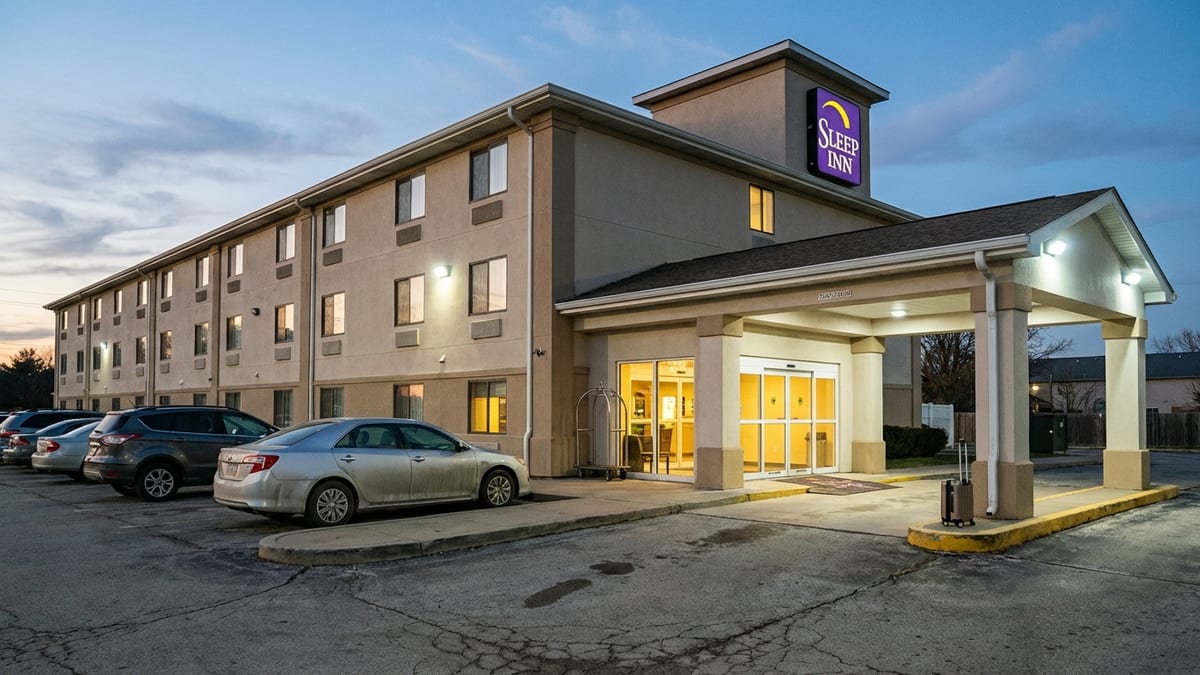
I went into my Sleep Inn stays with pretty moderate expectations. I was not looking for a resort or a design-forward boutique hotel. I just wanted a reliable, affordable place to sleep on a couple of road trips and an airport layover in the United States.
Over the past year, I stayed at three different Sleep Inn properties in three states, all booked directly through Choice Hotels. What I found was a brand that mostly does what it promises on paper: basic comfort at a budget-friendly rate. But there were noticeable gaps between the glossy website photos and the reality on some nights, especially around noise control, maintenance, and consistency between locations.
How I Booked, What I Paid, and What I Expected
I booked all three stays directly through the Choice Hotels site, usually one or two weeks before arrival. I wanted to keep things fair and avoid last-minute distressed inventory where standards might slip. Prices for my nights ranged from about 80 to 130 US dollars before tax, depending on the city and date. In each case, Sleep Inn was cheaper than the midscale competitors nearby but not dramatically cheaper, which made me pay closer attention to what I was actually getting for the money.
At booking, the main promises were consistent: free breakfast, free Wi-Fi, non-smoking rooms, a focus on "Simply Stylish" design, and a good night’s rest on a modern mattress. Photos showed clean, compact rooms with walk-in showers instead of tubs, streamlined furniture, and brighter color accents. The language was all about efficiency and comfort, not luxury, and that matched what I was hoping for: a place where I could have a hot shower, a reliably clean bed, and a quiet enough night to be rested for the next day’s drive or flight.
Before each stay, I checked current guest reviews to make sure there were no recent red flags about bedbugs, security issues, or obvious renovation problems. For the most part, reviewers described Sleep Inn as clean but sometimes noisy, occasionally dated, and highly variable depending on the individual franchise owner. That last part turned out to be true. The brand standards are clearly defined, but how well each property meets them is mixed.
Still, I walked in each time with a baseline mindset: this is a budget chain, not a full-service hotel. As long as the room is clean, the bed is decent, and the shower works, I am willing to overlook tired carpets or basic decor. The question I wanted to answer was whether Sleep Inn stays consistently clear that low bar, or if the compromises are bigger than the price difference justifies.
Check-in, First Impressions, and Front Desk Realities
My first impressions varied a lot between the three properties. At the airport-adjacent Sleep Inn I used for an early-morning flight, the lobby looked almost exactly like the marketing photos: neutral tones, simple seating, a small front desk, and a breakfast area just off to the side. Check-in was efficient. I presented my ID and credit card, signed the no-smoking agreement, and had my room key in under five minutes. The staff member was polite but brisk, which was fine since it was late at night and there were several other guests waiting.
At the small-town interstate Sleep Inn on my road trip, the front desk experience felt more like a family-run motel. The lobby looked older than the pictures online, with worn furniture and a faint smell of cleaning chemicals. The worker at the desk was friendly and chatty, and check-in went smoothly, but it took longer because they were clearly juggling phones, walk-ins, and housekeeping questions. It did not bother me as much as it made me realize how much quality hinges on who is actually running each location day to day.
The third property, in a midsize city just off a busy highway, was the least impressive on arrival. The glass entry doors were smudged, the lobby lighting felt harsh, and the front desk area needed dusting. Check-in was quick, but I immediately noticed a whiteboard with multiple notes about maintenance and a printed sign warning about a strict "no refunds after check-in" policy. It did not mean there was anything wrong, but it primed me to look more closely at the details.
Across all three, check-in hours were straightforward. All offered 24-hour front desk coverage, and I confirmed ahead of time that late arrival would not be an issue. None of them required any unusual deposits beyond the standard credit card hold. The process itself was not the problem. It was the subtle signals in the lobby spaces that hinted at how much pride each property took in keeping up with small but important standards like cleanliness, maintenance, and basic hospitality.
Room Design, Layout, and Real-World Comfort
Sleep Inn markets a consistent room layout: compact, efficient, and designed to maximize usable space. In reality, all three of my rooms followed the same essential pattern: one queen or king bed, a small desk, a chair, a wall-mounted TV, a mini-fridge, a microwave, and a walk-in shower instead of a tub. The design is minimalist and practical. I never felt like I was wasting space, but I also never felt like I had room to spread out.
The best of the three rooms, at the airport property, felt well thought out. The bed sat against a dark wood headboard with built-in reading lights. The desk was shallow but functional, and the TV was at a comfortable height for watching from the bed. Electric outlets were reasonably easy to reach, including a couple of USB ports by the nightstand. I could tell the furniture had seen some use, with a couple of scuffs and minor chips, but nothing that suggested neglect. The room was not stylish in the magazine sense, yet it was coherent and felt intentional.
In the small-town property, the room followed the same template but in a noticeably more worn state. The desk chair squeaked, the carpet had visible stains near the entryway, and the wall art was slightly crooked. The bed itself was fine, but the overall impression was more "older highway motel that happens to have a newer brand name" than fresh, modern Sleep Inn. It was still functional, but it did not match the sleek marketing aesthetic that had influenced my booking decision.
The third room, in the midsize city location, showed the most disconnect between design and actual comfort. The layout was cramped enough that moving around with an open suitcase felt awkward. The desk was tight against the bed, making it hard to use the chair without bumping into the mattress. There were fewer accessible outlets, and I had to move furniture slightly to plug in both my laptop and phone near the bed. None of these issues would ruin a stay, but together they undermined the feeling of effortless efficiency that Sleep Inn aims for.
Cleanliness: Where Sleep Inn Mostly Delivers, With Caveats
Cleanliness was the factor I cared the most about, and on balance Sleep Inn did reasonably well, though not perfectly. In two of the three properties, the rooms were clearly cleaned before my arrival: surfaces were wiped down, the bathroom smelled freshly disinfected, and the bedding appeared laundered and crisp. I checked mattress seams and corners in all three locations and did not see any signs of bedbugs or insects. For a budget chain, that alone counts as a genuine positive in my book.
That said, Sleep Inn does not hit the level of meticulous cleanliness that some midscale competitors manage. In the smaller highway town location, the bathroom corners had built-up grime that suggested long-term neglect rather than a missed cleaning once or twice. The tile grout looked dark in spots, and there was some mildew beginning to form near the base of the shower door. Nothing screamed "unsafe," but it chipped away at the sense that the property was fully on top of its cleaning routines.
The midsize city property had similar issues with deep cleaning. Dust had gathered along the baseboards and behind the TV. The carpet felt slightly sticky in high-traffic areas, especially near the entry and around the bed. Again, surfaces I actually touched, such as counters and bathroom fixtures, seemed clean enough. I was not worried about using the shower or sleeping in the bed. But visually, the room did not look freshly maintained in the way that creates confidence from the moment you open the door.
Housekeeping service on multi-night stays was mixed. At one property, the staff did a light refresh while I was out, replacing towels, taking out trash, and re-upping toiletries, but did not vacuum or straighten the bed beyond a very quick fix. At another, housekeeping did not enter my room at all even though I had not placed a do not disturb sign on the door. When I asked the front desk, they apologized and provided fresh towels, but it was clear that staffing levels were stretched thin. If you care about daily service, I would not assume it will always be consistent at Sleep Inn, even if it is technically offered.
Beds, Noise, and Whether I Actually Slept Well
Given the brand name, I paid particular attention to how well I actually slept. Across the three properties, the mattresses were surprisingly decent for the price. All felt medium-firm with enough support for my back, and none had that sagging dip you sometimes find in older budget hotels. Pillows were a mixed bag, though. Each room had four medium-sized pillows that looked plush but flattened quickly. I ended up stacking two or three to get proper neck support.
Sheets and bedding were generally clean and free of odors, but they lacked the softness you get at higher-end chains. That was not a deal breaker for me. At this price point, I am more focused on hygiene than luxury textiles. What did matter more to my overall sleep quality was noise, and this was where Sleep Inn showed its most significant weakness.
In the airport location, interior noise was noticeable but manageable. I could hear doors closing in the hallway and occasional conversations, but it tapered off after midnight. Exterior noise was better controlled than I expected. Even though planes were taking off nearby, I did not hear them much once I was in the room. The windows were not high-end soundproof, but they did their job well enough for me to get a solid six hours of rest.
On the highway town stay, noise was a different story. The walls felt thin. I could clearly hear the TV from the next room and muffled voices through the connecting door. Traffic from the nearby road droned all night, and there was a persistent hum from the in-room HVAC unit that kicked on with a clunk every time it cycled. I eventually put in earplugs, which helped, but it was not the quietly restful night I had hoped for. For a chain with "Sleep" in its name, I expected better basic sound insulation.
The city property landed somewhere in the middle. Hallway noise was quite obvious, especially in the early evening when families and groups were moving in and out. After around 11 pm it calmed down, but every time someone let a door slam, it echoed through the corridor. Once I finally fell asleep, I stayed asleep, but it took some effort to tune out the background noise. If you are a light sleeper, you should not count on a silent experience at Sleep Inn, especially in busy locations or during peak travel weekends.
Bathrooms, Amenities, and Breakfast: The Everyday Details
The Sleep Inn bathroom concept is pretty standard across the brand: no bathtub, just a walk-in shower with a glass door or curtain, a compact vanity, and wall-mounted toiletries. I personally like the shower-only layout because it saves space and feels more modern than the old tub-and-curtain combo. In all three properties, water pressure was good and hot water came quickly, which was a genuine plus.
The fixtures, however, showed their age in two of the three locations. One shower door had a loose handle that felt like it might come off if I pulled too hard. Caulking around the base was discolored, and the tiles had hairline cracks. Toiletries were basic: wall dispensers with shampoo and body wash of no particular distinction. They did the job, but if you are picky about products, you will want to bring your own. Towels were thin and slightly rough, standard for budget chains, and I often needed an extra towel just to feel fully dry.
In-room amenities beyond the bathroom were practical but unremarkable. Each room offered a small fridge and microwave, which I appreciated on the road when I wanted to keep drinks cold or reheat leftovers. The coffee makers were the small single-serve type with pre-packaged pods. The coffee tasted weak and stale, even when I used two pods, so I ended up grabbing coffee in the lobby instead, where it was marginally better. Wi-Fi worked reliably in all three properties for basic browsing and email, but speeds dropped during the evening when more guests were online.
Breakfast is one of Sleep Inn’s selling points, and all three properties offered it in some form. The official window was generally around 6 to 9 or 10 in the morning. In reality, the experience ranged from adequate to slightly disappointing. The airport property had the best spread: scrambled eggs, breakfast meat, waffles, yogurt, cereal, bread, and fruit. Food quality was roughly on par with other budget hotel chains. It did not feel special, but it was enough to get me going without stopping elsewhere.
At the smaller properties, breakfast felt more like an afterthought. One location ran out of hot items early and did not replenish them, leaving mostly bread, cereal, and a few pieces of fruit by 8:30 am. The coffee urns were not refilled promptly, and several tables were not wiped down between guests. I appreciated that breakfast was included in the rate and that there was always something available, but it did not match the neat, abundant presentation in the marketing photos. If complimentary breakfast is a must for you, Sleep Inn delivers it, but you should calibrate your expectations toward "bare minimum fuel" rather than "enjoyable meal."
Safety, Policies, and Dealing With Problems
On the safety front, I never felt directly unsafe at any Sleep Inn property, but there were a few things I noticed that travelers might want to be aware of. All locations had interior corridors and keycard access to guest-room floors, which I prefer over exterior motel-style doors. Parking lots were reasonably well lit, and I did not see any loitering or obvious security issues. Still, one property had a rear exit door whose latch did not close properly unless it was pulled hard, which undermined the sense of controlled access.
Policies were typical for a budget hotel chain: check-in roughly mid-afternoon, check-out late morning, with early check-in sometimes possible for a fee or subject to availability. Cancellation rules depended on the rate I chose. Standard flexible rates allowed cancellation up to a day before arrival, while discounted non-refundable options locked me in. These policies were clearly stated at booking, which I appreciated. Pet policies varied by property. One location allowed pets with a fee, another did not, and the third had a limited pet-friendly room inventory. If traveling with animals, it is important to confirm the specific property rules before you arrive.
When small problems arose, response times were mixed. At the highway town Sleep Inn, my TV remote did not work correctly. I mentioned it at the front desk on my way out for dinner, and by the time I returned it had been replaced without fuss. That was a good sign of attentive staff. At the city property, when I raised the issue of persistent hallway noise and a stuck window shade, the reaction felt more defensive. I was told the hotel was fully booked and that noise was to be expected, with no real attempt to offer earplugs or even a simple acknowledgment that it was a valid concern.
None of the problems I encountered were serious enough to force me to leave or demand a refund, but they highlighted an underlying reality about Sleep Inn. It operates in a price-sensitive segment where staffing levels and training vary significantly. When you get a well-managed property, issues are handled quickly and courteously. When you do not, you are left to accept minor flaws as the cost of saving money on a room.
Is Sleep Inn Worth It Compared With Other Budget Chains?
After three stays in different regions, I came away feeling that Sleep Inn occupies an interesting middle ground in the budget hotel landscape. It positions itself as a slightly more modern, design-conscious alternative to older economy brands, with the Choice Hotels loyalty program as an added incentive. In practice, the experience was not dramatically different from what I have had at similarly priced competitors like Comfort Inn, La Quinta, or Quality Inn.
On the positive side, Sleep Inn’s consistent emphasis on walk-in showers, functional desks, and included breakfast does add real value. The rooms rarely feel cluttered, and the presence of a fridge and microwave in every room I stayed in gave me practical flexibility on the road. When you get a well-maintained property, it can feel like an efficient, no-fuss home base for a night or two.
However, the brand does not always stand out in ways that justify choosing it over competitors if the price is the same. Noise insulation is average at best, and in some cases poor. Deep cleaning and maintenance clearly depend on individual owners' willingness to invest in keeping properties up to standard. The stylish, streamlined identity that Sleep Inn promotes is only partially realized at some older or less attentive locations.
For me, whether Sleep Inn is "worth it" comes down to three factors: price relative to nearby alternatives, the specific property’s recent reviews, and my purpose for the trip. When Sleep Inn is meaningfully cheaper than nearby chains, and recent guests confirm that rooms are clean and reasonably quiet, I feel comfortable booking it. When the price is nearly identical to a more consistently maintained brand in the same area, I am less inclined to choose Sleep Inn based on what I have experienced so far.
The Takeaway
Looking back on my stays, I would describe Sleep Inn as a mostly honest budget choice that occasionally overpromises on style and underdelivers on attention to detail. I had no major disasters, no sleepless nights spent worrying about cleanliness or safety, and no confrontations with staff. At the same time, I also did not walk away feeling that Sleep Inn was a hidden gem or a brand I would actively seek out over others in the same category.
I would stay at Sleep Inn again, but I would do so more selectively. I would pay close attention to recent photos and guest reviews for the specific property, not just rely on the brand name. If I saw repeated mentions of noise, cleanliness lapses, or tired rooms within the few months before my stay, I would probably choose a different chain, even if it meant paying a little more. If the reviews looked solid and the price advantage was significant, I would book Sleep Inn without expecting more than a functional, decent night’s rest.
Sleep Inn can be worth it for travelers who prioritize value over polish and who are realistic about what a budget chain can deliver. If you are on a road trip and need a place to sleep, shower, and grab a quick breakfast before getting back on the highway, Sleep Inn can fulfill that role well enough, especially at newer or better-managed properties. If you are traveling for a special occasion, are a very light sleeper, or are sensitive to signs of wear and tear, you may want to look higher up the price ladder.
In the end, Sleep Inn did not change my overall approach to budget travel. It reminded me that the name on the building matters less than the people running the individual hotel. With the right expectations and a bit of research into the exact property you are booking, Sleep Inn can be a practical, if unremarkable, choice. It is not a brand I would rave about, but under the right conditions, it is still one I would use again when I simply need a clean, serviceable place to sleep.
FAQ
Q1. Are Sleep Inn rooms generally clean enough for picky travelers?
In my experience, most Sleep Inn rooms were surface-level clean and hygienic, but not spotless in the deep-cleaning sense. If you are very picky, you may notice worn carpets, dusty corners, or older grout in bathrooms at some locations.
Q2. How comfortable are the beds at Sleep Inn?
The mattresses I slept on were medium-firm and supportive, better than I expected for the price. Pillows were average and tended to flatten, so if you are particular about neck support, you might want to bring your own travel pillow.
Q3. Is Sleep Inn a good choice for light sleepers?
Not always. Noise insulation varied a lot between properties. At some locations, I heard hallway traffic, doors slamming, TVs from neighboring rooms, and road noise. Light sleepers should bring earplugs and consider requesting a top-floor or end-of-hallway room.
Q4. What is the breakfast really like at Sleep Inn?
Breakfast is free and generally includes basic hot items, cereal, bread, and fruit. Quality and variety are comparable to other budget chains. It is convenient fuel, but not something I would look forward to as a highlight of the stay.
Q5. Do Sleep Inn hotels feel safe for solo travelers?
During my stays I felt reasonably safe. The properties had interior corridors, well-lit parking, and keycard access. That said, small maintenance issues like doors not closing firmly can undercut the sense of security, so I still stayed aware of my surroundings.
Q6. How reliable is the Wi-Fi at Sleep Inn?
Wi-Fi was free and generally reliable for email, browsing, and light streaming, but speeds dipped during busy evening hours. It was fine for remote work in a pinch, but not ideal for bandwidth-heavy tasks.
Q7. Are Sleep Inn bathrooms modern and well maintained?
The walk-in shower layout felt modern and practical, and water pressure was good. However, in two of my three stays I noticed aging fixtures, discolored caulk, and some minor mildew or cracked tiles, which made the bathrooms feel more tired than the design intended.
Q8. Is Sleep Inn worth it compared to other budget chains?
It can be, especially when the nightly rate is clearly lower than competitors and recent reviews are positive. When prices are similar, I did not find Sleep Inn consistently better than other midscale budget brands, so I would simply choose the property with the best recent feedback.
Q9. Would I stay at Sleep Inn again on a future trip?
Yes, but selectively. I would only book properties with strong, recent cleanliness reviews and a noticeable price advantage. I would also be realistic about likely noise levels and basic, no-frills amenities.
Q10. Who is Sleep Inn best suited for?
Based on my experience, Sleep Inn suits road trippers, budget-conscious families, and travelers needing a short, functional stay near highways or airports. It is less ideal for special occasions, very light sleepers, or anyone expecting a stylish, high-comfort experience beyond the basics.