

More news on this day
Rising from the heart of Northern Ireland’s Mourne Mountains, the Slieve Doan hiking trail is rapidly emerging as one of the region’s most compelling routes, luring walkers back to travel with its sweeping views, compact distance and wild, cinematic landscapes.
Get the latest news straight to your inbox!
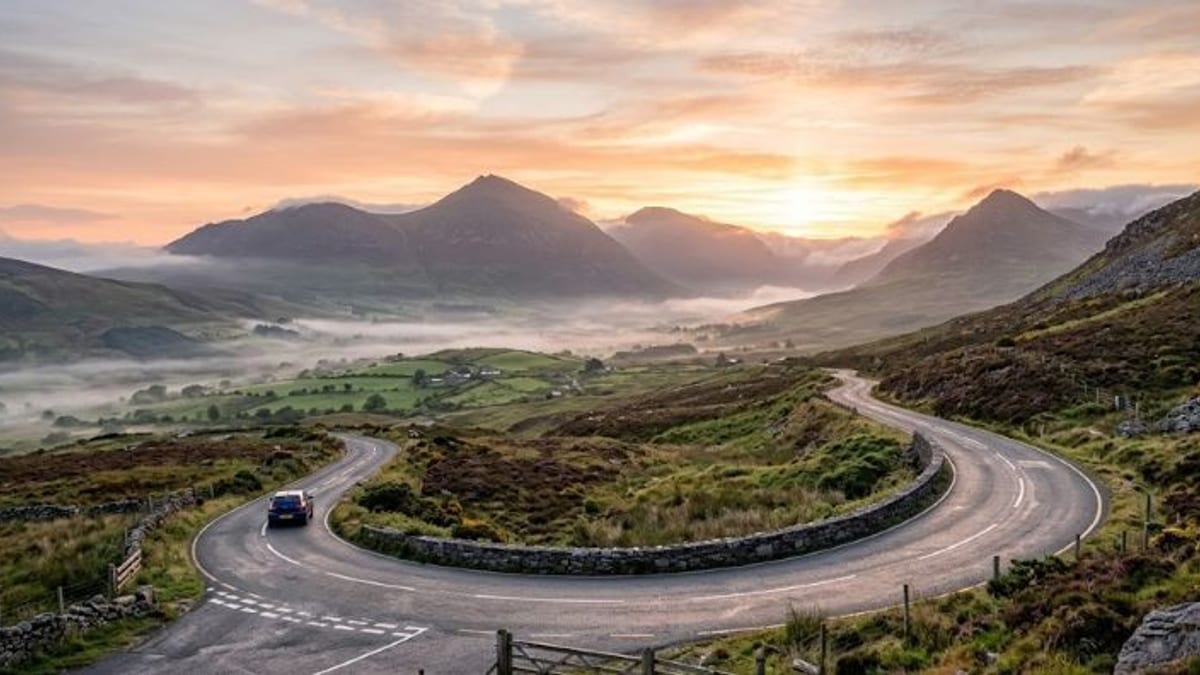
Image by Travel and Tour World – Tourism, Airline, Destination, MICE, Gobal Travel Market, Hotel news that you will find only over here.
A Compact Peak With Big-Mountain Drama
Slieve Doan sits close to the geographic centre of the Mourne range, surrounded by better-known summits such as Slieve Binnian and Slievelamagan and framed by the Silent Valley and Ben Crom reservoirs. Publicly available route descriptions show that, despite its modest height of just over 590 metres, Doan’s position delivers some of the most expansive panoramas in County Down, taking in a near 360-degree sweep of craggy ridgelines and dark water bodies.
Recent online trail guides highlight a standard approach from the Ott car park on the Slievenaman Road, where walkers gain the open hillside quickly before picking up clear paths towards the distinctive dome-shaped peak. Data from walking platforms indicates that the out-and-back route typically covers between 6 and 8 kilometres, depending on variations, placing it comfortably in the half-day category for most reasonably fit visitors.
Reports from hiking websites and community forums describe the ascent as a steady, mostly gradual climb over open moorland, with a short final rocky scramble to reach the narrow summit. The route allows walkers to feel immersed in high mountain terrain without the sustained steep gradients associated with the range’s tallest peaks, a balance that is helping to position Slieve Doan as a gateway experience for newcomers.
Views from the top are repeatedly cited as a key reason for the trail’s growing popularity. On clear days, walkers can trace the full length of the Mourne Wall snaking across the skyline, look down onto the reservoirs in the valleys below and, in good visibility, pick out the coastline and Irish Sea beyond.
A Growing Favourite Among Local Hikers
While Slieve Donard and Slieve Binnian continue to draw large numbers, social media posts and recent trip reports suggest that Slieve Doan has quietly become a favourite among regular Mourne walkers. Descriptions frequently point to its central location, dramatic outlook and relatively modest elevation gain as reasons it is repeatedly chosen for weekend outings.
Comments on hiking forums describe Doan as an “easy” or “accessible” summit in comparison with some neighbouring peaks, yet still offering a sense of remoteness. Walkers note that the route quickly leaves the road behind and crosses peat bogs, granite outcrops and small streams, providing a layered experience of typical Mourne terrain in a condensed format.
Some local contributors highlight the trail’s flexibility. Starting from Ott, it can be completed as a straightforward there-and-back hike, or extended into longer days by linking to nearby tops, contouring towards Ben Crom reservoir, or incorporating sections of the Mourne Wall. This adaptability enables both casual visitors and seasoned hikers to shape itineraries that fit available time and fitness levels while still including Doan as a focal point.
The mountain’s reputation as a rewarding yet manageable objective has also led to its promotion in online “best of the Mournes” round-ups, where it is regularly recommended as a first taste of the area for visitors arriving from Belfast, Dublin or the nearby coastal town of Newcastle.
Access, Safety and Conservation Considerations
The main access point at the Ott car park on the Slievenaman Road remains the most commonly referenced starting location in walking guides. From here, well-used paths lead towards the Mourne Wall and then branch off towards Doan, with route descriptions emphasising basic navigation skills and preparation even on this comparatively straightforward mountain.
Publicly available safety advice for hiking in the Mournes stresses familiar themes: rapidly changing weather, low cloud, and underfoot conditions that can shift from firm to waterlogged within short distances. Walkers are urged to carry appropriate waterproof clothing, sturdy footwear and a map and compass, particularly given the open moorland sections and the risk of poor visibility on the featureless plateau.
Environmental guidance from outdoor organisations and local authorities encourages visitors to treat the fragile upland landscape with care. Peat bogs and heather moorland around Doan are susceptible to erosion, especially in wet conditions. Hikers are reminded to keep to established paths where possible, avoid widening tracks, and adhere to “leave no trace” principles, including carrying out all litter and minimising disturbance to livestock and wildlife.
Parking capacity at key access points in the Mournes, including Ott, has been a recurring topic in local discussions, particularly on busy weekends and during peak holiday periods. Walkers planning a visit to Slieve Doan are advised by many route descriptions to arrive early, consider car sharing, and check recent online updates for any changes to access, forestry operations or seasonal restrictions.
An Immersive Introduction to the Heart of the Mournes
Travel commentators frequently describe the Mourne Mountains as one of the most atmospheric upland regions on the island of Ireland, with granite tors, stone walls and reservoirs lending the area a distinctive, storybook quality. In this context, Slieve Doan’s trail is increasingly presented as an ideal introduction, allowing visitors to step directly into the range’s central amphitheatre.
The route’s relatively short length means that walkers can devote time to pausing at vantage points rather than racing the clock. From the shoulder of the hill, views open towards Slieve Meelbeg and Slieve Meelmore to the north and towards the rugged silhouettes of Binnian and Lamagan to the south. As a result, trip reports often note that the experience feels much bigger than the map statistics might suggest.
Because of its central position, Slieve Doan is also being woven into multi-day itineraries across the wider Mourne and Slieve Croob Area of Outstanding Natural Beauty. Some backpackers include the summit as a highlight on traverses that connect the high peaks around the Silent Valley with lower, rolling country further north, underlining the mountain’s role as both destination and scenic waypoint.
For travellers seeking to rekindle enthusiasm for hiking holidays, the combination of accessible distance, rugged aesthetics and shifting light over the reservoirs offers a compelling case. Many recent accounts conclude that a single afternoon on Doan can restore a sense of wonder in the simple act of walking uphill for a view.
Planning a Visit to Slieve Doan
For visitors building a Mourne itinerary around Slieve Doan, publicly available guidance recommends checking detailed weather forecasts for County Down, particularly for wind speed and cloud base, as low visibility can obscure paths and diminish the famed views. Spring and early autumn are commonly described as optimal seasons, balancing daylight hours with cooler temperatures and often clearer vistas.
Route information suggests allowing between three and four hours for the Ott to Doan hike at a relaxed pace, including time for breaks and photography. Families and less experienced walkers are advised to judge conditions carefully, especially given the short rocky section near the summit, and to be prepared to turn back if weather deteriorates.
Accommodation and services in nearby hubs such as Newcastle, Castlewellan and Dundrum provide a base for exploring both Slieve Doan and other Mourne peaks, allowing visitors to blend mountain days with coastal walks and village visits. Travel features increasingly highlight this mix of outdoor activity and small-town amenities as a key attraction for domestic and international tourists alike.
As interest in nature-based travel continues to grow, Slieve Doan’s trail is likely to remain at the forefront of recommendations for the Mournes. With its compact scale, central location and far-reaching views, it offers a persuasive reminder of why mountain travel continues to capture imaginations in Northern Ireland and beyond.