

More news on this day
In Northern Ireland’s Mourne Mountains, the modest summit of Slieve Doan is drawing renewed attention from hikers seeking big views without a gruelling climb, positioning its compact trail as one of the region’s most rewarding short mountain walks.
Get the latest news straight to your inbox!
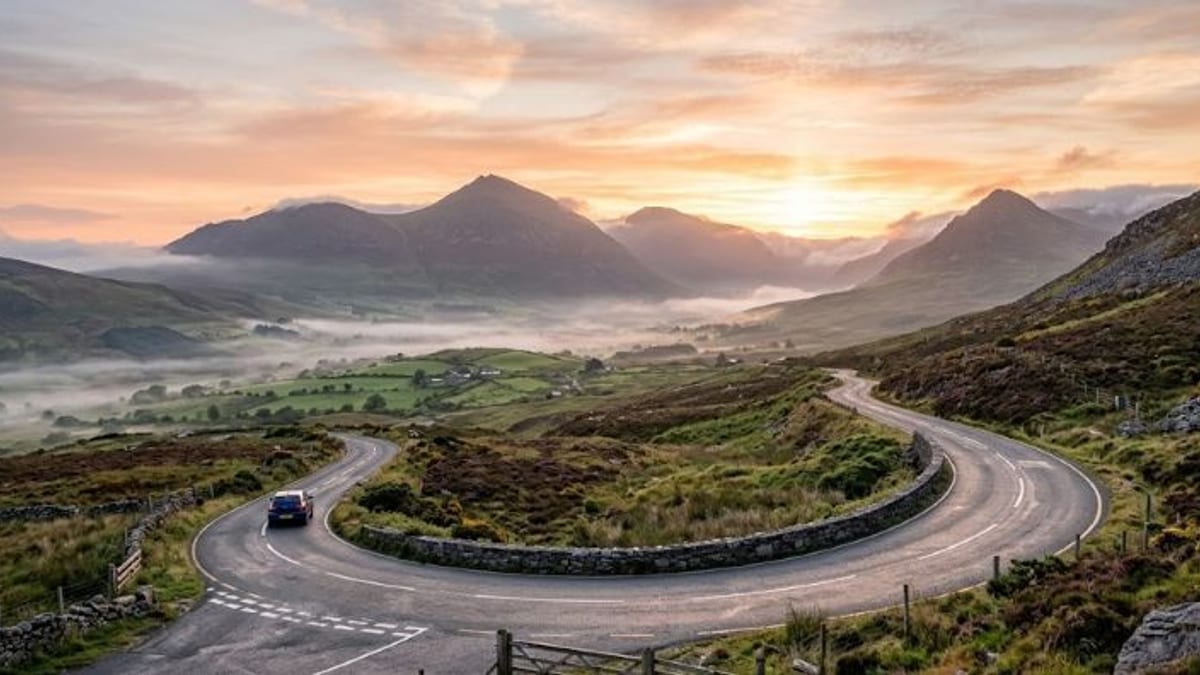
Image by Latest International / Global Travel News, Breaking World Travel News
A Compact Peak at the Heart of the Mournes
Slieve Doan sits almost centrally within the Mourne Mountains in County Down, surrounded by higher and more famous neighbours such as Slieve Binnian, Slieve Meelbeg and Slieve Doan’s larger namesake to the north, Slieve Donard. Topographic data and walking route guides show that Doan rises to around 593 metres, well below the highest Mourne summits, yet occupies a pivotal position overlooking the range’s valleys and reservoirs.
Publicly available mapping indicates that the most familiar access point is Ott car park on the Slievenaman Road. From here, a well-trodden upland path leads gradually into the open central Mournes, passing near the Mourne Wall before branching toward Doan’s rocky cone. Trail descriptions suggest that the out and back hike typically falls in the range of two to three hours for many walkers, depending on pace and conditions.
The mountain’s free-standing profile and modest elevation mean that the ascent is often described as steep only in its final section, where the route narrows and becomes rockier. For many visitors, this creates a sense of progression that feels adventurous without becoming technical, especially in comparison with the longer, more sustained climbs on nearby peaks such as Slieve Bearnagh or Slieve Binnian.
Local walking clubs and festival programmes increasingly feature Slieve Doan as a key objective within broader Mourne itineraries, highlighting how this once secondary peak has moved closer to the centre of the region’s hiking conversation.
A 360-Degree Panorama Over Reservoirs and Stone Walls
What sets Slieve Doan apart from other mid-height summits in the Mournes is the scale of the views relative to the effort required. From the upper slopes and summit area, hikers look directly across to the Ben Crom Reservoir and Silent Valley Reservoir, two of the most prominent water bodies in the range. In clear weather, the pattern of dams, dark upland lakes and steep corries gives the impression of a natural amphitheatre framed by stone walls and ridgelines.
Visitors frequently highlight the near-360-degree panorama as one of the mountain’s defining features. Surrounded by higher peaks on nearly all sides, Doan functions almost like a natural viewing platform set in the middle of the range. To the north, lines of the Mourne Wall rise and fall across summits, while to the south the broad sweep of upland ground drops toward the coastal plain and, on some days, to views over the Irish Sea.
Photography shared through walking forums and social platforms has strengthened Slieve Doan’s reputation as a scenic highlight. Wide-angle shots from the summit often capture a ring of better-known peaks, from Binnian’s tors to the rounded outline of Meelbeg and the distant, higher bulk of Donard. For visitors who may only have one day in the Mournes, this central vantage point offers a compressed introduction to the character of the entire range.
The mountain’s location also means that shifting light and weather can be particularly dramatic. Low cloud can move quickly across higher summits, briefly obscuring and then revealing ridges, while clear winter air often brings sharp long-distance visibility that appeals to photographers and experienced hikers alike.
Trail Experience: From Ott Car Park to Rocky Summit
Current route descriptions generally describe the standard approach to Slieve Doan as a straightforward upland hike, but note that conditions can be rough underfoot in places. From Ott car park, walkers typically cross the road and join a clear stony track heading into open ground. The path gains height steadily but not severely, giving early views back toward the lowlands and forward into the core of the Mournes.
Closer to the base of the peak, the route leaves the main track and becomes narrower as it approaches the rocky cone. The final ascent involves picking a line through boulders and short rocky steps, which some guides note may require the use of hands for brief sections but does not usually cross into technical scrambling. For many visitors, this short, more hands-on finish adds a sense of adventure to a route that is otherwise considered accessible to hikers with moderate fitness and suitable equipment.
Reports from walking groups and online communities advise that the terrain can be boggy in wet periods, particularly on the lower approach sections away from stone pitching. Waterproof footwear, spare layers and awareness of rapidly changing weather remain important, as with all mountain routes in the Mournes. Navigation skills are also recommended, given that paths can be less distinct in mist and there are multiple intersecting tracks leading toward other summits and reservoirs.
For hikers planning longer days, Slieve Doan is often combined with neighbouring peaks on circular routes. Some festival and club itineraries link Doan with Slieve Meelbeg or with sections of the Mourne Wall, allowing walkers to experience both the central summit and historic infrastructure that defines much of the landscape.
Growing Appeal for Returning and First-Time Hikers
The renewed focus on Slieve Doan comes as hiking continues to gain popularity across Northern Ireland, with visitors seeking routes that feel remote yet remain manageable within a half-day. In this context, Doan’s combination of short duration, varied terrain and dramatic views has been singled out as a potential “return-to-travel” experience for walkers who may be rediscovering the outdoors after focusing on urban or coastal trips.
Tourism bodies and regional destination campaigns increasingly highlight the Mourne Mountains as a key asset within Northern Ireland’s outdoor offering. Within that narrative, Slieve Donard typically appears as the headline summit, while peaks such as Slieve Binnian and Slieve Bearnagh offer more demanding outings. Slieve Doan is emerging in these same materials as a quieter counterpart, suited to hikers seeking immersion in the high country without committing to the longest or steepest ascents.
Public information on walking in the Mournes also notes the role of mountain festivals and guided events in drawing attention to less familiar peaks. In recent years, programme outlines for local walking festivals have included routes that either cross or approach Doan, introducing visiting hikers to the mountain as part of themed days focusing on the central Mournes and the area around Silent Valley.
This broader visibility, combined with easily shared digital imagery, appears to be encouraging more people to consider Slieve Doan as a primary objective rather than an optional add-on. For travellers building flexible itineraries around Belfast, Dublin or the Causeway Coast, the possibility of a rewarding, three-hour mountain walk is increasingly part of the appeal.
Planning a Safe and Sustainable Visit
While Slieve Doan is often described as attainable for hikers with moderate fitness, local mountain safety guidance consistently emphasises preparation. Weather in the Mournes can change quickly throughout the year, and upland paths can become slippery or indistinct in rain, wind or low cloud. Walkers are advised in publicly available safety resources to check forecasts, carry waterproof and insulating layers, and be prepared to turn back if conditions deteriorate.
Access to the central Mournes typically involves minor roads and relatively small parking areas such as Ott car park, which can fill quickly during busy weekends and holiday periods. Visitors are encouraged in regional outdoor guidance to arrive early where possible, park considerately, and avoid blocking passing places or gateways used by local residents and land managers.
Environmental organisations and walking groups also highlight the importance of minimising impact on fragile upland ecosystems. This includes staying on established paths where practical to reduce erosion, packing out all litter and avoiding disturbance to livestock and ground-nesting birds during the breeding season. Reports indicate that ongoing efforts to manage erosion and maintain key paths, including sections near the Mourne Wall, depend on cooperation between walkers and landowners.
For international visitors, Slieve Doan offers insight into how a relatively small mountain landscape can support both water supply infrastructure and outdoor recreation. The views over the reservoirs and stone walls underline the close connection between the Mournes and the wider region’s daily life, adding a layer of context to what might otherwise be simply a photogenic summit. Combined with nearby coastal towns and forest parks, the hike is helping position the Mournes as a compelling reason to rediscover travel in Northern Ireland.