

More news on this day
Slovakia has emerged as Europe’s standout aviation growth story at the start of 2026, with new data showing a striking 98 percent year-on-year surge in airport passenger traffic in January, far outpacing Malta, Ireland, Slovenia, Czechia, Cyprus and Poland and signaling a powerful new phase in the region’s post-pandemic recovery.
Record-Breaking Growth Puts Slovakia in the European Spotlight
The latest traffic report from ACI Europe for January 2026 places Slovakia firmly at the top of the EU+ growth table, with airports in the country registering a 98 percent increase in passenger volumes compared with January 2025. That growth rate is more than four times the European average, as overall passenger traffic across the continent rose by 4.6 percent over the same period.
Within the EU and affiliated markets, only a handful of countries came close to Slovakia’s performance. Malta recorded passenger growth of just over 17 percent, Slovenia above 20 percent, while Ireland, Czechia, Cyprus and Poland all posted robust but still comparatively modest double-digit gains of around 12 to 14 percent. Against that backdrop, Slovakia’s near-doubling of passenger numbers stands out as an exceptional outlier in the European aviation landscape.
The January figures build on a trend already visible through 2024 and 2025, when Slovakia repeatedly appeared among the fastest-growing markets in Europe. ACI Europe data for earlier quarters showed the country leading the EU in airport passenger growth, with gains above 15 percent, as carriers added capacity and tourism demand rebounded strongly. The new January 2026 numbers confirm that this momentum has not only continued but accelerated.
For travelers and industry observers, the January surge is an early indicator that Slovakia, traditionally a relatively small aviation market, is transitioning into a more prominent regional player. It also underscores how recovery patterns in European aviation remain uneven, with some smaller and peripheral states now outpacing established hubs in percentage growth.
Bratislava’s Ascent and the Role of Low-Cost Carriers
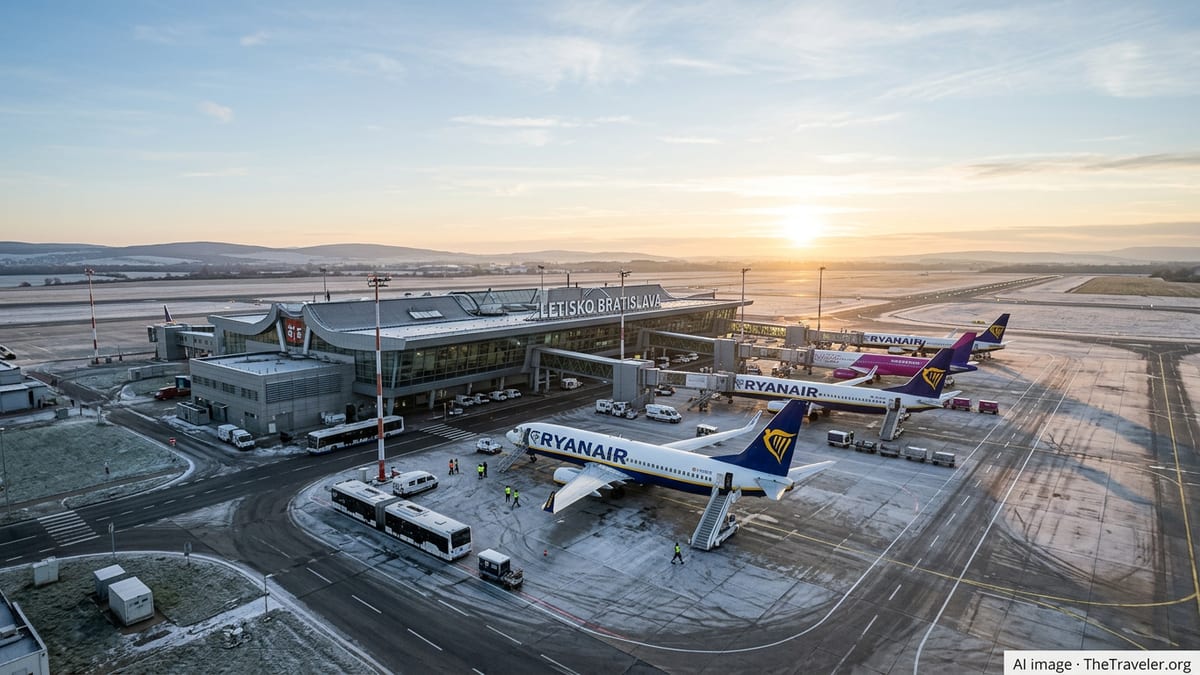
At the center of Slovakia’s aviation upswing is Bratislava Airport, the country’s main international gateway. After years of subdued traffic and financial losses, the airport returned to profit in 2024 and crossed the two-million-passenger mark again, supported by an aggressive expansion of low-cost capacity and new leisure routes. Industry briefings and local statements point to further growth plans for 2026, with projections of more than four million passengers annually in the coming years.
Low-cost carriers are central to that story. Ryanair has steadily reinforced its presence in Bratislava, operating several dozen routes that connect the Slovak capital to a wide spread of European cities, particularly in Italy, Spain and the United Kingdom. Wizz Air has also expanded, focusing on links to destinations in Southern and Eastern Europe and tapping into both migrant and leisure traffic. Their strategy aligns closely with broader trends in Europe, where budget airlines have been leading the post-pandemic demand rebound.
Alongside Bratislava, secondary gateways such as Košice are playing a supporting role. While smaller in absolute passenger terms, these airports benefit from pent-up demand for regional travel, diaspora visits and niche city-break tourism. Scheduled connections to hubs like Vienna, Prague, Warsaw and London give Slovak travelers more one-stop access to long-haul networks, helping to push up national passenger counts without relying on a single mega-hub.
For airlines, Slovakia’s cost structure, geographic position between Western and Eastern Europe and growing tourism profile make it an attractive market for deploying additional aircraft. The January surge reflects not just a return of existing routes but also new capacity, improved load factors and a recalibration of networks as carriers chase higher yields outside the most congested Western European hubs.
How Slovakia Pulled Ahead of Malta, Ireland and Other Fast-Growing Markets
What makes Slovakia’s 98 percent growth particularly striking is that it comes in a field of strong performers. ACI Europe’s January 2026 data show Malta up by about 17 percent, Slovenia by nearly 21 percent, Ireland close to 14 percent, Czechia around 13 percent, Cyprus a little over 13 percent and Poland just under 12 percent year on year. These are impressive figures that point to solid tourism and business demand across the EU’s periphery.
Several factors help explain why Slovakia pulled so far ahead. First, it is coming off a comparatively smaller base, which magnifies percentage gains as new routes and frequencies are added. In 2023 and 2024, Slovak airports were still below their pre-pandemic peaks, leaving more headroom for rapid growth once demand snapped back. By contrast, airports in Malta or Ireland had already neared or exceeded 2019 passenger levels, making it harder to sustain very high double-digit increases.
Second, Slovakia has benefited from being integrated into the catchment areas of major neighboring hubs, including Vienna. Some travelers now use Bratislava as a lower-cost alternative or as a secondary entry point into the Central European region. Competitive airfares, improving ground transport links and the growth of weekend city-break tourism to Bratislava itself have all contributed to rising international arrivals.
Third, airline network decisions have played a decisive role. In the wake of capacity constraints, staffing challenges and higher airport charges at larger Western European hubs, both budget and leisure-focused carriers have looked to smaller markets for growth. Slovakia’s airports, with available slots and supportive fee structures, have attracted new services to sunny Mediterranean destinations as well as to important labor and visiting-friends-and-relatives markets in Western Europe, helping to push the national growth rate well beyond that of Malta, Ireland, Cyprus or Poland.
What the Surge Means for European Aviation Recovery
Slovakia’s performance is unfolding against a backdrop of steady, if uneven, recovery across the European aviation network. Global air passenger demand in January 2026 was up nearly 4 percent year on year, according to the International Air Transport Association, while European carriers and airports saw slightly stronger growth as they continued to rebuild long-haul and intra-European capacity. Eurocontrol data indicate that overall flights in Europe are now at or above 2019 levels, even if some individual markets remain behind pre-pandemic benchmarks.
The sharp uptick in Slovakia supports a broader narrative of recovery diffusing away from the largest traditional hubs and toward smaller and regional airports. Across Europe, medium and small airports once again posted the strongest percentage growth in January, outpacing larger gateways that are more constrained by infrastructure, environmental regulations and slot limits. Slovakia’s 98 percent jump encapsulates this shift, illustrating how peripheral EU states can become growth engines in a mature market.
From an economic perspective, the implications for Slovakia are significant. The European Commission expects only modest GDP growth for the country in 2026, but aviation and tourism are emerging as important counterweights to weakness in export-oriented sectors such as automotive manufacturing. Higher passenger volumes translate into increased spending in hotels, restaurants and cultural attractions, particularly in Bratislava and key regional cities.
For European aviation policymakers, the Slovak example also raises questions about capacity, sustainability and connectivity. Rapid passenger growth can strain terminals, runways and local transport networks if infrastructure investment does not keep pace. At the same time, it offers a chance to rebalance traffic flows, reduce congestion at oversaturated hubs and promote more geographically diversified tourism flows across the continent.
What Travelers Need to Know About Flying to and Through Slovakia
For travelers planning 2026 trips within Europe, Slovakia’s surge in air traffic translates into more choice, more routes and often more competitive fares. Bratislava now offers a wider menu of direct flights to popular leisure destinations in Spain, Italy, Greece and the Balkans, as well as frequent services to major European capitals. This makes it easier to include Slovakia as a city-break destination or as a starting point for multi-country itineraries across Central Europe.
Passengers should, however, be prepared for a busier on-the-ground experience. As airports handle significantly higher passenger volumes than a year ago, peak times can bring longer security and check-in queues, and parking and public transport links may feel more crowded. While operators are investing in upgrades and process improvements, travelers would be wise to arrive earlier for departures and to build in extra time for transfers, especially during summer and holiday peaks.
The growth trend also means that route maps and seasonal schedules are changing quickly. Airlines are experimenting with new destinations from Slovakia, particularly to secondary Mediterranean airports and emerging city-break locations. Travelers looking for value can benefit from monitoring new route announcements and shoulder-season offerings, which may combine lower prices with less congestion than traditional Western European gateways.
Finally, Slovakia’s strengthened role in European aviation opens up more sustainable travel options for those combining air and rail. Bratislava’s location on the Danube and its rail links to Vienna, Budapest and Prague allow visitors to fly into Slovakia and then continue overland across the region. As the country moves from recovery to growth leader, it is becoming not just a destination in its own right but also a practical and increasingly well-connected entry point to Central Europe.