

More news on this day
From the Alps to the Silk Road, a new group of destinations is rapidly climbing the global tourism ranks, with Slovenia now joining Albania, Mongolia, Kyrgyzstan and Uzbekistan as rising powers investing heavily in infrastructure, branding and sustainable growth strategies to capture the next wave of international travelers.
Get the latest news straight to your inbox!
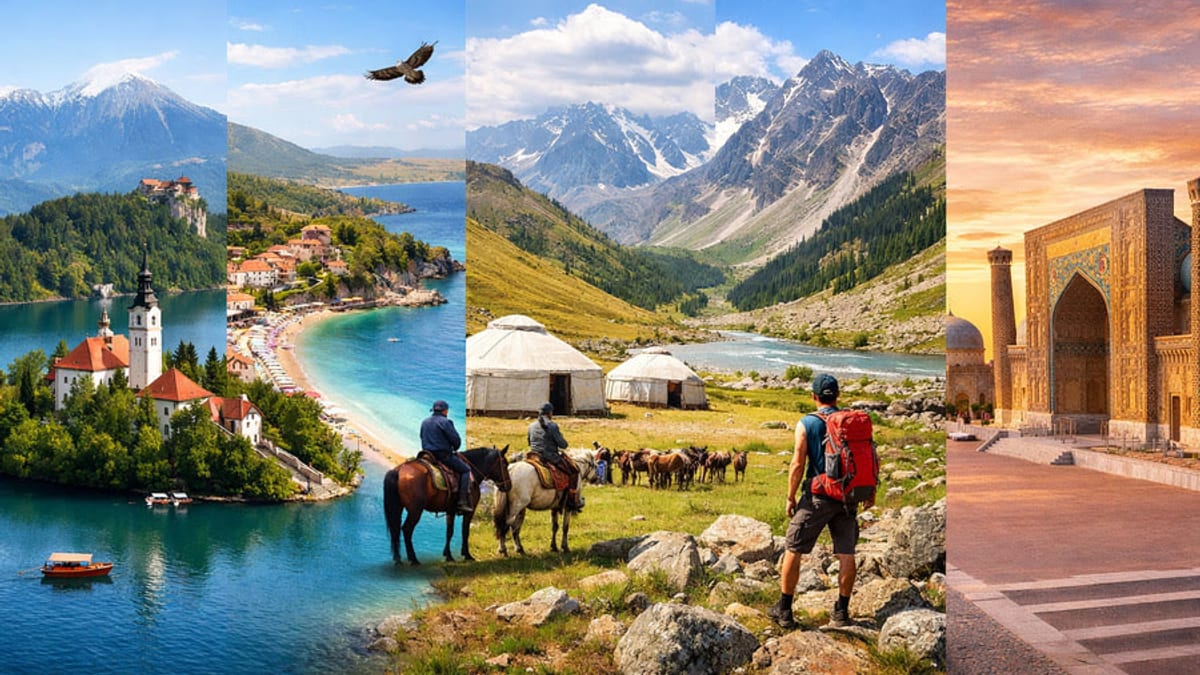
Image by Latest International / Global Travel News, Breaking World Travel News
Slovenia’s Record Tourism and Network of New Projects
Slovenia is moving from niche favorite to mainstream European destination, backed by a string of record-breaking seasons. Official statistics for 2025 indicate that around 7 million visitors generated more than 17.8 million overnight stays, the strongest performance on record and around 6 percent higher than 2024, itself a record year. Publicly available data also show double-digit growth from key long-haul markets such as the United States and the United Kingdom, pointing to a widening international appeal beyond neighboring countries.
Policy documents outline a clear framework behind this surge. The Slovenian Tourism Strategy 2022–2028 prioritizes quality over volume, dispersing visitors beyond Ljubljana and the lakes of Bled and Bohinj and encouraging year-round tourism in spa towns, Alpine valleys and lesser-known wine regions. An OECD review released in 2025 notes that the country received close to 4.7 million international tourists in 2023 and is using targeted investment and regulation to keep growth aligned with sustainability goals.
Infrastructure is central to this push. Government information indicates that dozens of public tourism infrastructure projects are underway, co-financed through the EU Recovery and Resilience Facility and the state budget. These range from cycling and hiking networks and visitor centers to wellness facilities and heritage restorations, many of them in smaller municipalities that previously lacked the capacity to attract and manage international visitors.
Alongside bricks-and-mortar investment, Slovenia has advanced its reputation for green and smart tourism. Industry analyses highlight initiatives such as the Green Scheme of Slovenian Tourism, expansion of eco-farms that host visitors, and digital tools that help manage flows in sensitive areas. The strategy aims to position Slovenia as a model mid-sized destination able to grow revenue while limiting environmental pressures and overtourism.
Albania’s Coastal Corridor and Airport Expansion
On the Adriatic, Albania has moved quickly from an under-the-radar destination to one of Europe’s most talked-about beach and adventure markets. Tourism arrivals have climbed sharply since the pandemic, and domestic commentary frequently refers to “beyond expectations” performance in 2023 and 2024. Authorities have responded with a wave of transport and hospitality investment that is reshaping access along the coast and into the interior.
A centerpiece is the opening of the Llogara Tunnel, which entered service for traffic in July 2024. The tunnel shortens and secures one of the most dramatic yet previously challenging segments of the coastal highway, linking the Albanian Riviera more efficiently with the north. Reports from regional business media describe it as a transformative project for tourism on the Ionian coastline, making journeys more predictable and extending the season for both domestic and international visitors.
Albania is also upgrading its sea and air gateways. Coverage in local outlets details plans for a modernized port of Durrës and a new port at Vlora, complemented by marina developments intended to attract higher-spending nautical tourism. Tirana International Airport handled more than 7 million passengers in 2023, and operators projected up to 9.5 million in 2024, a rapid expansion that aligns with new low cost and seasonal routes from across Europe.
These projects are accompanied by a hotel construction boom, particularly in coastal areas and key urban hubs. Public commentary from senior policymakers has linked tourism success directly to this web of new roads, ports, airports and accommodation, arguing that the country now offers continuous, modern infrastructure from north to south in ways that were not feasible a decade ago.
Mongolia’s Vision of a Tourism-Driven Steppe Economy
Far from Europe’s crowded corridors, Mongolia has set a goal for tourism to account for 10 percent of gross domestic product by 2030, positioning the country’s vast steppe, desert and mountain landscapes as a premium adventure and culture destination. Reports in international business media describe a national strategy developed with external consultancy support, emphasizing improved international connectivity, new accommodation and upgraded visitor services.
Connectivity has been a particular bottleneck. In recent years Mongolia introduced visa free entry for visitors from several dozen countries through the end of 2025 and launched the “Go Mongolia” branding campaign aimed at both tourism and investment. Public information indicates that most current visitors still come from neighboring China and Russia and from South Korea, but planners are explicitly targeting growth from North America and Western Europe as new infrastructure comes online.
Road construction is steadily extending away from the capital, Ulaanbaatar. National news coverage has highlighted projects such as the Tuul Highway, whose construction is scheduled to start in 2025 and which is intended to relieve congestion and improve access to popular nature areas outside the capital. Officials have also flagged the need for substantial private and public investment, with estimates in the billions of dollars to build the roads, hotels, ger camps and supporting infrastructure required to host significantly higher arrival numbers.
At the same time, Mongolia’s strategy stresses environmental and cultural safeguards, positioning nomadic heritage and relatively untouched nature as core assets. Investment plans often pair new physical infrastructure with conservation, such as tightening regulations for protected areas while expanding community led tourism that keeps revenue in rural regions.
Kyrgyzstan Bets on Adventure Tourism and Resorts
Kyrgyzstan, long known among regional hikers and mountaineers, is now formalizing tourism as a pillar of its economy through a series of national programs. A State Program for Sustainable Tourism Development covering 2025 to 2030 has been adopted, focusing on infrastructure, green technologies, safety measures and stronger domestic and international promotion. Local media report that the plan envisions construction of around 40 tourist bases under a new program, supporting both traditional summer trekking and emerging winter sports markets.
Economic outlook assessments released in 2025 point to steady year-on-year growth in tourism revenue, with earnings in 2024 estimated in the hundreds of millions of dollars. Analysts link this trend to a mix of infrastructure investment and increased marketing across Central Asia and beyond, framing tourism as a diversification tool for a country otherwise reliant on remittances and natural resources.
International organizations have also become more visible in the sector. The United Nations Development Programme has publicized projects that support adventure tourism in Kyrgyzstan, from trail and camp infrastructure upgrades to initiatives that promote eco-friendly practices and local entrepreneurship in remote valleys. These efforts aim to ensure that tourism benefits reach rural communities while preserving the mountain and lake environments that attract visitors in the first place.
Separately, private and public plans for new resorts, including year round mountain complexes near Bishkek and in western regions, signal a shift toward higher value, structured tourism products. These projects are expected to connect with broader infrastructure upgrades such as roads and energy developments, gradually improving access and reliability for international travelers seeking skiing, horse trekking and high-altitude camping.
Uzbekistan Accelerates Visa Reforms and Tourism Strategy
Uzbekistan has been one of Central Asia’s most active reformers in tourism policy, using visa liberalization and heritage promotion to draw visitors to cities such as Samarkand, Bukhara and Khiva. Over recent years the country has expanded visa free access to dozens of nationalities and introduced electronic visas for others, seeking to lower administrative barriers and compete more directly with established Silk Road routes.
The latest measures aim to deepen this approach. National news outlets report that in November 2025 the president signed an order abolishing visas for tourist visits of up to 30 days for citizens of the United States, effective from January 2026. The move is framed as a way to boost tourism and broader cultural relations, and it signals confidence that new air links and hospitality capacity can absorb increased demand from long-haul markets.
In parallel, coverage from regional media indicates that Uzbekistan plans to draft a Tourism Development Strategy running to 2040, with targets such as doubling the number of four and five star hotels and building a more recognizable national tourism brand. Authorities have spoken of developing new instruments to promote tourist products, which is expected to include greater use of digital campaigns and partnerships with international tour operators.
These policy changes are layered onto earlier reforms, including streamlined registration requirements for foreign visitors and investments in transport. High speed rail links between major cities and airport upgrades at hubs such as Tashkent and Samarkand have reduced travel times and improved comfort, placing Uzbekistan firmly on the map for travelers seeking culture rich itineraries that combine architecture, cuisine and desert landscapes.