

More news on this day
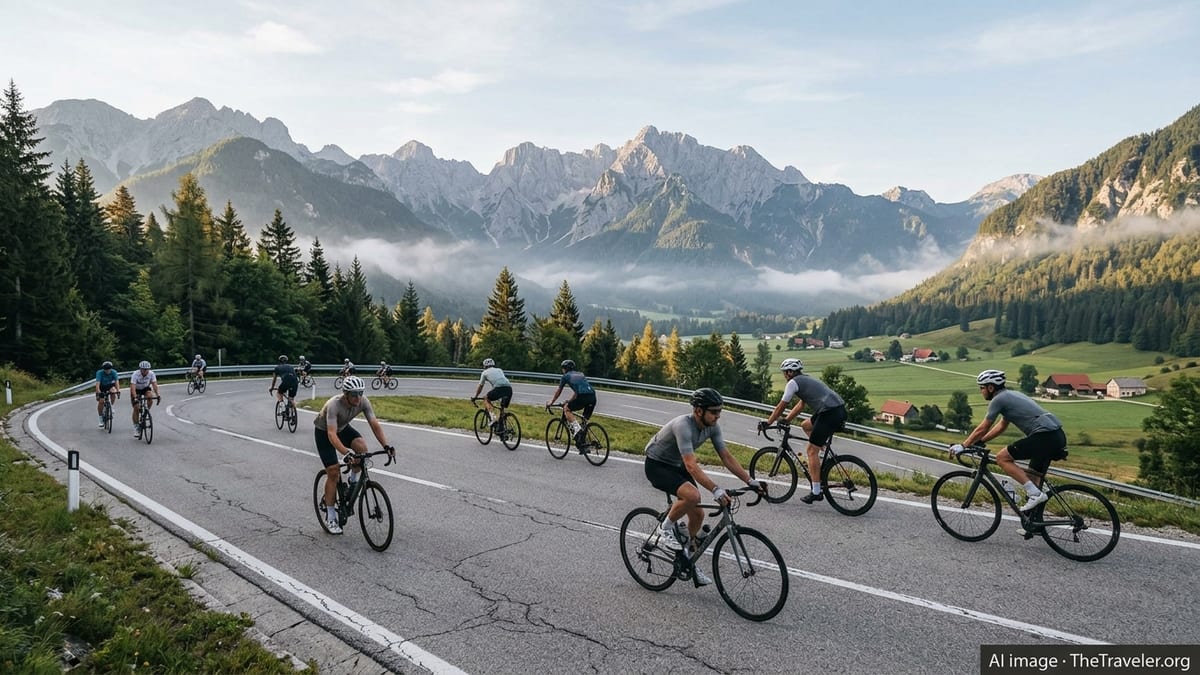
Slovenia is rapidly emerging as one of Europe’s most dynamic cycling tourism destinations, with new routes, major events and rising visitor numbers converging ahead of the 2026 European Road Cycling Championships in Ljubljana.
Get the latest news straight to your inbox!
European Championships Put Ljubljana in the Global Spotlight
Publicly available information from European cycling bodies confirms that Slovenia will host the 2026 European Road Cycling Championships in Ljubljana from 3 to 7 October 2026, placing the country at the center of the continent’s racing calendar. The event is expected to bring thousands of athletes, team staff and spectators to the capital, with spillover into nearby Alpine and Karst regions that are already popular with touring cyclists.
Cycling-focused coverage notes that the championships are being billed domestically as one of the largest sporting events ever staged in independent Slovenia. The course is set to showcase Ljubljana’s historic core and its surrounding hills, projecting images of riverside promenades, castle views and green urban corridors to television audiences across Europe. Tourism planners are positioning the week as both a high-performance showcase and a gateway for visitors to discover the country’s wider cycling offer.
Slovenian tourism promotion materials describe the championships as a milestone in what is being called a “golden era” for cycling in the country, driven by the global success of stars such as Tadej Pogačar and Primož Roglič. Their international victories have helped turn the small Alpine nation into a recognizable brand among cycling enthusiasts, who increasingly see Slovenia’s roads and gravel tracks as the stage on which their heroes trained.
Local organizers are working to align fan experiences with longer stays, with plans for side events, amateur rides and themed excursions during the championships. Travel industry briefings indicate that tour operators are already packaging race tickets with guided riding in nearby mountain regions, betting that many spectators will want to combine days at the barriers with time in the saddle.
From Racing Calendar to Year-Round Adventure Hub
Slovenia’s rising profile in professional road racing is anchored by the long-running Tour of Slovenia, which is on the UCI ProSeries calendar. The 32nd edition is scheduled for 17 to 21 June 2026, giving the country two major international cycling moments within a few months of each other. Race organizers have highlighted that the 2026 route will again link Alpine passes, river valleys and coastal roads, effectively functioning as a rolling advertisement for cycle tourism.
Alongside elite racing, Slovenia is increasingly positioning itself as a playground for amateur riders. L’Étape Slovenia by Tour de France, held in and around the city of Kranj, has quickly grown into a flagship mass-participation event. Listings for the 2026 edition describe a two-day cycling festival on 5 and 6 September 2026 in the Gorenjska region, marketed with the promise of “Tour de France conditions” on roads framed by the Julian Alps.
Additional recreational races and stage events, such as The Stage Slovenia based around Kranj, are promoting multi-day itineraries that blend timed riding with cultural visits to landmarks including UNESCO-listed caves and historic towns. These formats are designed to appeal to the growing segment of adventure travelers who want structured athletic challenges alongside food, wine and nature experiences.
Industry analysts note that this clustering of international races, gran fondos and stage events is transforming Slovenia’s image from a niche destination to a year-round cycling hub. The 2026 calendar is particularly dense, with the Tour of Slovenia in June, L’Étape Slovenia in early September and the European Championships in October, giving tourism stakeholders multiple peaks in demand and opportunities to extend the main summer season.
Infrastructure, Green Branding and Signature Routes
Slovenia’s tourism strategies emphasize cycling as part of a broader shift toward outdoor, low-impact travel. Guides to the national network of cycling paths describe a diverse offer that ranges from family-friendly riverside routes to challenging Alpine climbs and coastal trails along the Adriatic. Well-known corridors such as the Parenzana, a route that follows a former narrow-gauge railway line between Italy, Slovenia and Croatia, are frequently cited as examples of how disused infrastructure is being repurposed for sustainable tourism.
National sustainability reports released in late 2023 highlight that Slovenia recorded its most successful tourism year to date, with moderate growth in arrivals and overnight stays compared with previous periods. The documents single out hiking and cycling routes as key products for dispersing visitors into less crowded regions and encouraging longer stays in smaller, rural communities.
New long-distance concepts, such as the Amazon of Europe Bike Trail that passes through northeastern Slovenia as part of a cross-border river corridor, reflect a push to integrate cycling into regional development. Project roadmaps prepared for European funding bodies position these trails as tools to support local businesses, from guesthouses and farms to bike rentals and repair workshops.
Urban areas are also adapting. Ljubljana and other cities have expanded bike lanes, traffic-calmed streets and rental schemes, reinforcing Slovenia’s branding as a “green and active” destination. Travel guides point to the ease with which visitors can transition from urban exploration on two wheels to longer day rides in nearby hills, often without needing a car.
Balancing Economic Gains With Environmental Concerns
While cycling is often promoted as a low-carbon way to travel, recent academic research has started to scrutinize the environmental footprint of domestic cycling tourism in Slovenia. A peer-reviewed study published in late 2024 concludes that car travel associated with bike holidays can offset some of the environmental benefits of cycling itself, a phenomenon the authors refer to as “double pollution.”
The research suggests that, although cycling tourism contributes to economic growth and healthier lifestyles, planners need to consider how visitors arrive at trailheads and events. The authors argue that promotional narratives sometimes engage in “greenhushing,” underplaying emissions linked to long car journeys while emphasizing the sustainability of the on-bike experience.
In response, public documents from Slovenia’s tourism board stress rail connections, shuttle services and bike-friendly public transport as part of new product development. Marketing materials for events such as the European Championships and L’Étape Slovenia increasingly encourage visitors to align their travel with public transport, and highlight accommodations that participate in national green certification schemes.
Observers note that Slovenia’s relatively compact size and dense rail network offer advantages in shifting more cycling visitors out of private cars. However, the continued growth of adventure tourism presents an ongoing challenge in ensuring that the boom in bikes does not inadvertently lead to higher overall emissions through increased long-distance travel.
Adventure Travel Demand Fuels a Competitive Edge
The wider European adventure tourism market has expanded significantly in recent years, with sector studies indicating that Europe accounts for a substantial share of global revenue. Countries known for hiking and cycling, including Slovenia, Austria and Italy, have been singled out as key drivers of this growth, partly due to strong infrastructure and easy access for travelers from major source markets.
Slovenia’s competitive edge lies in its compact geography and variety of landscapes, allowing visitors to combine Alpine passes, wine country and Mediterranean-style coastlines within a single trip. Tour operators report growing interest in multi-activity itineraries that pair road or gravel riding with rafting, trail running and wellness retreats, reflecting a broader shift in consumer preferences toward “soft adventure” experiences.
Travel media coverage notes that social platforms have amplified this appeal, with images of turquoise rivers, high mountain roads and car-free passes circulating widely among cycling and outdoor communities. High-profile success by Slovenian professional riders has added a narrative layer, encouraging fans to follow in their wheel tracks on training climbs and iconic segments highlighted during televised races.
As the countdown to October 2026 continues, Slovenia appears poised to leverage the European Road Cycling Championships as both a showcase and a stress test for its evolving adventure tourism model. The challenge for the Alpine nation will be to sustain growth in cycling visitors while preserving the quiet roads, intact landscapes and small-scale hospitality that first drew riders to its mountains and valleys.