

More news on this day
Cross-border journeys and long-distance travel across Ireland are facing widespread delays as slow-moving convoys protesting rising fuel costs continue for a second day on key intercity and border routes.
Get the latest news straight to your inbox!
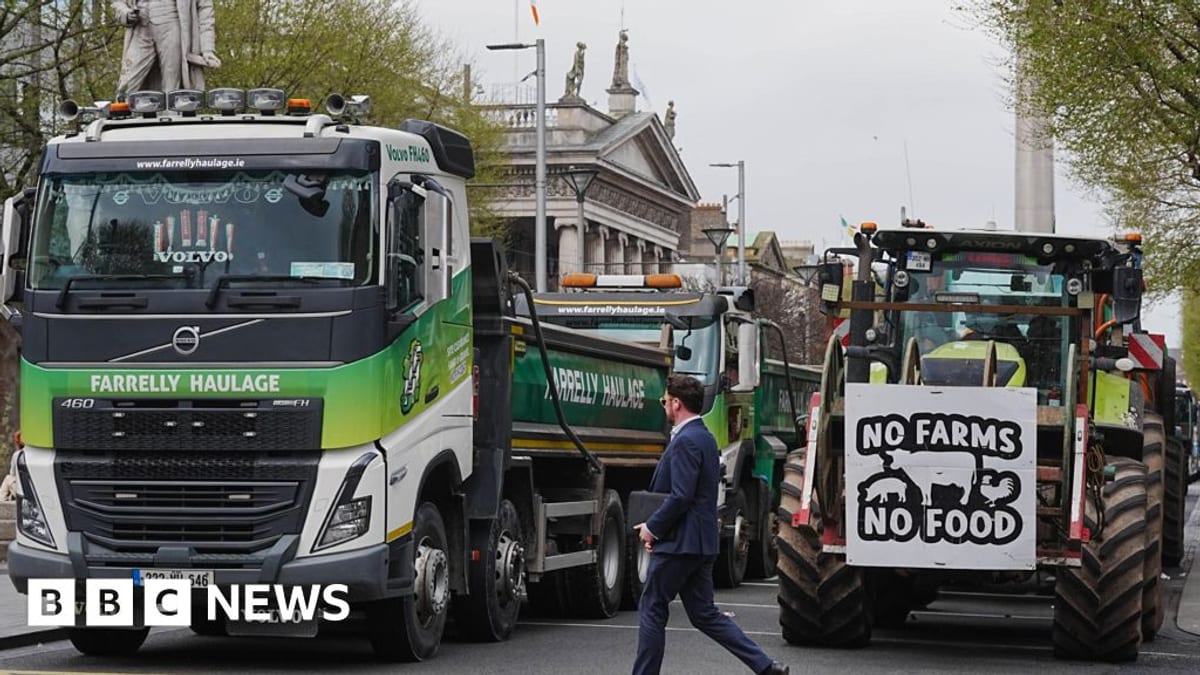
Second day of go-slow convoys hits major routes
Coordinated go-slow convoys involving trucks, tractors, buses and private cars are again moving at reduced speeds along sections of Ireland’s motorway and national road network, according to published coverage from Irish regional and national outlets. The action follows a day of disruption on Tuesday, when long tailbacks were reported on routes including the M7, M8, M18 and N4, as well as approaches into Dublin.
Reports indicate that similar convoys have resumed on Wednesday on some of the same corridors, with organisers seeking to maintain pressure on the government over soaring diesel and petrol prices. Publicly available information shows that vehicles have been assembling at motorway junctions and service areas before joining main carriageways in tightly bunched groups, creating rolling traffic jams that can stretch for several kilometres.
While the demonstrations are primarily focused on the cost of fuel, the tactic of driving at low speeds on strategic routes is having a broader impact on mobility across the island. Cross-border road users travelling between the Republic of Ireland and Northern Ireland are among those experiencing delays where convoys intersect with key arteries feeding border crossings.
Published reports describe delays building rapidly behind each convoy, as heavy goods vehicles occupy one or two lanes and maintain speeds significantly below the limit. Although some routes retain an open lane, traffic density and driver hesitation around larger vehicles are contributing to a wider slowdown that extends beyond the immediate protest columns.
Cross-border and airport travel disrupted
Travel industry updates and local media coverage indicate that the disruption is being felt most acutely by long-distance road users, including cross-border commuters, international coach operators and passengers heading to and from airports. Dublin Airport has urged travellers to allow additional time to reach the terminals, with access routes from several directions affected at different points during the rolling protests.
Coach services linking regional towns with Dublin and other cities have reported slower journey times where routes intersect with the convoys. Cross-border services operating between the northwest and Belfast or Dublin are particularly exposed, as they rely on sections of motorway and dual carriageway that have been targeted as part of the national action.
Private motorists driving from border counties into the capital also face unpredictable journey times. Reports from along the M1 and connecting routes suggest that even when convoys do not fully block a road, knock-on congestion at junctions and roundabouts can add significant time to regular commutes or onward international travel plans.
Travel planners warn that the rolling and decentralised nature of the protests makes precise forecasting difficult for both operators and passengers. With convoys forming and dispersing at varying times, some services are able to bypass hotspots using alternative routes, while others encounter lengthy, unplanned delays that risk missed connections and appointments.
Hauliers, farmers and small firms highlight fuel burden
According to published coverage across Irish media, the convoys draw support from a mix of independent hauliers, agricultural operators and small business owners who rely on road transport. Many participants have branded their vehicles with slogans referencing fuel costs and the viability of rural and logistics-based livelihoods.
Haulage operators argue that sustained increases in diesel prices are eroding already tight margins on domestic and cross-border routes, particularly for smaller firms that lack the scale to absorb or hedge against fuel volatility. Publicly available commentary from industry figures notes that higher operating costs risk being passed on to consumers through higher prices for goods if relief is not provided.
Farmers and agricultural contractors joining the convoys highlight the combined effect of fuel prices and other input costs on seasonal work, especially for machinery-intensive activities such as planting, harvesting and silage cutting. For many rural businesses, fuel is a central operating expense rather than a discretionary cost, meaning prolonged price spikes can quickly threaten viability.
Small business owners who depend on vans and light trucks for deliveries and services are also visible in the convoys. Reports indicate that these participants are particularly concerned about the impact of higher transport costs on customers and on the competitiveness of regional enterprises compared with larger urban-based rivals.
Government measures under scrutiny as protests grow
The slow-moving convoys are unfolding against a backdrop of recent government steps to ease cost-of-living pressures, including cuts to fuel excise duties and other targeted measures. However, publicly available information suggests that many protesters view these actions as insufficient in light of the intensity and persistence of fuel price increases linked to global market conditions and tax structures.
Industry groups representing fuel suppliers and road transport interests have previously called for a broader review of taxation on petrol and diesel, warning that further rises could undermine freight and passenger transport networks. The latest convoys are amplifying those concerns by bringing them directly onto the country’s main arteries, turning routine commuter and cross-border journeys into visible demonstrations of strain.
Commentary across Irish media notes that the protests also intersect with environmental and climate debates, particularly around carbon taxes and incentives to shift away from fossil fuels. Some analysts argue that any additional relief on fuel must be carefully calibrated to avoid undermining emissions goals, while others contend that abrupt cost spikes risk public backlash that could set back support for longer-term transition policies.
As the second day of disruption unfolds, the convoys are drawing increasing attention from both domestic and international travellers who find themselves caught in extended queues. Travel observers suggest that the scale and duration of the action will influence whether policymakers move toward further temporary relief or focus instead on reinforcing existing measures.
Advice for travellers amid continuing uncertainty
Travel advisories circulating through transport operators, tourism bodies and local media recommend that anyone undertaking essential journeys build in significant extra time while the convoys continue. Passengers heading to airports and major rail hubs are being encouraged to travel earlier than usual, particularly from regions where slow-moving columns have been active on consecutive days.
Motorists are advised to monitor local traffic updates and, where possible, consider alternative routes that avoid known gathering points such as major motorway junctions, service areas and city approaches. Even where alternatives add distance, detours may offer more predictable journey times than remaining behind a convoy moving at reduced speed.
Cross-border travellers between Ireland and Northern Ireland are urged to pay close attention to route-specific information, as disruption can vary considerably by corridor and time of day. Long-distance coach passengers may wish to confirm schedules and potential delays with operators before departure, especially for services that connect with flights or ferries.
With organisers indicating that protests could extend beyond an initial day of action, the situation remains fluid for domestic and international visitors alike. Travel industry observers note that while most routes remain open, the pattern of rolling disruption means that flexibility, early departure and real-time information are likely to be key to minimising the impact on cross-border and long-distance journeys.