

More news on this day
Multi-day tours, once synonymous with large buses and rigid timetables, are entering a new phase of growth as operators worldwide pivot toward smaller groups, slower-paced itineraries, and more customizable experiences.
Get the latest news straight to your inbox!
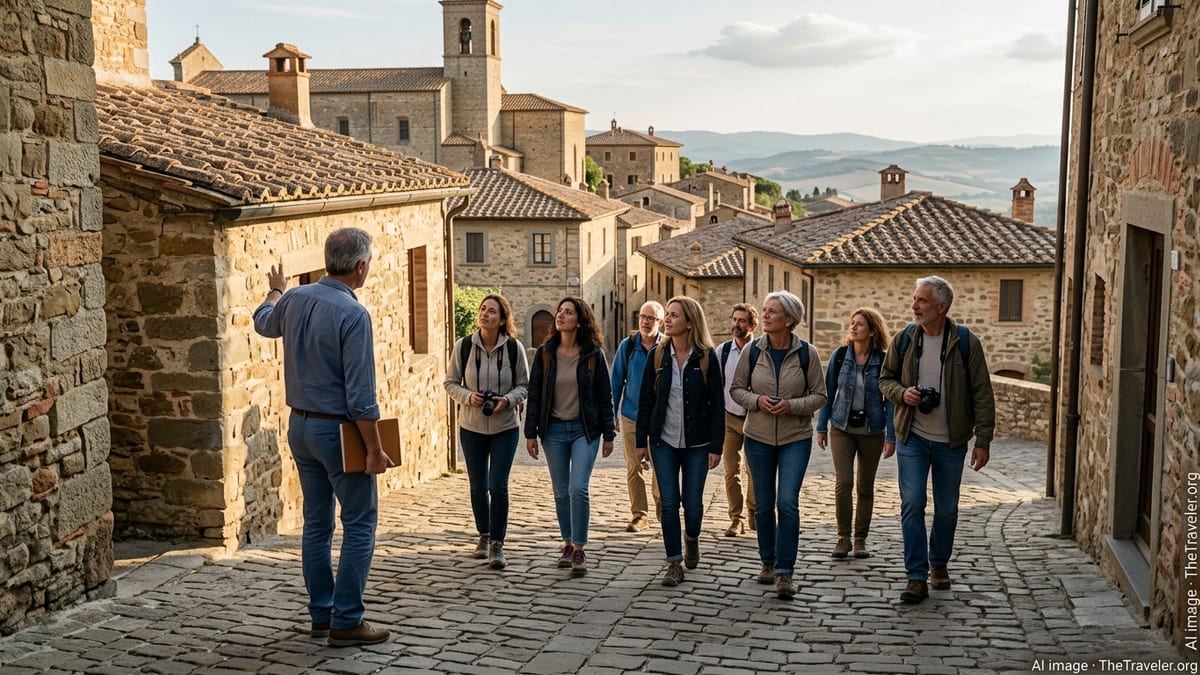
Demand Surges as Travelers Seek Space and Connection
Industry forecasts point to robust expansion in the organized land-tour segment, with reports indicating that multi-day itineraries are set for double-digit growth into 2025. A key feature of that momentum is shifting group composition: travel advisors in North America report that average group sizes are shrinking compared with pre-pandemic norms, even as overall passenger numbers rise.
Research from tour operator associations and market analysts indicates that small group tours are now among the fastest-growing product categories. In surveys of tour companies, small-group departures consistently rank at or near the top when operators are asked which offerings show the strongest passenger growth trajectories for the year ahead. That pattern suggests a structural shift rather than a short-lived response to health concerns.
Consumer behavior studies add further context. Global trend reports for 2024 and 2025 describe travelers who are more selective about how and with whom they travel, favoring itineraries that balance social interaction with personal space. According to these analyses, organized trips that bring together a limited number of like-minded travelers are increasingly seen as a way to enjoy the convenience of a tour while avoiding the anonymity and crowding associated with large buses.
These preferences are showing up in destination choices as well. Popular multi-day tour markets in Europe, North America, and parts of Asia are seeing heightened interest in walking routes, rural stays, and nature-based programs that lend themselves to smaller groups. As international tourism volumes recover to and beyond pre-pandemic levels, small-group formats are emerging as a pressure valve for destinations trying to disperse visitors more evenly.
Operators Redesign Itineraries Around Smaller Cohorts
Major tour brands and specialist operators are reconfiguring their multi-day portfolios to match the new demand. Companies long associated with classic coach touring now promote “always smaller than mainstream” groups, introduce dedicated small-group collections, or cap departures at lower passenger counts on high-demand itineraries. Product brochures for 2025 and 2026 emphasize more intimate group dynamics, with some itineraries marketed specifically for women-only or interest-based cohorts.
At the same time, multi-day specialists that built their brands around small groups are using that positioning to capture a larger share of the recovery. Intrepid-style adventures and similar products typically limit departures to fewer than 16 travelers, use locally owned hotels and guesthouses, and rely on public or small-vehicle transportation. Recent annual reports from such companies underline small-group touring as a core differentiator and link it to both customer satisfaction and repeat bookings.
New capital is also flowing into the segment. Multi-day tour platforms that aggregate and package small-group itineraries have secured substantial funding rounds to expand technology, inventory, and geographic reach. Investors are betting that as travelers become more comfortable booking complex, multi-country trips online, demand will favor curated, small-group programs that can be searched and compared digitally in the same way as flights or hotels.
Smaller groups are influencing operational decisions behind the scenes. Operators are adjusting contract terms with hotels, shifting to boutique properties that cannot accommodate large coaches but welcome recurring smaller groups, and experimenting with staggered departures to keep loads low while maximizing use of guides and vehicles. Many providers are also training staff to manage more flexible days, where individual preferences are easier to accommodate in a group of 12 than in a group of 45.
Personalization, Wellness, and Sustainability Shape New Products
The rise of small-group multi-day tours dovetails with broader travel megatrends around personalization, wellness, and sustainability. Market research into small-group travel shows a growing share of guests requesting at least one bespoke element in their itineraries, such as an extra night in a particular village, a private cooking class, or a modified hiking segment. Analysts report that more than half of small-group bookers now seek some form of pre-departure customization, even on scheduled departures.
Wellness and slow travel are significant drivers. Global tourism outlooks highlight strong growth in wellness tourism, with travelers drawn to itineraries that include yoga sessions, thermal spas, gentle trekking, and unplugged stays in nature. Small groups allow operators to incorporate these elements without overburdening local facilities or compromising the quiet atmosphere that guests expect from such experiences.
Sustainability expectations are also re-shaping multi-day product design. Policy-focused tourism reports from bodies such as the OECD describe growing pressure on destinations to address overcrowding, climate risk, and community impact. In response, many tour companies are reducing coach capacities, extending shoulder-season departures, and designing routes that spread visitors across lesser-known towns and rural areas. Small-group trips often highlight lower-impact transport, local food, and community-based activities that can be scaled responsibly.
Travel trend analyses further note increasing interest in “regenerative” and community-positive travel, where visitors aim to leave destinations better than they found them. Smaller groups are easier to integrate into local projects, homestays, and workshops without overwhelming hosts. This alignment between guest expectations and community capacity strengthens the appeal of small-group multi-day tours for destinations seeking higher-value, lower-footprint tourism.
Regional Variations: From Europe’s Trails to China’s Customized Groups
While the pivot toward smaller groups is global, its expression varies by region. In Europe, small-group growth is especially visible in walking and cycling tours that move slowly between villages, vineyards, and coastal paths. Recent market outlooks expect Europe’s small-group tour segment to grow at a healthy pace into the next decade, supported by sustained demand from North America and a rising appetite for rural and nature-based travel among European residents.
North American tour operators are capitalizing on domestic and regional opportunities. Reports on the land-tour outlook for 2025 indicate that advisors expect strong growth in tours across the United States and Canada, with national celebrations and major sporting events adding to demand. To manage this interest without amplifying overtourism, operators are leaning into smaller groups, more departures to secondary cities, and itineraries that combine headline attractions with lesser-known parks and towns.
In Asia, especially in China’s outbound market, recent travel trends reports highlight a marked shift toward smaller groups, self-guided segments, and customized itineraries. Chinese travelers booking outbound multi-day tours increasingly favor more flexible programs, often traveling as families or friendship groups with a dedicated guide rather than in large, mixed-coach parties. Tour companies in the region report that average group sizes have fallen compared with pre-2020 norms as travelers prioritize personalization and quality over volume.
These regional patterns are reinforced by global survey work suggesting that younger cohorts, including Millennials and Gen Z, are particularly inclined toward small-group and experiential travel. Their preferences, amplified by social media, are helping to normalize the idea that a “tour” can mean a curated, small-scale experience rather than a one-size-fits-all coach package.
Technology, Distribution, and the Competitive Landscape
Technology platforms are accelerating the shift to small-group multi-day tours by making complex itineraries more discoverable and bookable online. Multi-day tour marketplaces and tour-tech providers now allow operators of all sizes to list small-group departures with live availability, dynamic pricing, and detailed day-by-day breakdowns. This digital visibility helps niche operators compete with legacy brands and gives travelers more options beyond traditional mass-market tours.
Consumer-facing travel trend coverage notes that social media content is a powerful catalyst, particularly for small-group adventure and cultural trips. Industry reports for 2025 attribute a significant portion of small-group bookings among younger travelers to inspiration found on platforms such as Instagram and TikTok, where images of small hiking parties, intimate food tours, and off-the-beaten-path villages circulate widely. This user-generated content effectively markets the small-group format as aspirational and shareable.
The competitive landscape is evolving as traditional tour operators, online travel agencies, and newer platforms converge around similar product types. Some airline and hotel brands are experimenting with bundled small-group experiences, while destination marketing organizations work with local partners to develop multi-day routes that can be sold by multiple distributors. Flexible booking policies, now common across the industry, further lower the barrier to committing to a multi-day tour.
As these dynamics play out, observers expect small-group departures to become a standard, rather than niche, feature of the multi-day tour market. For operators, the task will be balancing the economic realities of running more departures with fewer guests against the premium pricing and loyalty that small-group experiences can command. For travelers, the trend points to a future in which organized multi-day touring is defined less by headcounts and more by the depth and distinctiveness of the journey.