

More news on this day
Central Visayas is leaning into sensors, startups, and science-backed farming as Cebu’s emerging smart farms and tech hubs begin to recast the region as the Philippines’ next agri‑tourism magnet.
Get the latest news straight to your inbox!
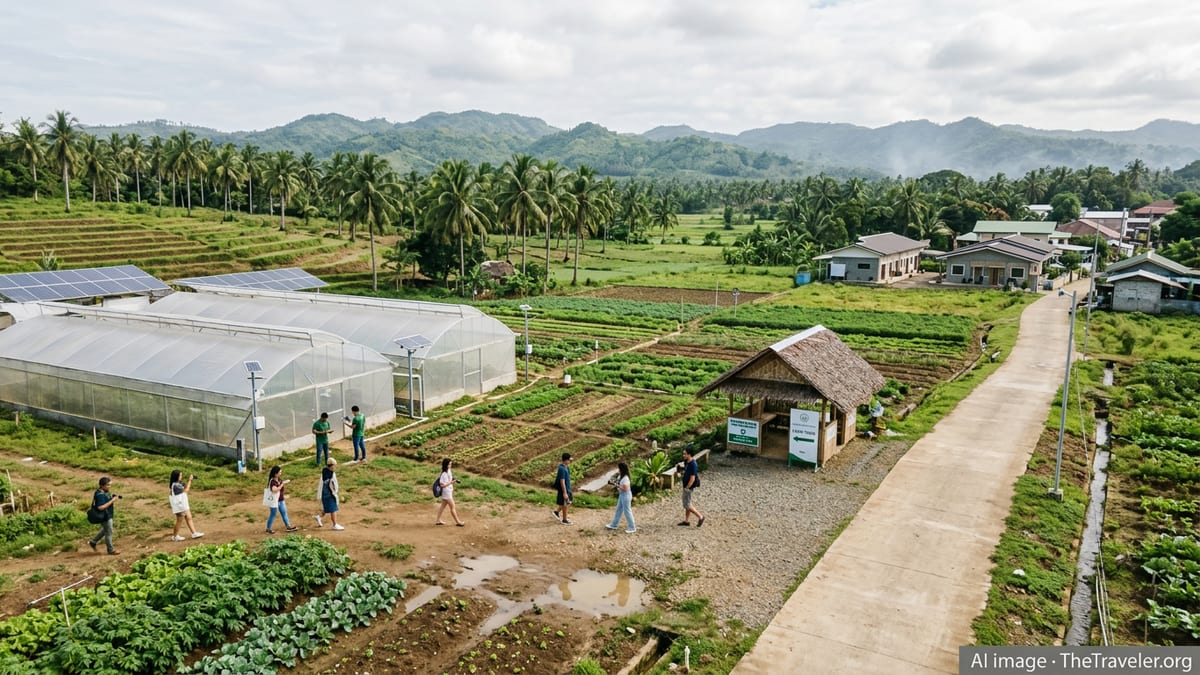
Tech-Driven Farming Arrives in a Tourism Powerhouse
Cebu’s long-standing reputation as a sun-and-sea destination is widening to include fields and greenhouses as local agriculture projects start to deploy smart technologies more commonly associated with city-based innovation hubs. Publicly available information from science and tourism agencies points to a broader Visayas shift toward climate-smart, tech-enabled agriculture, with Central Visayas expected to benefit from spillover know-how and visitor interest generated across the island group.
Across the Visayas, recent initiatives such as smart greenhouse programs and precision-farming pilots are being promoted as tools to modernize food production while supporting nearby resort destinations that rely heavily on fresh, high-value crops. Although one of the flagship smart greenhouse projects is located in neighboring Western Visayas, reports indicate that it is being framed as a demonstration model for other regions, including Central Visayas, as they plan similar facilities that can double as educational agri‑tourism sites.
For Cebu, this regional momentum coincides with sustained growth in visitor arrivals and a renewed emphasis on experiences that move travelers beyond the beach. Tourism studies and briefing papers on Central Visayas describe agriculture, coastal ecosystems, and community-based initiatives as key assets that can be layered with technology to attract new markets interested in sustainability, food provenance, and hands-on learning.
Innovation Hubs Link Startups and the Countryside
Cebu’s emerging network of innovation spaces is playing a quiet but significant role in this shift. A Department of Science and Technology innovation hub in Cebu City has been positioned as a venue for technology developers and startup builders, including those working on digital solutions for agriculture, logistics, and climate resilience. The facility adds to a broader ecosystem anchored by Cebu IT Park and new collaboration hubs being developed by local business groups.
Business press and startup community updates describe Cebu as an increasingly active base for young companies, with pitching competitions and regional accelerators highlighting agritech, food technology, and marine-related solutions among their focus areas. One Visayas-wide deep-tech program recently expanded its regional edition to Cebu, citing agriculture, fisheries, and food systems as priority fields for innovators seeking commercialization pathways.
These developments are not yet a full-fledged agritech cluster, but they are creating the enabling environment for smart farming projects that can be showcased to visitors. Travel planners and regional economic briefs have begun to frame Cebu as both a tourism gateway and an emerging technology node, suggesting that rural municipalities around the province could tap city-based incubators for expertise when upgrading farms to host sensor-equipped greenhouses, automated irrigation, or drone-assisted crop monitoring.
From Demo Farms to Agri-Tourism Circuits
As infrastructure for conventional tourism expands, Central Visayas officials have also championed themed routes and circuits that encourage travelers to combine coastal attractions with inland visits. Coverage of the One Visayas tourism circuits, launched to link Western, Central, and Eastern Visayas along with the Negros Island Region, highlights heritage, gastronomy, and nature-based experiences as key pillars. Such circuits create a framework that local governments in Cebu can use to insert smart demonstration farms, research stations, and community-led agri‑tourism stops into existing itineraries.
Within Cebu province, the rollout of tourist rest areas and supporting facilities in towns such as Medellin, Moalboal, and Carmen has improved basic services for travelers heading into the countryside. Publicly available information on these projects notes that the structures are designed to help visitors navigate surrounding attractions, many of which are agricultural or nature-based. As farms adopt greenhouse technology, precision irrigation, or digital traceability tools, these rest areas could become gateways to nearby “smart farm” tours marketed alongside beaches and dive sites.
Regional science and innovation events held in Cebu in recent months have consistently underscored the role of technology in building a resilient blue and green economy. Presentations from these gatherings highlight opportunities to integrate smart aquaculture, seaweed farming, and sustainable coastal agriculture into tourism offerings, giving travelers a window into how local communities are adapting to climate and market pressures through science-backed interventions.
Cebu’s Creative, Tech, and Rural Communities Converge
Cebu City’s recognition within international creative networks has reinforced its positioning as a laboratory for innovative and experiential tourism. A recent monitoring report on the city’s participation in a global creative cities program notes the presence of dozens of creative hubs and makerspaces, several of which collaborate with universities and technology agencies. These spaces are increasingly seen as potential partners for rural communities interested in packaging farm-based activities, food production, and craft into marketable visitor experiences.
Local entrepreneurship communities describe a pipeline of student-led and early-stage projects focused on agriculture, food, and climate resilience, even as they acknowledge persistent challenges around funding and long-term support. Hackathons, innovation challenges, and research fairs in Cebu regularly feature prototypes for farm monitoring systems, supply-chain platforms, and climate data tools that, over time, could be deployed in real-world farm settings open to visitors.
This convergence of creative practice, digital technology, and traditional livelihoods is laying the groundwork for new forms of agri‑tourism. For travelers, it suggests that future itineraries in Central Visayas may involve not only tasting local produce but also seeing firsthand how sensors, data dashboards, and automation are reshaping smallholder plots, greenhouses, and coastal farms across Cebu and its neighboring islands.
Positioning Central Visayas as a Testbed for Climate-Smart Travel
Analysts and policy briefs focusing on Central Visayas increasingly frame the region as a testbed for climate-smart strategies that blend tourism, food security, and innovation. Cebu’s role as an air and sea hub for the wider Visayas, combined with its growing pool of technologists and creative professionals, positions it as a logical launchpad for smart farm showcases that can be reached on short excursions from the city.
As neighboring provinces develop high-tech demonstration farms and greenhouse complexes aimed at supporting tourist-heavy destinations, pressure is likely to grow for Cebu’s agricultural communities to adopt similar models. The prospect of farm visits that feature app-guided tours, sensor-powered greenhouses, and interactive learning about climate-resilient crops adds a new dimension to the region’s tourism pitch, especially for visitors seeking more purposeful travel experiences.
While many of these projects are still in early stages, publicly available information suggests that the pieces are steadily coming together: innovation hubs in the city, science-backed agriculture programs across the Visayas, and tourism circuits designed to disperse visitors into rural areas. For Central Visayas, and Cebu in particular, the emerging narrative is that of a destination where smart farms and smart trips evolve side by side, turning technology itself into part of the travel experience.