

More news on this day
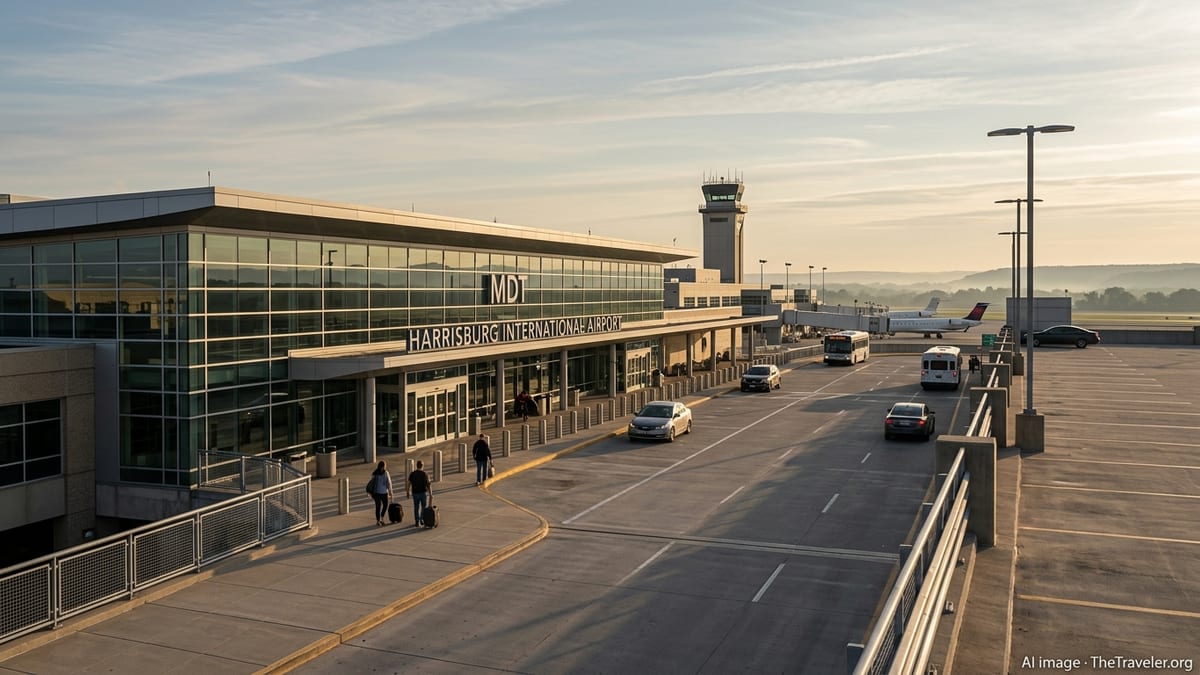
Harrisburg International Airport is emerging as a quiet winner in 2026, combining record traffic, streamlined operations and a calm, compact terminal that is persuading more central Pennsylvania travelers to skip larger hubs.
Get the latest news straight to your inbox!
Record Passenger Growth Signals Shifting Travel Habits
Harrisburg International Airport ended 2025 with its busiest year on record, serving more than 1.6 million passengers for the first time. According to publicly available figures from the Susquehanna Area Regional Airport Authority, that milestone capped a fourth straight year of growth and represented a double-digit increase in traffic compared with 2024, underscoring how more residents are choosing to start their trips close to home.
Reports indicate that the growth has been broad-based rather than tied to a single carrier. Airport updates describe steady gains across the five commercial airlines serving the field, reflecting both business travel tied to the state capital and leisure demand to major hubs and sun destinations. A 15 percent jump in passengers in February 2025 compared with the same month a year earlier pointed to strong momentum heading into the peak summer and holiday periods.
Industry analysts note that such numbers are notable for a mid-sized regional airport competing with larger East Coast gateways. Instead of driving to Philadelphia, Baltimore or Newark to chase marginally lower fares, many travelers in the Harrisburg region appear increasingly willing to trade a wider menu of routes for shorter commutes, easier parking and a more predictable day-of-travel experience.
The trend has implications for the broader regional economy. Increased passenger volumes support additional airport jobs, justify infrastructure upgrades and make Harrisburg more attractive to airlines evaluating where to deploy precious aircraft and crews. For central Pennsylvania, a busier but still manageable local airport is becoming a more important piece of the transportation network.
Route Expansions Improve Connectivity Without the Chaos
Passenger gains at Harrisburg have been matched by a gradual thickening of the route map. Published schedules show that American Airlines launched new links from Harrisburg to its Miami and Phoenix hubs beginning in February 2025, opening one-stop options to Latin America and the western United States while giving local travelers more flexibility during peak periods.
United Airlines has also been rebuilding and expanding its presence. Airport communications highlight growing service from Harrisburg to United’s hubs at Washington Dulles and Chicago O’Hare, with total departing seats across all carriers projected to rise by more than 15 percent between the spring of 2024 and the same period in 2025. That additional capacity has helped smooth out peaks and valleys in demand, reducing the sense of crowding that can quickly overwhelm smaller terminals.
Not every route adjustment has been positive. Coverage in regional outlets notes that Frontier Airlines chose to end service at Harrisburg again after briefly returning with an Orlando flight in 2024. Even so, the airport’s record traffic in 2025 suggests that overall connectivity has strengthened despite the departure of an ultra-low-cost carrier, helped by the larger network airlines and seasonal offerings from other operators.
For travelers, the practical effect is that Harrisburg is better plugged into the national network than it was just a few years ago, even if nonstop choices remain limited for certain long-haul destinations. The balance between added flights and the airport’s modest scale is a key ingredient in keeping the experience manageable while still offering enough options to make MDT a viable starting point for most trips.
On-Time Performance and Short Lines Enhance Reliability
Reliability has become a selling point at Harrisburg. Federal transportation data for mid-2024 show that the airport’s on-time departure and arrival percentages were competitive with many similar-sized facilities nationwide. While no airport is immune to weather or air traffic disruptions, the relatively lean schedule at MDT can help reduce the cascading delays that often afflict busier hubs with tightly packed operations.
Recent traveler commentary shared on public forums reinforces that perception of predictability. Passengers describing trips through Harrisburg in March 2026 report moving from the parking garage to their gate in roughly 15 minutes and clearing security in as little as six minutes during typical weekday departures. Although those accounts are anecdotal and can vary by time of day and season, they align with the airport’s reputation for modest crowds and straightforward wayfinding.
Shorter lines at security and check-in are particularly appealing to infrequent travelers and families. The ability to arrive closer to departure time, avoid lengthy queues and navigate a single, compact concourse reduces stress and the risk of missed flights. For business travelers, the time savings can make same-day trips more realistic, especially when compared with driving to larger airports where parking and security can add an extra hour or more.
Combined with the airport’s scale and relatively simple layout, these operational advantages contribute to what many passengers describe as “smooth skies” at MDT: a travel day defined more by routine than by surprises.
Targeted Upgrades Keep the Terminal Comfortable and Functional
Harrisburg International is not engaged in the kind of billion-dollar terminal transformation underway at some larger airports, but it has been steadily modernizing key pieces of its infrastructure. Project summaries detail a series of investments, including federal funding for cargo apron expansion that provides additional parking positions for UPS and FedEx aircraft and supports the airport’s role as a logistics hub.
On the passenger side, publicly available airport updates highlight progress on terminal modernization initiatives such as the installation of six new jet bridges, the first of which entered service at an American Airlines gate in late 2025. New boarding bridges improve accessibility, protect travelers from weather and reduce boarding times, small changes that collectively enhance the experience at the gate.
Ground access has also been a focus. Recent project documentation points to earlier work reconstructing Airport Drive, improving the main roadway connection into the terminal area. Seasonal operating notices for the parking garage and emphasis on clear detour signage during construction suggest that the airport has attempted to manage upgrades while keeping disruptions to a minimum.
These incremental improvements reflect a strategy of evolution rather than reinvention. Instead of chasing architectural landmarks or expansive retail districts, Harrisburg appears to be prioritizing functional comforts that matter most in a smaller facility: reliable boarding equipment, convenient vehicle access and straightforward terminal circulation.
Regional Context Helps MDT Stand Out
Harrisburg’s trajectory is playing out against a backdrop of significant airport investment across Pennsylvania. In Pittsburgh, a new terminal complex opened in late 2025 following a multiyear, multibillion-dollar modernization program aimed at creating a more efficient, passenger-focused hub. That high-profile project has captured much of the statewide aviation spotlight, demonstrating how large airports are rethinking their infrastructure to stay competitive.
Yet for travelers in central Pennsylvania, the comparison often reinforces the appeal of MDT’s smaller footprint. While bigger facilities may offer more nonstop destinations, they can also introduce longer walks, more complex parking systems and higher levels of congestion. Recent discussions among travelers online about new terminals and parking changes at other airports underscore a growing awareness that scale alone does not guarantee convenience.
Against that regional backdrop, Harrisburg’s strength lies in delivering a stable, low-friction experience while still adding capacity and connectivity. Record passenger totals, new links to major hubs and ongoing, targeted upgrades signal that the airport is growing into its role without sacrificing its core advantage: the ease of getting from car to gate with minimal hassle.
As 2026 unfolds, publicly available information suggests that MDT is well positioned to continue winning over travelers who value smooth operations and manageable surroundings over sprawling terminals and sprawling crowds. For many in central Pennsylvania, smooth skies increasingly start in Middletown.