

More news on this day
Security screening at Fort Lauderdale-Hollywood International Airport is showing signs of returning to normal after a tense mid-March stretch of long Transportation Security Administration lines tied to the spring break rush and a broader federal government shutdown.
Get the latest news straight to your inbox!
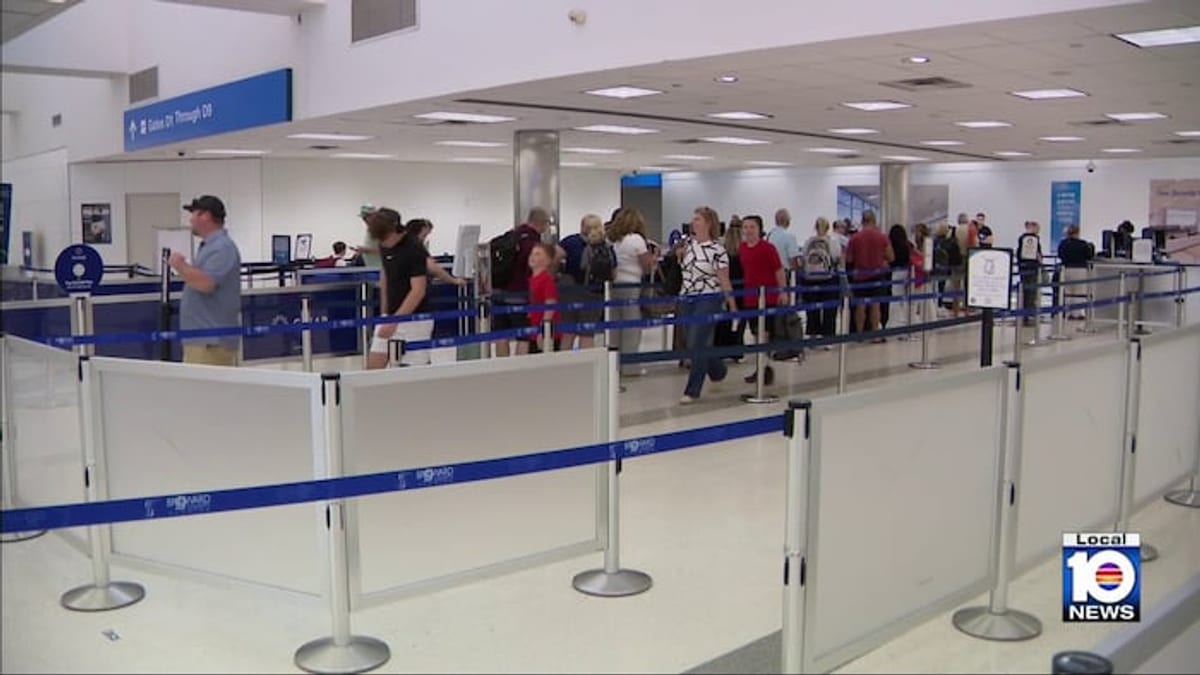
Image by local10.com
TSA bottlenecks give way to manageable queues
Travelers passing through Fort Lauderdale-Hollywood International Airport in recent days are encountering shorter and steadier TSA lines compared with the gridlocked scenes reported around March 15, when security queues stretched toward terminal doors during peak morning hours. Publicly available wait time trackers that aggregate official data now show typical midafternoon waits in the 15 to 25 minute range at most checkpoints, a notable improvement from earlier in the month when some passengers reported far longer holds.
Airport-focused discussion forums for Broward County reflect the shift. Posts shared on March 27 describe regular screening lines with only a handful of people waiting and note that conditions appeared to calm as the core college spring break travel period tapered off toward the end of the month. These firsthand accounts contrast with posts from the prior weekend, when users described crowded departure halls and advised arriving unusually early for domestic flights.
Third-party tools that summarize historical checkpoint data also suggest that recent throughput at Fort Lauderdale has begun to track more closely with typical high-season patterns, rather than the acute spikes seen in mid-March. While early-morning banks of departures still generate heavier volumes, reports indicate most lines are now moving consistently, without the stop-and-start surges that defined the height of the spring break rush.
The smoothing of TSA waits has coincided with a broader normalization in national screening volumes as spring break peaks pass at many sun destinations. Fort Lauderdale, which serves both domestic beachgoers and Caribbean-bound travelers, appears to be following that trend after several weeks of elevated pressure on security checkpoints.
Spring break surge reshapes South Florida travel flows
This year’s spring break season has been especially consequential for Fort Lauderdale. Published coverage in late March highlighted how student crowds that once packed South Beach shifted in larger numbers toward Broward County’s oceanfront, following a series of moves by Miami Beach to curb rowdy party scenes. That reorientation of demand placed additional strain on Fort Lauderdale’s hotels, roads and, critically, its airport during the first half of March.
On peak weekends, Fort Lauderdale-Hollywood International Airport functioned as a primary departure point for returning spring breakers headed to the Midwest, Northeast and other regions. The timing coincided with a powerful storm system and a federal shutdown that affected staffing across the Transportation Security Administration, contributing to uneven checkpoint performance at multiple major airports. While delays in Fort Lauderdale were not solely driven by local issues, the convergence of these factors magnified the experience for travelers using FLL as a gateway.
As the core student break window closes and family-focused Easter and April school holidays approach, travel demand in South Florida is expected to remain firm but less concentrated into single weekends. Industry analysts note that this more staggered pattern of departures generally gives airports additional room to manage screening resources, reducing the likelihood of the extreme lines seen earlier in March.
Fort Lauderdale’s experience this season underscores how quickly regional policy changes and social media-driven travel trends can redirect large numbers of visitors, with airport operations often feeling the impact first. The rapid swing from severe crowding to relatively smooth flows at TSA checkpoints within a span of roughly two weeks illustrates that volatility.
National factors still in play for airport security
The easing of lines at Fort Lauderdale comes against a complex national backdrop for aviation security. Reports from outlets tracking the federal shutdown and its impact on transportation describe hundreds of TSA officers leaving their posts nationwide since February, as well as higher than usual rates of unscheduled absences. Those developments contributed to long lines at large hubs such as Atlanta and Houston, and similar images from Fort Lauderdale were widely circulated in mid-March coverage of the situation.
Despite these pressures, Fort Lauderdale’s recent experience suggests that local conditions can improve quickly when passenger volumes normalize, even if broader staffing challenges persist. Travel data indicates that the worst of the spring break congestion has passed for many Florida airports, allowing existing personnel and screening infrastructure to better absorb daily peaks.
Travel commentators caution, however, that systemic issues like staffing shortfalls and ongoing federal funding uncertainty could resurface during future holiday periods. For now, though, the balance between passenger demand and checkpoint capacity at Fort Lauderdale appears more favorable than it was during the most intense days of the March rush.
Airlines serving the airport are also adapting schedules as winter and early spring demand patterns give way to shoulder season. Slightly lower frequencies on some leisure routes can ease crowding at ticket counters and security checkpoints, contributing to the more orderly scenes now being reported.
What travelers can expect heading into April
For passengers planning to fly out of Fort Lauderdale in the coming days, the recent trend points toward a more predictable experience. Reports from March 27 and 28 describe security lines that move steadily, with many travelers clearing standard screening in under half an hour outside of the busiest early-morning bank of flights. TSA PreCheck and other expedited options, when operating, appear to be reducing waits even further for enrolled passengers.
Travel experts continue to recommend arriving at the airport at least two hours before domestic departures and three hours before international flights, particularly for early morning and late afternoon departures when multiple large jets are scheduled to leave in close succession. However, the need to build in extra buffer time beyond these customary guidelines seems to be diminishing as the spring break peak recedes.
Digital tools that display near-real-time checkpoint estimates remain a useful resource for travelers departing Fort Lauderdale. These services aggregate official data and user reports to present expected waits by terminal and time of day, allowing passengers to adjust their arrival time when conditions tighten unexpectedly.
While no major operational changes have been publicly announced at Fort Lauderdale-Hollywood International Airport in connection with the recent easing of lines, the airport’s experience during March is likely to inform future staffing and communication strategies for peak travel windows. For now, though, most indications point to a return to smoother, more manageable security screening for travelers heading home from South Florida’s beaches.