

More news on this day
After days of spring break chaos marked by lengthy security lines and widespread flight disruptions, travelers passing through Fort Lauderdale-Hollywood International Airport are beginning to see smoother check-ins and shorter waits at Transportation Security Administration checkpoints.
Get the latest news straight to your inbox!
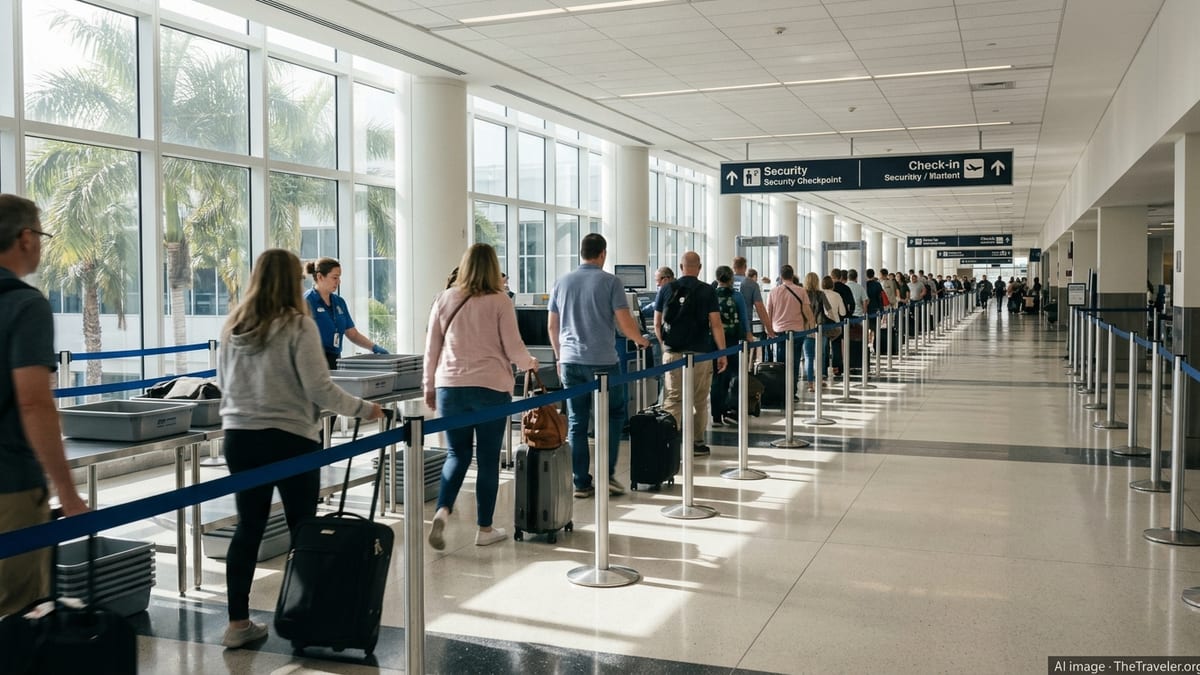
TSA Lines Ease As Peak Spring Break Rush Passes
Publicly available tracking data and local coverage indicate that security wait times at Fort Lauderdale-Hollywood International Airport (FLL) have begun to ease heading into the final weekend of March. The shift follows a turbulent mid-March period in which spring break demand, weather disruptions and a partial government shutdown combined to overwhelm security checkpoints and airline operations across Florida.
Earlier in the month, reports highlighted passengers at FLL facing serpentine queues and waits of up to two hours or more at TSA screening, particularly on peak departure days when student travel and cruise traffic overlapped. Published coverage also pointed to hundreds of delays and dozens of cancellations on some of the busiest days, placing additional pressure on already crowded concourses.
By late March, those extreme conditions appear to be moderating. While the airport remains busy, especially during early morning and late afternoon departure banks, traveler reports and airport wait-time dashboards show more typical screening times returning, with many periods in the day now under 30 minutes for standard screening and significantly lower for TSA PreCheck.
From Spring Break Gridlock To More Predictable Flows
The easing of lines at FLL reflects a broader seasonal pattern. Travel industry data show that mid-March routinely delivers some of the highest passenger volumes of the year in South Florida, as college spring break crowds converge with family vacations and cruise departures. In 2026, that surge was amplified by strong domestic demand and additional seasonal routes into Fort Lauderdale, including special spring break services announced by several carriers.
At the height of the rush, those added flights helped push FLL close to operational capacity. Regional news outlets documented extensive queues at security and check-in, while flight-tracking services showed elevated levels of delays and cancellations across several Florida airports, with Fort Lauderdale frequently among the most affected. The situation was compounded by broader national disruptions, including a major March winter storm in the Midwest and Northeast that rippled through airline networks.
As the calendar moves beyond the busiest spring break weeks, schedules and passenger flows are gradually coming back into balance. Airlines have begun cycling out some of their heaviest peak-day schedules, and demand from student groups is tapering, easing the strain on terminal infrastructure and security staffing even as overall leisure travel remains strong.
Operational Adjustments Help Stabilize Security Waits
Airport and federal operational changes have also contributed to the improvement in TSA line conditions. Publicly available information shows that airports across Florida, including Fort Lauderdale, emphasized staffing adjustments at checkpoints during the March peak, opening additional lanes during early morning surges and redirecting travelers between checkpoints to smooth out bottlenecks.
Travelers in recent days have reported a more orderly experience at FLL, with clearer wayfinding to security, more consistent use of queue management stanchions and real-time electronic displays of approximate wait times. Those tools, combined with the gradual drop in peak-period volumes, have reduced the stop-and-start crowding that characterized the worst days of the rush.
Airlines have helped by encouraging passengers to arrive early but not excessively so, attempting to avoid artificially inflating congestion with large numbers of travelers queued several hours before departure. Some carriers have also highlighted self-service bag drop and mobile boarding pass options at Fort Lauderdale to keep counters and security accesses flowing more smoothly.
What Travelers Can Expect At FLL In The Coming Weeks
While conditions at Fort Lauderdale are markedly better than in mid-March, travelers should still prepare for a busy airport environment as the broader spring travel season continues into April. Industry forecasts point to high leisure demand persisting, especially on routes linking South Florida to the Northeast, Midwest and key international leisure markets.
Security screening times are likely to remain variable throughout the day, with the highest risk of congestion during early morning departures between roughly 6 a.m. and 9 a.m., and again in the late afternoon as banks of domestic and international flights depart. Outside those windows, recent patterns suggest that many travelers are moving through security in less than half an hour.
Travel experts recommend that passengers departing FLL continue to follow standard guidance: arrive at least two hours before domestic flights and three hours before international departures, check terminal and gate assignments in advance, and use airline apps or airport information screens to monitor both flight status and security wait-time estimates. Travelers enrolled in TSA PreCheck or similar expedited screening programs can generally expect significantly shorter waits but may still encounter crowds during the heaviest peaks.
Broader Implications For Florida’s Spring Travel Corridor
Fort Lauderdale’s transition from gridlock to more manageable operations carries implications for the broader Florida travel corridor, where airports from Orlando to Tampa and Miami have also grappled with heavy spring break volumes. Data compiled by travel trackers show that several of these airports ranked among the nation’s leaders in delays and cancellations during the mid-March peak, with security queues stretching well beyond typical norms.
The gradual normalization at FLL suggests that the most intense spring break pressure on airport infrastructure may be passing, even as overall travel demand stays elevated. For airlines, that shift provides an opportunity to work through residual delays, reposition aircraft and crews, and restore more reliable schedules into and out of South Florida.
For travelers, the return of smoother security processing at Fort Lauderdale is a welcome sign at the close of an unusually challenging spring break season. While patience and preparation are still advised, current conditions indicate that the worst of the bottlenecks at FLL have eased, allowing passengers to start and end their South Florida trips with a more predictable airport experience.