

More news on this day
Thousands of travelers across Canada are facing another day of disruption as winter storms and Arctic air masses trigger at least 60 new flight cancellations and more than 635 delays, snarling operations for Air Canada, WestJet, Porter and other carriers at key hubs from Vancouver to Halifax.
Get the latest news straight to your inbox!
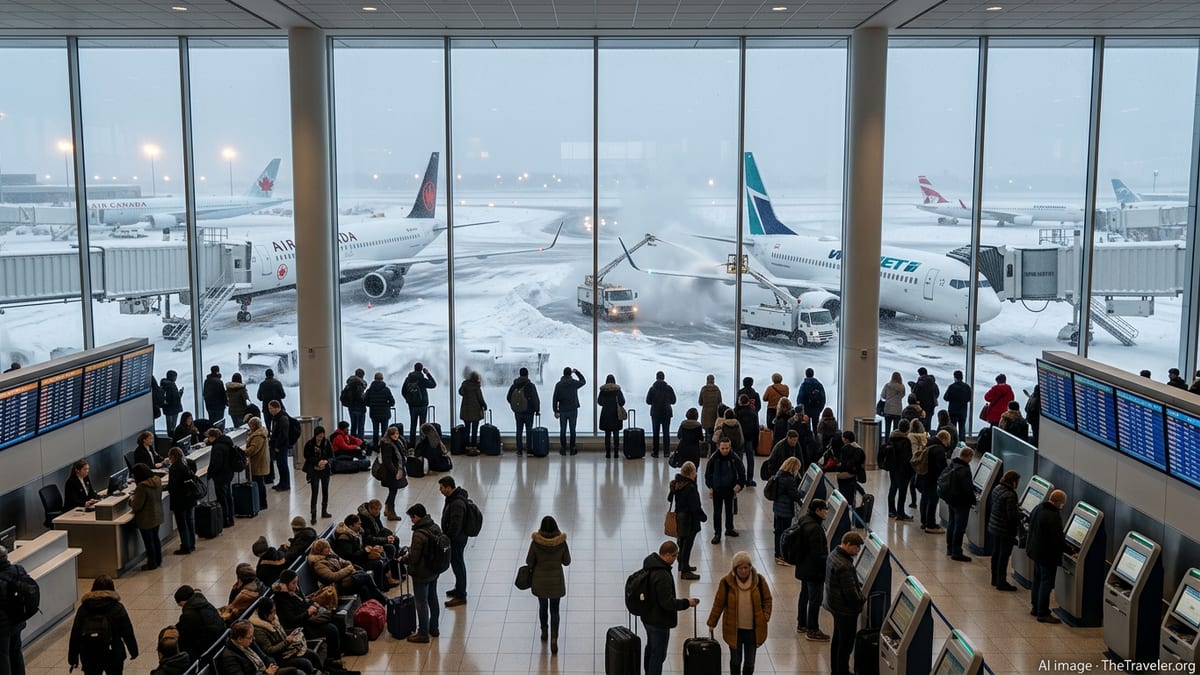
Winter Weather Batters Canada’s Major Air Hubs
A series of snow squalls and Arctic fronts sweeping across the country have combined to create difficult conditions at some of Canada’s busiest airports, including Vancouver, Calgary, Toronto, Ottawa, Montreal and Halifax. Publicly available meteorological summaries point to persistent low visibility, drifting snow and dangerous wind chills, which have pushed airport operations to the limit over several consecutive days.
In Toronto and Montreal, heavy snowfall and strong crosswinds have reduced runway capacity and lengthened the time required for plowing and de icing between movements. In Western Canada, frigid temperatures in Calgary and periods of wet snow in Vancouver have strained de icing infrastructure and slowed aircraft turnaround times. Similar conditions in Atlantic Canada around Halifax have periodically reduced arrivals and departures to a trickle.
Operational data published by major airports and third party tracking services indicates that the latest wave of disruption has led to at least 60 fresh cancellations and roughly 635 new delays nationwide, on top of earlier weather related interruptions this season. The combined effect has rippled through the country’s tightly interconnected domestic network, leaving aircraft and crews out of position and compounding delays even in regions where skies have cleared.
Airlines Struggle to Maintain Schedules
Air Canada, WestJet, Porter and several regional operators are all reporting elevated levels of cancellations and late departures as they adjust schedules in response to rapidly changing forecasts. In some cases, carriers have pre emptively thinned out flight programs on storm affected days to avoid even larger backlogs at gates and de icing pads.
According to widely available performance dashboards, Air Canada has seen significant schedule pressure at its main hubs in Toronto Pearson, Montreal Trudeau and Vancouver International, where morning banks of departures have been particularly vulnerable to ground stops and flow restrictions. WestJet has faced similar challenges in Calgary and Edmonton, with knock on effects for transcontinental routes linking Western Canada to Ontario and Quebec.
Porter Airlines, which operates from downtown Toronto’s Billy Bishop Airport as well as expanding jet bases in Ottawa and Montreal, has also been forced to modify operations as crosswinds and low ceilings limit runway use. Smaller regional carriers serving northern communities and secondary cities report that airport closures and blowing snow have forced diversions and cancellations on short notice.
Publicly available information shows that airlines are prioritizing safety based decisions around de icing hold times and runway conditions, which can change quickly during bands of heavy snow. These measures, while essential, inevitably translate into extended waits on taxiways, gate holds and missed connections for travelers trying to move through the system.
Travelers Face Long Lines, Missed Connections and Overnight Stays
The operational strain is being felt most acutely by passengers, many of whom have found themselves stuck in terminals or forced to rebook itineraries multiple times. Reports from major airports describe long lines at customer service counters, crowded seating areas and departure boards dominated by delayed indicators throughout the day.
At Toronto, Ottawa and Montreal, travelers connecting to transborder and international flights have been particularly exposed when inbound domestic segments arrive late or are cancelled outright. In several cases, passengers have missed once daily departures to sun destinations or overseas cities, forcing overnight stays and unplanned hotel searches in already busy urban centers.
Across Western Canada, travelers in Vancouver and Calgary have contended with repeated schedule changes as airlines juggle aircraft availability and crew duty limits. Some passengers report being rebooked through alternate hubs or secondary airports, lengthening already long journeys and increasing the likelihood of luggage arriving later than its owners.
Consumer facing guidance from airports and carriers stresses the importance of checking flight status before leaving for the airport and using mobile apps or online tools to manage rebookings where possible. Many airlines have published flexible change policies for the current weather system, allowing affected customers to move travel dates or routings without additional fees within specified windows.
Arctic Cold Wave Extends the Disruption Timeline
The storms affecting Canadian aviation are part of a broader Arctic cold pattern that has dominated large parts of North America through late January and into March. Climate and weather analyses describe a persistent flow of polar air dipping southward, fueling repeated rounds of snow, ice and extreme wind chills across the Prairies, central Canada and the Atlantic provinces.
In major cities such as Toronto, Ottawa and Montreal, recent events have included some of the heaviest single day snowfalls on record, combined with temperatures low enough to challenge de icing operations and create frostbite risks for workers on exposed ramps. In Western hubs like Calgary and Edmonton, the combination of bitter cold and wind has periodically pushed conditions near operational thresholds for ground handling and fueling.
Forecast discussions suggest that while the most intense snowfall bands may ease in the coming days, intermittent flurries, blowing snow and lingering Arctic air could continue to affect flight operations intermittently. Even as weather gradually improves, the backlog of displaced aircraft, crew rotations and rescheduled passengers may take several days to fully resolve across the national network.
Industry observers note that extreme winter events are not new to Canada’s aviation system, but the scale and duration of this season’s cold wave have highlighted the vulnerability of tightly scheduled networks. The combination of hub congestion, high travel demand and weather induced constraints has left little room to absorb shocks when storms arrive in rapid succession.
What Impacted Passengers Can Do
With thousands of travelers still trying to reach their destinations, attention has turned to practical steps passengers can take while the disruptions continue. Travel advisories from airlines and airports emphasize that the fastest way to make changes is often through digital channels rather than in person counters, which can become overwhelmed during peak disruption periods.
Passengers whose flights have been cancelled or significantly delayed are being encouraged by public information resources to review their airlines’ rebooking and refund policies, including any options to reroute through different hubs or shift travel to later dates when weather is expected to improve. For those with time sensitive commitments, same day alternatives may be limited, particularly on routes where carriers operate only one or two daily frequencies.
Travel experts also point to the role of travel insurance and credit card protection benefits, which can help offset costs for meals, accommodations and incidentals when journeys are disrupted by weather. However, eligibility rules and documentation requirements vary, making it important for travelers to retain receipts and keep records of updated itineraries and delay notifications.
While there is no immediate sign of a quick return to fully normal operations, gradual improvements in weather at key hubs should allow airlines to rebuild schedules and clear backlogs over time. For now, passengers across Canada are being advised to prepare for continued uncertainty, pack additional patience and flexibility into their plans, and monitor conditions closely as winter’s grip shows few signs of loosening.