

More news on this day
Hundreds of passengers were left stranded at Denver International Airport on March 6 and 7 after a powerful late-winter snowstorm triggered hundreds of delays and cancellations, snarling connections to major U.S. hubs and transatlantic gateways in Europe.
Severe Snowstorm Turns Mile-High Hub into Bottleneck
Denver International Airport, one of the nation’s busiest connecting hubs, struggled to keep operations moving as bands of heavy snow, low visibility and de-icing backlogs converged on Friday. Flight-tracking data showed hundreds of departures and arrivals pushed well behind schedule, with scores of flights ultimately canceled as airlines ran out of recovery options late in the day.
The disruption quickly rippled beyond Colorado. Denver’s central position in domestic and international networks meant delays spread to New York, Los Angeles and Chicago, as well as to long-haul services linking the United States with Europe. Passengers bound for London and Paris reported missed connections and involuntary overnight stops as aircraft and crews were left out of position.
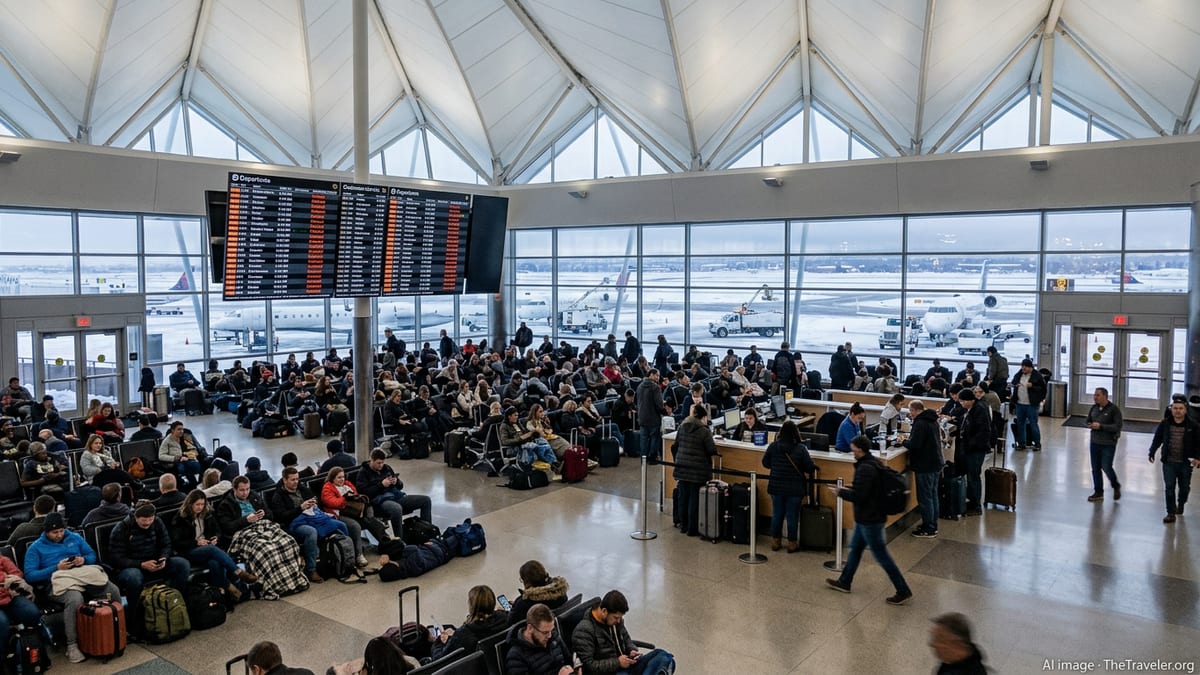
Inside the terminal, crowded gate areas and growing lines at customer-service desks painted a familiar picture of modern air travel under stress. Families sprawled out on the floor with luggage piled around them, while solo travelers refreshed airline apps in search of new itineraries and standby seats. With limited hotel availability near the airport, many resigned themselves to sleeping in the terminal.
Airlines Grapple With Domino-Effect Disruptions
Major U.S. carriers that rely on Denver as a key connecting point, including United Airlines, Southwest, Delta and American, faced a complex operational puzzle. Aircraft queued for de-icing, crews bumped up against duty-time limits and arrival rates were throttled as air-traffic controllers managed snow and changing wind conditions.
Even when conditions began to improve, the backlog of late-running flights meant that simply clearing the runway and taxiways was not enough to restore normal service. Aircraft scheduled to operate onward legs to New York, Los Angeles and other large hubs often departed hours late, if at all, forcing airlines to cancel subsequent rotations and rebook passengers across the network.
For international travelers, the timing was particularly problematic. Many transatlantic departures are concentrated in late afternoon and evening windows, and missed inbound connections from Denver left empty seats on some flights while passengers re-routed through alternative hubs. Others were shifted to next-day departures, stretching the disruption into the weekend and straining customer-service resources.
Stranded Passengers Face Long Waits and Limited Options
For travelers caught in the middle of the storm’s impact, the experience was one of uncertainty and fatigue. Some reported waiting in lines for hours to speak with agents, only to be told that the next available seat to their destination was not until late in the weekend. Others, especially those with tight schedules, scrambled to piece together complex multi-stop alternatives through smaller airports.
Families with young children and elderly passengers were among the hardest hit, as delayed boarding calls, repeated gate changes and late-night cancellations compounded the stress of the day. Airport concourses filled with makeshift camps of passengers sharing power outlets, snacks and information, while airport staff circulated to answer questions and direct people to cots and blankets where available.
Local businesses near the airport, including hotels and ride-hailing services, saw a sudden surge in demand as passengers sought a bed for the night away from the crowded terminal. With many properties quickly selling out, some stranded travelers opted to remain at the airport rather than risk a long and expensive journey into the city.
Impact Felt From Coast to Coast and Across the Atlantic
Because Denver serves as a key connecting point in the center of the United States, the storm’s impact extended far beyond Colorado. Aircraft that could not depart or arrive in Denver on time caused crew and equipment shortages in other cities, contributing to additional delays and cancellations across the national network.
Flights to and from major hubs such as New York and Los Angeles were particularly affected as airlines prioritized limited slots and available aircraft. Travelers connecting onward to international services in cities like London and Paris faced missed departures, onward delays and extended journeys through alternative hubs in the Midwest and on the East Coast.
The cascading effects also reached tourism and business travel sectors in Europe and beyond. Tour operators reported clients arriving a day or more late for ski trips and conferences, while some travelers had to trim itineraries or cancel side visits altogether. For transatlantic carriers, the episode highlighted once again how a single weather event in a central hub can reverberate through global schedules.
Authorities Urge Flexibility as Recovery Continues
Airport and airline officials urged passengers with upcoming flights to monitor their status closely and build extra time into their plans. With aircraft and crews still scattered around the network, schedules remained vulnerable to further delays as operations gradually stabilized following the height of the storm.
Travel experts noted that Denver’s challenges this week fit into a broader pattern of weather-related disruption hitting U.S. aviation during the late winter period. From intense blizzards in the Northeast to heavy snow in the Rockies, even a single day of severe conditions can translate into several days of recovery as airlines realign planes, crews and passengers.
For now, travelers passing through Denver and other major hubs are being advised to keep itineraries flexible, consider earlier departures where possible and prepare for last-minute changes. While the worst of the snow has moved on, the operational aftershocks of the storm are expected to linger, particularly for long-haul and tightly timed connecting journeys.