

More news on this day
Severe winter weather and operational bottlenecks at Amsterdam Airport Schiphol have left thousands of passengers stranded across Europe, with 332 delayed flights and 85 cancellations snarling operations for KLM, easyJet, SAS, Air France, Swiss and other major carriers while disrupting air links to Vienna, London, Paris, Oslo and beyond.
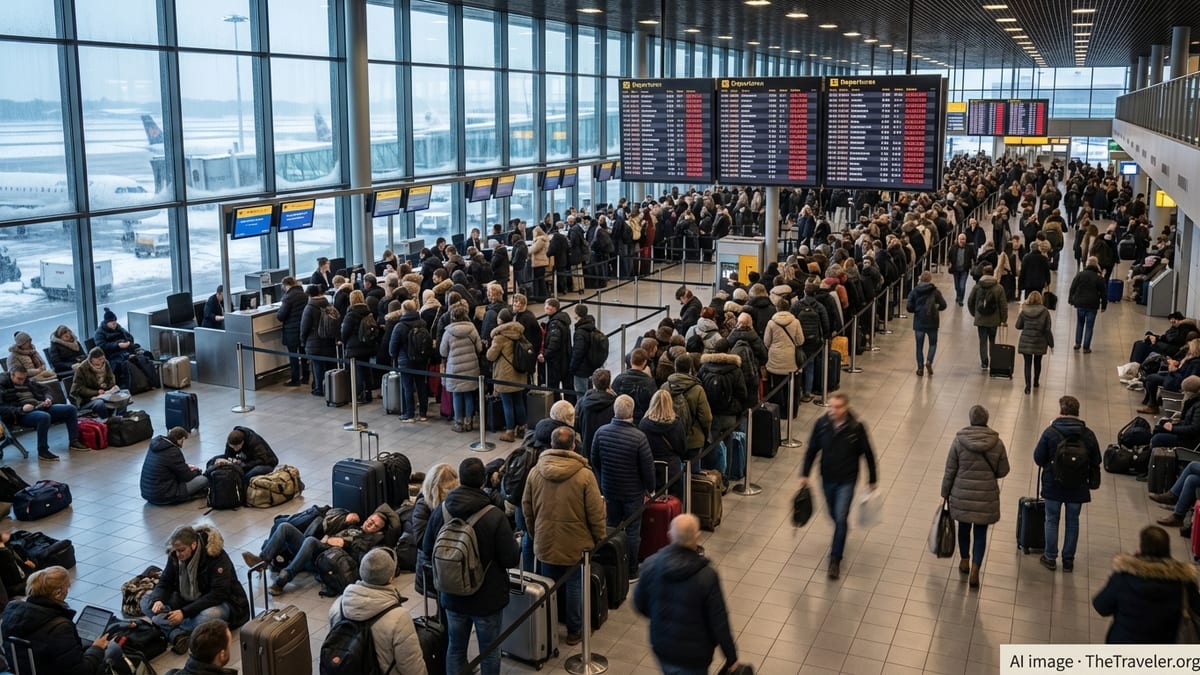
Storm-hit Schiphol Chokes European Flight Network
Amsterdam Airport Schiphol, one of Europe’s busiest hubs, has once again become the epicentre of a continent-wide travel meltdown as snow, ice and high winds triggered cascading delays and cancellations. Airport data and airline statements indicate that 332 flights were delayed and 85 were cancelled in a single day of disruption, paralyzing schedules and overwhelming customer-service channels.
The latest gridlock is part of a broader pattern of winter chaos that has plagued Schiphol since early January, when successive storms and cold fronts repeatedly slashed runway capacity and forced airlines to trim schedules. Ground handling and de-icing teams have been working around the clock, but intermittent snow showers, slippery taxiways and crosswinds have repeatedly forced temporary suspensions of operations, leading to knock-on effects across Europe.
Large parts of the Netherlands remain under weather warnings as snow and freezing rain complicate travel on roads and railways as well as in the air. Aviation authorities and airport operators have been urging passengers to check flight information before heading to Schiphol, but many travelers already in transit have found themselves stuck for hours, or even overnight, in crowded terminals.
With Amsterdam serving as a crucial transfer point for northbound and eastbound European routes, even modest local capacity reductions quickly ripple outward. On the worst-hit day, airlines struggled to recover their rotations, leaving aircraft and crews out of position and prompting last-minute cancellations to and from cities including Vienna, London, Paris and Oslo.
Major Carriers Hit as KLM, easyJet, SAS and Others Cut Schedules
Home carrier KLM has borne the brunt of the disruption, as the Dutch airline depends heavily on Schiphol as its central hub. Winter storms earlier in January had already forced the airline to cancel hundreds of flights over several days, and the latest weather episode compounded the backlog. KLM has admitted that tens of thousands of passengers have been affected since the start of the season, with many journeys interrupted multiple times by rolling schedule changes.
Short-haul European routes have been hardest hit, particularly high-frequency links between Amsterdam and major capitals such as London, Paris, Vienna and Oslo. Airlines often attempt to preserve long-haul services and cut back on regional sectors when capacity is constrained, which has translated into repeated cancellations on intra-European city pairs and severe crowding on those flights that do operate.
Budget carrier easyJet, which operates a substantial network from Amsterdam to the United Kingdom and other European destinations, has seen a large share of its Schiphol flights delayed or scrapped when snow and de-icing bottlenecks peak. Passengers on low-cost services typically rely more heavily on point-to-point itineraries, leaving them particularly exposed when there is limited scope for rebooking onto alternative connections through the hub.
Scandinavian operator SAS and Swiss International Air Lines have also reported extensive knock-on delays on services touching Amsterdam, where aircraft are frequently queued for de-icing and reduced runway slots. Air France, operating jointly with KLM on a number of key routes as part of their group network, has had to adjust schedules at both ends of shared city pairs, with Paris and Amsterdam each facing their own weather-related constraints at various points in the winter season.
Passengers Face Long Queues, Camp Beds and Scrambled Plans
Inside Schiphol’s terminals, the human impact of the figures has been visible in long queues at rebooking desks, lines snaking out from airline counters and clusters of travelers camping out near departure gates. On the worst evenings, hundreds of passengers have had to spend the night at the airport after missing their final connections or finding that replacement flights were fully booked.
Airport staff have distributed camp beds, blankets and basic toiletries to stranded travelers, while airlines have handed out meal vouchers and attempted to rebook passengers onto the next available flights. However, with large numbers of cancellations and aircraft out of position, extra capacity has been limited. Many travelers have been offered rerouting via alternative hubs in Frankfurt, Brussels or London, only to encounter additional weather or capacity constraints there.
Families with small children and elderly passengers have been particularly vulnerable, often facing long waits for accommodation or ground transport on nights when local rail and bus services are also disrupted by snow and ice. Some travelers have described spending hours on hold to airline call centres, only to be told that the earliest available seats would not be for several days.
Travel insurance providers are reporting an uptick in claims as passengers seek reimbursement for extra hotel nights, meals and alternative transport arrangements. Consumer groups in the Netherlands and other affected countries have reminded travelers that, under European passenger-rights rules, airlines are responsible for care obligations such as meals and lodging, even when disruptions are caused by bad weather.
Vienna, London, Paris and Oslo Feel the Shockwaves
Although the operational crisis is centred on Amsterdam, its consequences have rippled across the wider European network. Vienna, London, Paris and Oslo, all heavily linked to Schiphol, have each reported waves of delayed and cancelled flights directly tied to the Dutch hub’s reduced capacity.
In London, frequent shuttle services between Heathrow, Gatwick and Amsterdam are a key artery for both business and leisure traffic. When Amsterdam-bound aircraft are grounded or restricted, aircraft and crew rotations at British bases are disrupted, resulting in delays that cascade into domestic and European routes far removed from the original weather front in the Netherlands.
Paris Charles de Gaulle, the twin hub in the Air France-KLM group, has faced its own winter challenges this season. When Schiphol has been severely constrained, some passengers have been rerouted through Paris, but that has placed additional pressure on infrastructure there, particularly at peak morning and evening bank times. As a result, some travelers bound for destinations such as West Africa or the Middle East have faced multiple rebookings as they attempt to navigate around the disrupted Amsterdam gateway.
Oslo and other Scandinavian airports have also been affected, despite being more routinely accustomed to snow operations. Many Nordic passengers use Amsterdam as a stepping stone to long-haul destinations in North America, Asia and Africa. When feeder services into Schiphol are delayed or cancelled, entire long-haul connections can be lost, compelling airlines either to depart with empty seats or to undertake complex rebooking exercises via alternative hubs such as Copenhagen or Frankfurt.
Weather Warnings, De-icing Bottlenecks and an Overstretched Network
The difficulties at Schiphol this winter underscore the vulnerability of tightly packed hub operations to sudden capacity reductions. Even a relatively modest accumulation of snow can dramatically slow aircraft movements when combined with crosswinds, low visibility and freezing surfaces. De-icing, which is essential for safety, becomes a critical bottleneck whenever the number of aircraft requiring treatment simultaneously exceeds the capacity of de-icing trucks and crews.
Meteorologists at the Royal Netherlands Meteorological Institute have repeatedly issued code yellow and higher alerts for snow and ice in recent weeks, covering Amsterdam’s Noord-Holland region and large parts of the country. These prolonged warnings have led airport authorities to anticipate multiple days of restricted operations, prompting airlines to pre-emptively cut flights in an attempt to maintain some predictability in their schedules.
Aviation experts note that Schiphol’s infrastructure and that of the broader Dutch transport system are not optimised for sustained heavy snowfall, which remains relatively rare even in the colder months. Maintaining a much larger fleet of de-icing vehicles and snow-clearing equipment year-round for events that occur only a few days each winter would significantly increase costs, raising ticket prices and airport charges.
At the same time, critics argue that the current level of preparedness leaves passengers overly exposed whenever an intense winter storm or a string of cold days coincides with peak travel periods. They call for better contingency planning, clearer communication and more resilient staffing models that can be activated quickly when severe weather is forecast.
KLM and Partners Struggle to Restore Confidence
For KLM and its alliance partners, the repeated disruptions at Schiphol have become both a logistical and reputational challenge. The airline has already warned customers that uncertainty is likely to persist as long as volatile winter conditions continue, emphasizing that rapidly changing forecasts make it difficult to guarantee that flights scheduled for the following day will operate as planned.
To manage the fallout, KLM has been deploying larger aircraft on key European sectors when conditions allow, in an effort to clear backlogs of stranded passengers. Additional widebody jets have been used on routes such as London, Berlin and Stockholm to accommodate as many rebooked travelers as possible when weather windows permit the safe operation of more flights.
Customer communications have emerged as a major point of criticism. While airline apps and email alerts provide real-time updates, passengers at Schiphol have repeatedly reported feeling underinformed once they are inside the terminal, where public announcements and staff on the floor are often unable to provide firm guidance on when, or whether, their flights will depart.
Senior executives at the airline group have acknowledged those concerns and promised better coordination between digital channels and on-the-ground information desks. In the short term, however, they continue to urge passengers to allow extra time at the airport, to monitor flight status closely and to consider rebooking flexible tickets where possible during periods of active weather warnings.
Airports and Regulators Review Lessons From a Turbulent Winter
The recurring paralysis at Schiphol has prompted broader questions within the aviation sector and among regulators about how Europe’s major hubs can better withstand climate-driven extremes. While snow and ice events of the current magnitude are still relatively infrequent in the Netherlands, warmer, wetter winters can produce unpredictable bursts of heavy snowfall and freezing rain that challenge traditional planning models.
Airport operators are expected to review their winter resilience strategies once the current season ends, likely focusing on the balance between infrastructure investment and operational flexibility. Options under discussion include expanding the de-icing fleet, enhancing rapid-response maintenance teams, and redesigning schedules to build in more slack on days when adverse weather is forecast.
Regulators and passenger-rights advocates may also push for clearer minimum standards on communication and care during prolonged disruptions. While airlines are already obligated to provide meals and accommodation, implementation on the ground can be uneven when thousands of disrupted passengers descend on an airport at once.
For travelers, the events at Schiphol this winter underline the importance of proactive planning, flexible itineraries and realistic expectations when crossing Europe in the coldest months of the year. As Amsterdam and its partner hubs in Vienna, London, Paris and Oslo work to restore normal operations after yet another day dominated by delays and cancellations, the wider industry faces pressure to ensure that future storms do not so easily paralyze one of the continent’s most critical air corridors.