

More news on this day
Spring snowbirds counting on an easy escape through Southwest Florida International Airport are encountering a tangle of delays, diversions and terminal bottlenecks as broader U.S. aviation disruptions converge on one of the country’s fastest growing leisure gateways.
Get the latest news straight to your inbox!
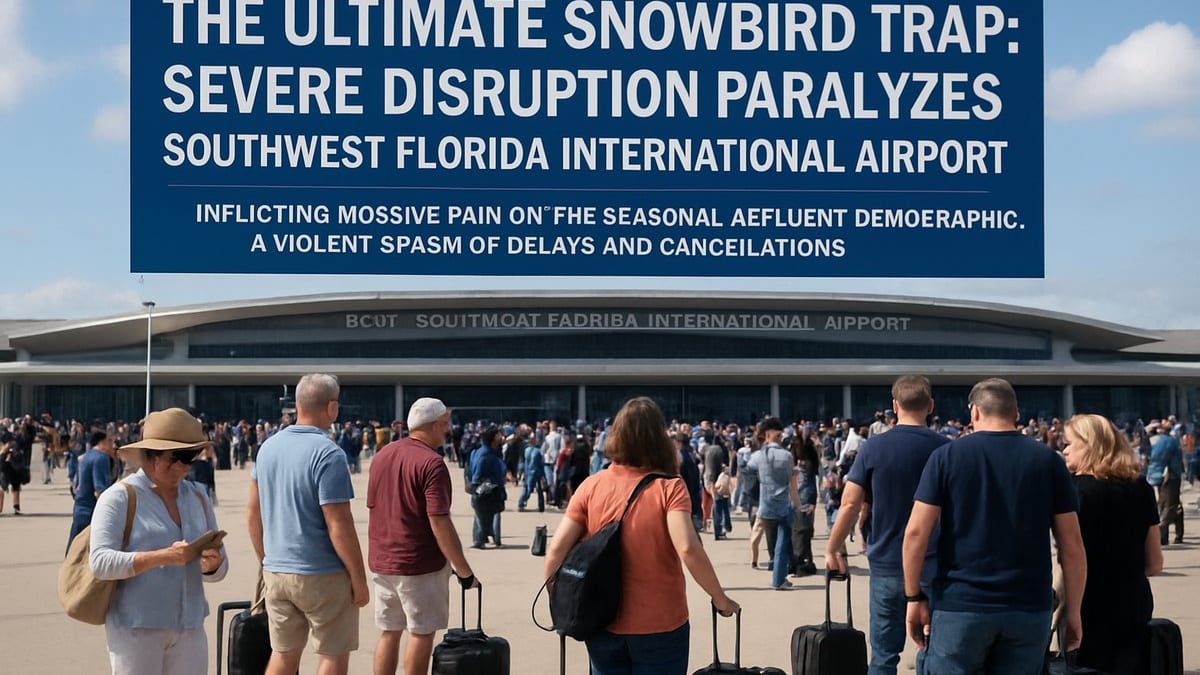
A Busy Sunbelt Hub Faces Peak-Season Strain
Southwest Florida International Airport, known by its code RSW, has emerged in recent years as a major entry point for winter residents and vacationers bound for Fort Myers, Naples and the barrier islands. Publicly available airport data indicates the facility handled more than 11 million passengers in 2025, placing it among the 50 busiest airports in the United States and cementing its role as a critical access point for seasonal traffic.
The early April travel window coincides with the tail end of peak snowbird season, school breaks and a final surge of visitors before Florida’s summer heat sets in. Industry trackers show higher than usual delay volumes across multiple U.S. hubs during the first days of April, as strong demand, tight aircraft and crew rotations, and scattered weather issues combine to stress airline schedules. When that national backdrop intersects with a leisure-heavy airport such as RSW, even modest operational hiccups can quickly feel like a full scale shutdown for passengers facing missed connections and limited rebooking options.
Real time federal aviation dashboards on April 3 still showed normal runway conditions for Fort Myers, underscoring that the current disruption is less about a single headline event and more about network fragility rippling into a popular regional gateway. For travelers on the concourse, however, the effect is the same: long lines, shifting departure boards and uncertainty about when they will actually get airborne.
Network Disruptions Turn RSW Into a Snowbird Trap
Recent coverage of U.S. air travel performance in early April describes a system grappling with rolling delays and scattered cancellations across major hubs from Dallas and Chicago to New York and Los Angeles. When large carriers and low cost rivals absorb several hundred delays in a single day, aircraft and crews fall out of position, and that imbalance propagates into downline airports such as Fort Myers, even when local weather is calm.
RSW’s route map is heavily focused on point to point leisure flying to Midwestern and Northeastern cities where late season storms and congested airspace have been recurrent themes this year. Travel reports highlight how a disruption to a morning departure in Chicago or New York can strand an aircraft that was due to operate an afternoon return to Florida, leaving outbound snowbirds at RSW staring at an aircraft that never arrives. Once those rotations slip, airlines often need 24 to 48 hours to realign fleets, a period that spans multiple high demand departure banks.
This pattern is particularly punishing for winter residents who time their departures to the end of condo leases or rental stays. With packed load factors and limited spare capacity, traditional same day rebooking options can evaporate quickly, transforming RSW from a convenient sunbelt escape hatch into what many travelers perceive as a trap. By the time passengers realize their original flight is no longer viable, remaining seats on alternative departures from Fort Myers, Tampa or Miami may already be sold out.
Terminal Expansion Meets Real-World Stress Test
While airlines wrestle with aircraft and crew logistics, the airport itself is in the middle of a multi year Terminal Expansion Project aimed at adding gates, circulation space and upgraded concessions. Public construction advisories for early 2026 describe a rolling schedule of crosswalk closures and concession changes in the main terminal and Concourse C as work progresses. On ordinary days, these adjustments amount to minor detours for passengers. During a disruption spike, they create additional pressure points.
Concourse level closures of specific food and beverage outlets, together with rerouted pedestrian flows across the terminal roadway, can lengthen walks between security, gates and ground transportation. For travelers already dealing with multi hour delays, that means smaller clusters of open concessions absorbing surging crowds. Seating can be hard to find and lines for restrooms, coffee and quick meals quickly stretch down the concourse during peak departure waves.
The expansion work is intended to prepare RSW for a future in which passenger totals continue rising and more airlines compete for Southwest Florida demand. In the short term, however, it limits the airport’s flexibility to absorb irregular operations. When several delayed flights board at once or when a late night departure pushes toward the airport’s busy early morning window, the combination of construction pinch points and disrupted schedules amplifies the perception of paralysis.
Stranded Travelers Face Limited Workarounds
For snowbirds caught in the current disruption wave, options are constrained by geography. RSW sits more than two hours by car from other major Florida airports such as Tampa and Fort Lauderdale, and closer alternatives like Sarasota and Punta Gorda also draw heavily seasonal traffic. Publicly available route and schedule data shows that many of the same airlines and aircraft that serve Fort Myers are also operating at high load factors at these neighboring airports, reducing the likelihood of finding last minute seats when a flight from RSW is canceled.
Travel industry guidance for this season stresses the importance of monitoring flights well before departure, building buffer time into connections, and considering earlier departures or less congested travel days when possible. Passengers with flexibility can sometimes salvage itineraries by accepting connections through secondary hubs rather than holding out for a nonstop back to their home city, but this strategy depends on real time availability and the willingness to accept overnight stays in intermediate cities.
Consumer advocates also note that newly strengthened federal rules clarify when passengers are entitled to refunds or other compensation if a delay or cancellation is deemed within an airline’s control, such as certain maintenance or crew scheduling problems. Understanding those rules before arriving at the airport can help travelers make faster decisions about whether to wait out a disruption at RSW or abandon a trip and seek a refund to rebook later on their own terms.
What the RSW Meltdown Signals for the Rest of Spring
The strain now visible at Southwest Florida International Airport is part of a broader pattern across the U.S. aviation system as it adjusts to sustained high demand, staffing realities and ongoing infrastructure projects. Data compiled by travel analysts for early 2026 shows elevated national delay totals on multiple days, suggesting that airports serving leisure heavy regions may face recurring stress tests through at least the end of spring break season.
For airlines, the disruption highlights the fragility of tightly wound schedules that leave little room for recovery once storms, airspace constraints or technical issues enter the picture. For airport operators, it underscores how construction phasing decisions, concession availability and landside access routes shape the real world experience of passengers struggling through an interruption, even when the runway environment remains fully open.
As snowbirds and vacationers cycle through Fort Myers in the coming weeks, RSW’s performance will provide an early indicator of how well the wider U.S. aviation network can cope with concentrated leisure demand heading into summer. For now, the convergence of national delays, local construction and seasonal crowds has turned one of Florida’s most important getaway airports into a cautionary example of how quickly a popular sunbelt hub can seize up when multiple stressors hit at once.