

More news on this day
Snowbird season in Southwest Florida has collided with construction work and nationwide airline turmoil, creating severe disruption at Southwest Florida International Airport and stranding peak-season travelers across the Gulf Coast region.
Get the latest news straight to your inbox!
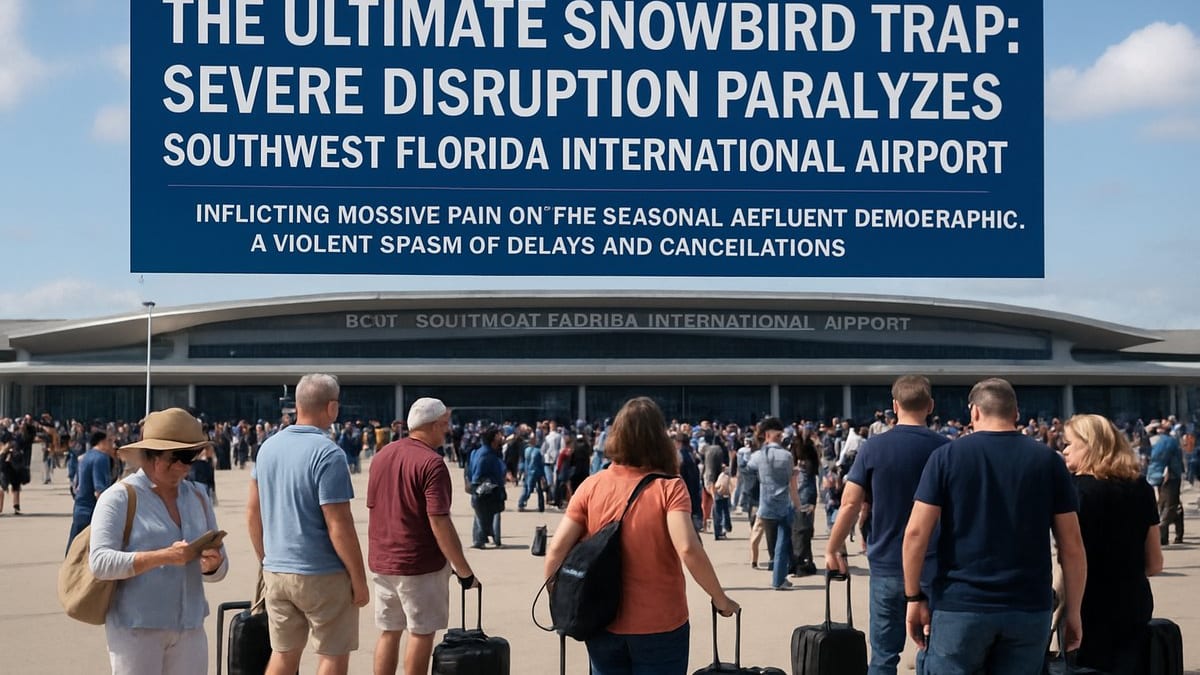
Snowbird Peak Meets Capacity Strain at RSW
Southwest Florida International Airport, the primary gateway for winter visitors bound for Fort Myers, Naples and nearby beach communities, is experiencing some of its most acute operational strain in recent years as the winter travel season reaches its climax. Publicly available tracking data and travel-industry coverage indicate that departure delays at the airport have stretched to an average of 30 to 45 minutes on several late-March and early-April days, with some departures pushed significantly longer during peak afternoon bank periods.
The disruption comes at a time when passenger volumes are at or near record levels. Airport and tourism reports show that RSW handled more than 11 million passengers in 2025, with March historically the busiest month of the year as seasonal residents and visitors arrive and depart in large numbers. This seasonal surge has translated into congested roadways approaching the terminal, busy security checkpoints during morning and late-afternoon peaks, and crowded gate areas across the concourses.
Travel-planning tools that monitor real-time performance have flagged RSW as a pressure point within the wider U.S. air travel system in recent weeks. On some days, the airport has been cited among a group of mid-size facilities experiencing persistent volume-related departure delays, even when weather locally in Fort Myers has remained favorable for flying. The result has been a classic snowbird bottleneck, where high demand magnifies even routine disruptions.
Travel forums and passenger anecdotes from late March describe packed terminals, long lines for concessions and tight connections at northern hubs for travelers attempting to route through RSW. While many flights are still departing within an hour of schedule, the cumulative effect of repeated short delays has tested the patience of holidaymakers and seasonal residents trying to time flights around rental car returns and condo checkouts.
Construction and Terminal Expansion Add to the Squeeze
Compounding the pressure from seasonal demand is a multi-phase terminal expansion program that is reshaping how travelers move through Southwest Florida International. Information from the Lee County Port Authority highlights that work on the multi-year Terminal Expansion Project is well underway, with roadway changes, walkway closures, and concession shifts occurring in stages throughout 2025 and 2026.
Recent advisories note alternating closures and reopenings of pedestrian bridges and crosswalks between the parking garage and the terminal as crews reconfigure access routes. While core operations continue, those changes can lengthen the time it takes passengers to move from parking or rental cars into the check-in area, particularly for travelers unfamiliar with the airport layout or juggling luggage and beach gear. For snowbird travelers used to a simpler terminal configuration, the evolving traffic pattern can come as a surprise.
Inside the building, portions of the project have temporarily reduced the number and location of certain concessions and amenities in the main terminal and at Concourse C while construction walls are in place. A recent phase of work has included temporary closures of specific food, beverage and retail outlets, concentrating passenger demand on the remaining vendors. During heavy departure banks, lines for coffee, snacks and takeaway meals have lengthened, adding another friction point for travelers already watching departure boards for schedule changes.
Federal aviation construction reports confirm that RSW is among a group of U.S. airports engaged in significant capacity and modernization programs this year. While those projects are expected to add gates and improve passenger flow over the long term, the current overlap between construction and peak-season traffic has created a tight operating environment that leaves little room to absorb wider network shocks.
Nationwide Airline Turmoil Spills Into Southwest Florida
The disruption at Southwest Florida International is not occurring in isolation. March 2026 has been marked by elevated levels of flight delays and cancellations across the United States, driven by a combination of winter weather systems, airline staffing constraints and aircraft availability issues. Industry roundups show several days in late March with more than 200 cancellations and several thousand delays nationwide, affecting large network carriers and low-cost airlines alike.
In that broader context, RSW has repeatedly appeared on lists of airports reporting notable departure delays because of volume-related congestion. On one recent high-impact day near the end of March, travel-industry monitoring outlets highlighted Southwest Florida alongside much larger hubs as experiencing average delays of roughly three-quarters of an hour on outbound flights, largely as a knock-on effect of airline schedule disruptions elsewhere in the system.
When storms and operational issues ripple through northern and Midwestern hubs, snowbird routes are among the first to feel the impact. Flights into and out of Fort Myers depend heavily on connections through cities that have been affected by winter storms in January, February and March, resulting in late-arriving aircraft, crew reassignments and, in some cases, same-day cancellations. Passengers bound for Southwest Florida have reported misconnected itineraries, overnight stays at hub airports and last-minute reroutes through alternate Florida gateways.
The national backdrop means that even on days with clear skies in Fort Myers, airlines operating at RSW may be struggling to reposition aircraft and staff. This dynamic has amplified the severity of local delays, turning what might otherwise have been minor schedule adjustments into extended disruptions for travelers at the end of their journeys.
On-the-Ground Experience: Long Lines and Packed Gates
For travelers on the concourse, the combined effect of seasonal volume, construction and national network stress is most visible in the crowds. Social media posts and regional community discussions from March describe terminal areas that feel consistently busy from early morning through late afternoon, with particular surges between 5 a.m. and 8 a.m. and again in the mid- to late-afternoon departure windows.
Traveler reports indicate that security wait times have fluctuated widely. On some days, passengers have moved through screening in a matter of minutes, particularly those using expedited lanes, while on others, conventional queues have stretched toward or beyond the entrance to the checkpoint area. Travel tools that estimate processing times advise adding at least 30 minutes to pre-pandemic norms during the January to March high season at RSW, especially for midday and afternoon departures.
Once through security, gate areas have often been standing-room-only as airlines consolidate boarding zones and adjust schedules. Accounts from recent days mention passengers waiting shoulder to shoulder in gate hold rooms as multiple flights board in quick succession, with overhead announcements about rolling delays and updated departure times. Concession queues and limited seating have contributed to a perception among some travelers that the airport has grown busier faster than its facilities.
These conditions have proven particularly challenging for older travelers and families, who make up a significant share of Southwest Florida’s winter visitor base. With many snowbirds timed to return to northern homes around school and holiday calendars, a single disruption can have cascading effects on medical appointments, rental agreements and connecting ground transportation hundreds of miles away.
What Travelers Can Do to Navigate the Snowbird Trap
In response to the current conditions, travel experts and consumer advocates are emphasizing preparation and flexibility for those flying through Southwest Florida International in the coming weeks. Guidance compiled from airline advisories and travel-planning resources encourages passengers to build in extra time at every stage of the journey, from allowing for heavier-than-normal traffic on the Interstate 75 corridor to arriving at the airport earlier than usual for check-in and security.
Data from airport-specific planning tools suggest that morning departures before 8 a.m. are generally less affected by rolling delays than midday and afternoon flights, which tend to absorb disruptions propagating through the national network. Where possible, advisors recommend booking earlier departures and nonstop routes to reduce exposure to missed connections at weather-prone hubs. Travelers connecting through major northern airports are also being encouraged to monitor conditions closely in the 24 hours before departure.
For those already ticketed, published guidance from airlines and travel-industry outlets stresses the importance of using mobile apps and text alerts to track real-time changes. Same-day schedule shifts have become more common during the current period of disruption, and passengers who stay informed may have a better chance of requesting rebooking or alternate routings before options dry up on peak travel days. Snowbird travelers with flexible itineraries are also being urged to consider shifting travel dates by a day or two on either side of peak weekends to reduce crowding-related risk.
Despite the present challenges, the ongoing expansion at Southwest Florida International is expected to add gate capacity and improve passenger circulation once complete, which could ease future snowbird seasons. For now, however, the combination of construction, heavy seasonal demand and nationwide airline instability has made RSW one of the most acute examples of how quickly a popular sun destination can turn into a snowbird trap when the air travel system is under strain.