

More news on this day
Southwest Florida International Airport, the sunny gateway prized by winter-weary snowbirds, is facing a turbulent spring as nationwide aviation disruptions and mounting local pressures converge on one of America’s busiest seasonal hubs.
Get the latest news straight to your inbox!
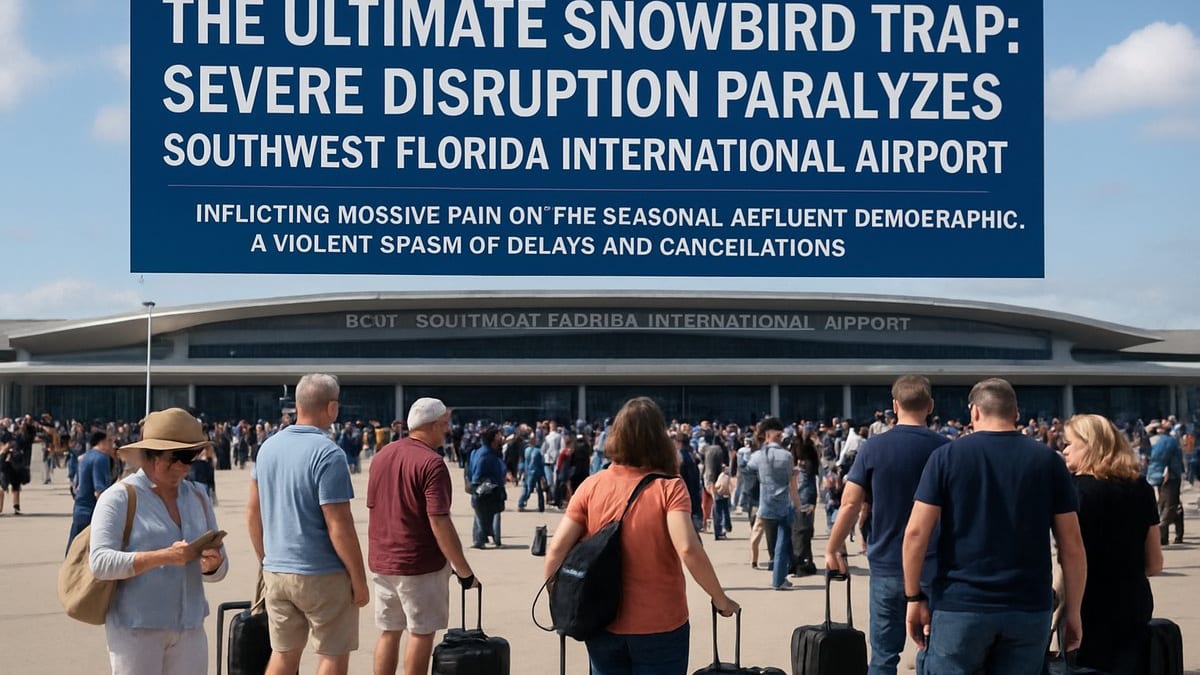
A Perfect Storm for a Peak-Season Gateway
Southwest Florida International Airport in Fort Myers, known by its code RSW, serves more than 11 million passengers a year and ranks among the top 50 U.S. airports by traffic. Airport planning documents show that March remains its peak month for passenger volume, driven heavily by retirees and seasonal visitors fleeing colder climates for Gulf Coast warmth. The result is a compressed, high-stakes travel window in which even minor system shocks can cascade into severe disruption.
Recent national aviation data from late March and early April 2026 indicate that the broader U.S. network is under unusual strain. Severe weather events, including thunderstorms, rapid snowmelt and flash flooding across multiple regions, have produced thousands of delays and hundreds of cancellations nationwide. Coverage in travel and aviation outlets highlights that disruptions are increasingly systemic, with aircraft, crew and maintenance rotations thrown off across interconnected hubs.
Although real-time federal dashboards list RSW operations as currently on time, published analyses of flight performance show that Florida’s airports as a group are among the most delay-prone in the country. Studies of domestic flight data from recent years rank several major Florida gateways near the bottom for on-time arrivals, suggesting that the state’s air travel system is particularly vulnerable when national conditions deteriorate. For snowbirds relying on tightly planned seasonal itineraries, that vulnerability can turn overnight into a travel trap.
Compounding the pressure, a partial federal government shutdown has added uncertainty around aviation staffing and airport throughput across the United States. Reports note that Transportation Security Administration personnel only recently received retroactive pay after weeks of working without compensation, underscoring the fragility of staffing levels at security checkpoints. Even when local wait times at RSW appear manageable, the broader context points to a system operating close to its limits.
National Weather Chaos Sends Shockwaves to Southwest Florida
The spring 2026 travel period has been defined by volatile weather patterns that have battered the U.S. air traffic grid. A major March blizzard in the northern states, followed by severe thunderstorms and flash flooding in key corridors, generated several days of intense disruption at major hubs. Industry tracking compiled from FlightAware data and summarized by travel publications describes more than 3,000 delays and over 100 cancellations in a single day, with ripple effects stretching across the network.
While many of the worst-affected airports sit far from Florida, the hub-and-spoke nature of airline scheduling means that chaos in one region reverberates across the map. Travel reporting on Miami, Orlando and other Florida gateways during the same period documents elevated delay levels tied not only to local conditions, but also to aircraft and crew arriving late from storm-battered cities. That pattern places RSW squarely in the crosshairs, particularly for carriers that rely on complex rotations linking the Midwest and Northeast to Southwest Florida.
Spring also corresponds with the tail end of peak winter-season demand for Fort Myers, when planes are heavily booked and spare capacity is scarce. Aviation planners note that RSW’s peak-month average day forecasts call for intense concentrations of operations and passenger flows. When severe weather upends flights in earlier legs, there are fewer open seats or backup aircraft available to absorb stranded travelers bound for or departing from Southwest Florida.
These dynamics transform what might once have been an isolated delay into a multi-day disruption for snowbirds on fixed schedules, including those trying to reach medical appointments, cruise departures or rental checkouts. As national carriers juggle aircraft across wide networks, even a clear-sky day in Fort Myers can see significant knock-on impacts from storms hundreds or thousands of miles away.
Infrastructure Works and Terminal Strain at RSW
Against this turbulent national backdrop, Southwest Florida International Airport is simultaneously undergoing a multi-phase Terminal Expansion Project intended to modernize and enlarge its facilities. Public advisories from the Lee County Port Authority describe a rolling sequence of changes to pedestrian bridges, crosswalks, concessions and terminal roadways as construction progresses in 2026. While the work is designed to accommodate long-term growth, it also introduces short-term complexity during an already difficult travel season.
Recent advisories outline closures and rerouting of pedestrian bridges and crosswalks between the parking garage and terminal, along with phased shutdowns of food, beverage and retail concessions in parts of the main terminal and Concourse C. Travelers arriving at peak times may encounter unfamiliar walk patterns, narrowed passageways, temporary signage and fewer open outlets for dining or last-minute purchases. For elderly passengers or those with mobility challenges, these changes can add friction to an already stressful journey.
Airport planning material indicates that expansion and modernization projects are a response to sustained growth in passenger and aircraft operations at RSW, particularly in March and other high-demand months. However, any construction taking place during peak snowbird season increases the likelihood that minor operational hiccups escalate into major bottlenecks when coupled with full flights and tight turnaround times.
Even when flight operations remain technically normal, terminal congestion can feel like a de facto disruption. Reduced seating, longer walks between reconfigured access points and fewer open concessions can lengthen the time needed to move from curb to gate. For travelers arriving from delayed inbound flights and facing short connections or tight boarding windows, that added friction can make the difference between a successful trip and an unplanned overnight stay in Fort Myers.
Snowbirds Face a Growing Risk of Being Stranded
For the snowbird community, the convergence of these factors creates what some analysts are characterizing as an “ultimate trap” scenario. Seasonal travelers, many of them retirees, often plan long stays in Southwest Florida and then attempt to depart during a narrow late-season window in March and early April. Airport master planning forecasts identify these weeks as some of the busiest of the year at RSW, with limited slack in the system to accommodate disruption.
Contemporary travel coverage points out that Florida airports, by virtue of their popularity with leisure travelers, frequently operate with very high load factors. That means flights are close to full, leaving few spare seats to rebook passengers when cancellations or long delays occur. If a late-arriving aircraft forces a missed outbound connection or a carrier preemptively cuts a rotation due to weather elsewhere, travelers may discover that the next available seat home is days away rather than hours.
Social media and community forums for Fort Myers and Southwest Florida have recently carried anecdotal reports of travelers worried about security lines, shifting departure times and the risk of last-minute cancellations. While some local commenters note that security throughput at RSW can be reasonable during portions of the day, the broader stories emerging from across the country, including extended delays at other Florida airports, are feeding a sense of unease among snowbirds planning their exits.
For those on fixed incomes or with strict housing check-out dates, getting stuck in the region can quickly become expensive. Extra nights in hotels or vacation rentals, higher walk-up airfares, and the cost of rebooking ground transport back home can turn what began as an affordable winter escape into a costly ordeal. The risk is heightened for travelers who rely on a single daily nonstop to their home city or who are booked on complex itineraries that pass through multiple weather-sensitive hubs.
How Travelers Can Reduce Their Exposure
Travel advisories and consumer reporting suggest several strategies for those determined to fly through RSW in the weeks ahead. One common recommendation is to build redundancy into itineraries by opting for earlier departures in the day, when aircraft and crews are more likely to be in position. Morning flights are statistically less vulnerable to the accumulated effect of rolling delays that build across the national grid.
Another tactic highlighted in travel coverage is to favor single-connection or nonstop itineraries where possible, even if they carry a slightly higher fare. Each additional leg introduces another potential failure point, especially when storms or staffing issues are affecting multiple regions at once. For travelers whose home airports are served by more than one carrier, diversifying beyond a single airline that is heavily exposed to specific hubs may also reduce the risk of being stranded.
Given the ongoing terminal expansion work at RSW, passengers are also encouraged by published guidance to allow extra time for parking, walking and navigating modified access routes. Arriving earlier can help absorb the impact of unfamiliar layouts, temporary closures of concessions and potential spikes in security or check-in volume. Those with mobility considerations or traveling with small children may benefit from pre-arranging wheelchair assistance or confirming trusted traveler benefits such as TSA PreCheck before arrival.
For snowbirds balancing the appeal of a final week in the Florida sun against the risk of disruption, publicly available data and recent national performance trends suggest a more cautious approach than in previous years. By recognizing Southwest Florida International Airport as a pressure point within a strained U.S. aviation system, travelers can make more informed choices about when and how to route their journeys home.