

More news on this day
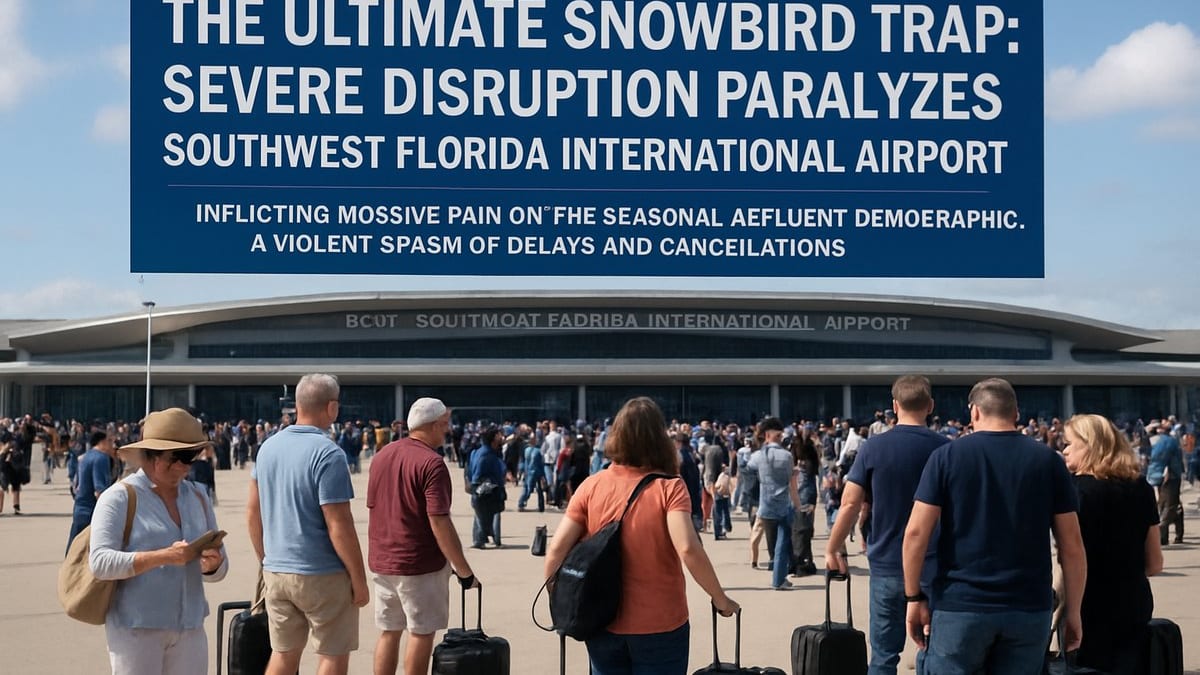
A sharp spike in flight cancellations and delays across key U.S. hubs has converged on Southwest Florida International Airport in Fort Myers, turning one of the country’s signature snowbird gateways into an unexpected chokepoint for spring travelers.
Get the latest news straight to your inbox!
Network Turbulence Reaches a Sunny Gateway
Southwest Florida International Airport, known by its code RSW, typically moves traffic smoothly during the late-season rush of visitors heading to and from Gulf Coast beaches. In early April 2026, however, the airport has been pulled into a wider web of disruption as weather systems and operational issues at other hubs ripple through national airline networks.
Published coverage of U.S. flight performance in recent days points to hundreds of cancellations and several thousand delays nationwide, with large carriers and low cost airlines alike struggling to keep aircraft and crews in place. This system-wide strain has translated into rolling schedule changes on routes in and out of Fort Myers, even when local conditions in Southwest Florida remain favorable for flying.
Publicly available airport status boards for RSW show routine operations resuming by April 3, yet traveler reports from the preceding days describe crowded concourses, long rebooking lines, and difficulty securing seats on alternative flights. The contrast between clear local weather and a snarled national network has underscored how vulnerable smaller leisure-focused airports can be when disruptions strike elsewhere.
For seasonal residents and vacationers timing their journeys around condo checkouts, tee times, and rental car drop-offs, this convergence has created what some travel observers are describing as a classic snowbird trap: everything running smoothly on the ground in Florida, while the broader system that feeds the airport seizes up.
Stormy Winter Leaves a Springtime Hangover
The immediate disruption follows a punishing winter and early spring for North American aviation. A series of major winter storms in January, February, and March repeatedly forced airlines to cancel or reroute flights, creating backlogs of displaced aircraft and crews that have taken weeks to fully untangle.
According to widely circulated operational analyses, those storms triggered some of the heaviest cancellation days since the height of the pandemic era. Each new weather event compounded existing strains, leading to what travel data firms describe as a lingering “hangover” effect across airline schedules as spring break travel surged.
By early April, the heaviest snow and ice had shifted away from Florida itself, but carriers were still repositioning jets between weather-exposed northern hubs and sun destinations such as Fort Myers. When another round of severe weather and congestion hit parts of the Midwest and Northeast, flights connecting through those regions to RSW were again vulnerable, even as skies above the Gulf Coast stayed mostly clear.
Industry commentators note that this pattern is especially disruptive for leisure-heavy markets. Many snowbirds and vacationers book nonstop or one-stop itineraries into seasonal airports like RSW only a few times a year, leaving them with limited familiarity with alternative routings when their original plans unravel.
Spring Break Volume Amplifies the Impact
The timing of the latest disruption coincides with the tail end of the spring break period, traditionally one of the busiest stretches for Florida airports. Travel planners and regional tourism officials have long pointed to late March and early April as peak weeks for inbound and outbound traffic, as northern visitors chase a final dose of warm weather before heading home.
Recent reports on national air travel patterns indicate that many hubs serving Florida are operating near capacity on peak days, leaving little slack when storms, air traffic programs, or mechanical issues cascade through the system. Once a few flights into or out of Fort Myers are delayed or canceled, gate areas can quickly become congested and rebooking options scarce.
Online traveler accounts from the last week of March describe passengers at a range of U.S. airports struggling to connect to or from Southwest Florida after successive storms. Some describe spending multiple days in transit or making last-minute changes to fly into alternate Florida airports before driving on to the Fort Myers region.
Within RSW itself, the disruption has translated into longer-than-usual waits for customer service, tight competition for seats on the next available departures, and pressure on ground transportation as more travelers arrive or depart outside their scheduled windows. Hotels near the airport and along the Interstate 75 corridor also appear to have faced higher demand from stranded passengers seeking overnight stays.
Snowbirds Face Difficult Choices on the Return Trip
For seasonal residents heading north after wintering in Southwest Florida, the recent disruption has forced uncomfortable choices. Travel advisors observing the situation suggest that many snowbirds prefer nonstop flights to hometown airports, often flying only once or twice a season and booking months in advance to secure favorable times.
When those flights are delayed or canceled, however, the combination of full loads and tight connection windows can make same-day alternatives hard to find. Public information from consumer advocates stresses that travelers are entitled to refunds when airlines cancel or significantly change flights, but notes that cash refunds may be cold comfort when there are no remaining seats to get home on the desired day.
Some long-stay visitors have reportedly opted to extend their time in Florida by several days rather than accept complex multi-stop reroutings through distant hubs. Others have accepted itineraries involving overnight connections, long layovers, or arrival at secondary airports, then relied on friends, family, or one-way car rentals to close the final gap.
For retirees managing medical appointments, home maintenance schedules, or seasonal housing back north, these last-minute changes have added stress to what is already a tightly choreographed annual migration. The episode has highlighted how even a brief disruption at the end of the season can reverberate through personal plans.
What the Disruption Signals for Future Peak Seasons
While flight boards for RSW indicate that operations are stabilizing in early April, analysts following air travel performance suggest that the recent problems in Southwest Florida fit into a broader pattern of strained resilience across the U.S. aviation system. High aircraft utilization, lean staffing, and concentrated peak travel days all increase the risk that a single storm or air traffic constraint will have outsized effects.
Travel industry commentary increasingly points to smaller and mid-sized airports with heavy leisure demand, such as Fort Myers, as potential pressure points when national networks come under stress. These airports often rely on a relatively limited set of carriers and routes, which can leave passengers with fewer options if those particular flights are disrupted.
For snowbirds and sun seekers planning for late winter 2027 and beyond, travel planners are already emphasizing strategies such as booking earlier departure times, allowing extra connection buffers at northern hubs, and considering flexible return dates when possible. They also highlight the importance of monitoring flight status closely in the days leading up to travel, given how quickly schedule changes can now propagate through airline systems.
As the winter 2025–26 travel season fades, the experience at Southwest Florida International Airport serves as a reminder that even airports framed by palm trees and clear skies are not immune to the knock-on effects of distant storms and system-wide strain. For thousands of snowbirds trying to head home on schedule, this spring’s disruption has turned a usually routine journey into a lesson in the fragility of modern air travel.