

More news on this day
Hundreds of passengers were left stranded across Austria on February 20 and 21 as a historic snowstorm crippled air traffic at Vienna, Salzburg, Innsbruck and Graz airports, triggering at least 265 flight delays and cancellations and disrupting major international carriers from Europe, the Middle East and Asia to North America.
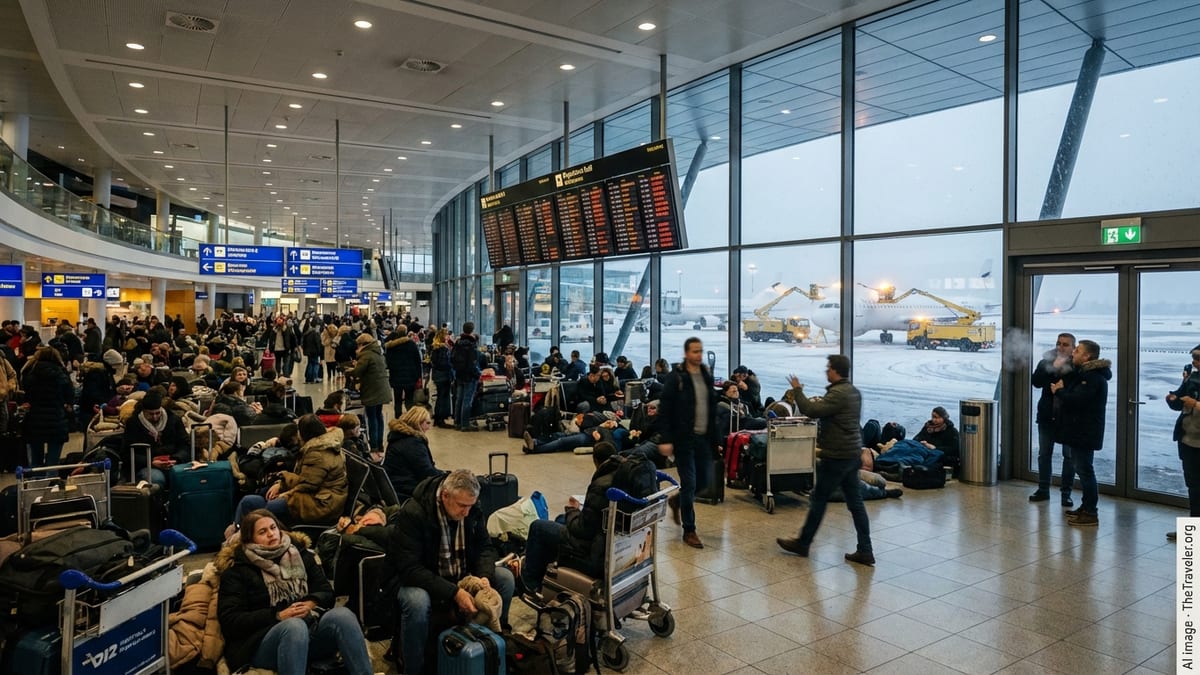
Record Snowfall Turns Austria’s Airports Into Bottlenecks
The disruption began early on Friday, February 20, when heavy snow swept across eastern and central Austria, quickly overwhelming snow-clearing teams at Vienna International Airport. Within hours, operations at the country’s busiest aviation hub were temporarily suspended as runways and taxiways disappeared under as much as 20 centimeters of snow, forcing a rolling wave of delays, diversions and cancellations.
By late Friday, Vienna airport officials reported that more than 230 arrivals and departures had been cancelled, rerouted or severely delayed as crews struggled to keep up with fresh snowfall and icing on critical surfaces. The suspension of flight movements for several hours created an immediate backlog that spilled over into Saturday’s schedule, with aircraft and crew out of position and connections across Europe unraveling.
While Vienna bore the brunt of the crisis, the same system brought hazardous conditions to Salzburg, Innsbruck and Graz, key gateways to Austria’s Alpine ski resorts and regional cities. These smaller airports maintained limited operations but reported mounting delays as arriving aircraft were held on the ground, deicing times stretched and inbound flights missed crucial takeoff slots.
Across the network, air traffic data and airline updates indicated at least 265 individual flights either delayed or cancelled between Friday morning and midday Saturday, including a small but growing number of outright cancellations as carriers reset their weekend schedules.
Passengers Sleep on Floors as Stranded Crowds Grow
Inside Vienna’s terminal buildings, long queues formed at airline service desks on Friday afternoon as passengers scrambled to rebook missed connections or secure seats on the dwindling number of departures still showing as operating. With many flights pushed back repeatedly or scrubbed altogether, families with children, business travelers and tourists alike faced uncertain waits stretching well into the night.
By early Saturday, images from the terminal showed rows of passengers resting on the floor or slumped over luggage trolleys, trying to sleep under fluorescent lights while periodic announcements detailed further delays. Some travelers reported spending more than 12 hours at the airport without being able to board a flight, as deicing operations and limited runway capacity forced repeated last-minute schedule changes.
At Salzburg and Innsbruck, the mood was slightly calmer but no less anxious. Passengers bound for winter-sport holidays watched departure boards flicker with shifting times, many learning only at the gate that their flights had been pushed back again. Airport staff urged travelers to arrive early but prepare for extended processing times, with security and check-in queues periodically swelling as multiple flights converged on the same departure windows.
Graz, though handling a smaller share of total traffic, also reported delays and congested departure halls, particularly for regional links feeding into larger European hubs already struggling with Vienna-related knock-on effects.
Major Carriers Face Knock-on Disruptions Across Continents
The storm’s impact was felt well beyond Austria’s borders as airlines with Vienna and Salzburg operations grappled with cascading delays along their route networks. Europe-based flag carriers and low-cost airlines faced the toughest logistical challenges, but long-haul operators serving Austria also encountered significant disruption.
Among the affected services were flights by United Airlines linking Vienna with North American hubs, where late arrivals into Austria made same-day turnarounds impossible and forced schedule reshuffles. Regional European routes feeding these long-haul departures were delayed, leaving transatlantic passengers stranded mid-journey or rerouted through other gateways.
The disruption also rippled through codeshare and interline partners, including carriers from Asia and the Middle East whose passengers rely on Vienna as a transfer point into central and eastern Europe. Flights marketed or supported by Cebu Pacific and PAL Express via partner networks saw customers delayed or reprotected onto alternative routings as Vienna’s operations slowed to a crawl and regional airports struggled to maintain punctuality.
In many cases, aircraft that were scheduled to operate multiple legs across the day remained grounded or diverted, leaving airlines short of both planes and crew in the right locations. Recovery efforts were further complicated by crew duty-time limits, forcing last-minute overnight stops and additional cancellations even after weather conditions began to slowly improve.
From Vienna Hub Paralysis to Regional Gridlock
Vienna International Airport functions as Austria’s primary aviation hub and one of central Europe’s key connecting points. The sudden pause in operations on Friday effectively removed a major node from the continent’s air traffic system, with immediate consequences for regional airports that depend on Vienna-bound and Vienna-originating flights.
At Salzburg, Austria’s second-busiest airport and a crucial gateway for winter sports travelers, departure boards on Saturday showed a growing share of flights leaving late, with some services delayed by close to an hour as crews awaited inbound aircraft arriving out of sequence. Live operational data indicated that around one in five departures was running behind schedule, with a smaller but notable share of arriving flights similarly affected.
In Innsbruck, where operations are already constrained by challenging terrain and weather-sensitive approach procedures, even modest delays quickly cascaded into schedule gaps. Airlines opted to prioritize safety, spacing out arrivals and departures and, in some instances, swapping larger aircraft for smaller types to operate within operational limits, further reducing available capacity.
Graz, a regional airport with fewer daily movements, nonetheless felt the secondary shockwaves as flights to and from major European hubs encountered delays linked to Vienna’s paralysis and broader winter weather impacts across the continent. Passengers traveling from Graz to onward destinations in western Europe and Scandinavia reported missed connections and involuntary overnight stays at connecting airports.
Ground Transport and City Services Struggle Under Winter Onslaught
The air travel disruption unfolded against a wider backdrop of transport chaos across Austria as the snowstorm hammered roads and railways. Sections of major motorways south and west of Vienna were closed for several hours due to snowdrifts, stranded trucks and poor visibility, trapping motorists in long tailbacks and complicating airport access for both passengers and staff.
Rail services into Vienna and Salzburg also experienced delays and sporadic cancellations, limiting alternatives for air travelers who might otherwise have opted to continue their journeys by train. In some Alpine regions, avalanche risk rose sharply, curtailing bus connections to key ski resorts and leaving visitors waiting in resort towns without clarity on when they could depart.
Within Vienna itself, municipal crews worked around the clock to clear streets and tram tracks, but images from the capital showed slowed public transport and pedestrians navigating knee-deep snowdrifts. Power utilities in parts of southern and eastern Austria, including Styria, reported tens of thousands of households temporarily without electricity as heavy snow weighed down lines and trees.
This combination of airport disruption and ground transport strain meant that many stranded airline passengers had difficulty reaching hotels or alternative accommodation, prompting local authorities to coordinate with tourism partners to identify available rooms near major hubs.
Airlines, Airports and Authorities Coordinate Recovery
As conditions began to stabilize by midday Saturday, airlines and airport operators across Austria shifted focus from crisis management to staged recovery. Vienna airport resumed limited operations, gradually reopening runways and increasing the pace of departures and arrivals while still warning passengers to expect lingering delays and crowded terminals throughout the weekend.
Carriers launched rebooking initiatives, waiving some change fees and fare differences for affected passengers and publishing revised schedules focused on restoring core connections. Call centers and digital channels were inundated, and travelers were urged to use airline apps and self-service tools rather than queuing at airport counters wherever possible.
At Salzburg, Innsbruck and Graz, airport managers coordinated with national air traffic control and the meteorological service to sequence flights during short weather windows and maximize throughput without compromising safety. Deicing capacity and staff rosters were reinforced, and ground handlers faced the dual challenge of managing delayed departures while receiving diverted or rescheduled arrivals from elsewhere in Europe.
Austrian authorities tasked with aviation oversight closely monitored the evolving picture, emphasizing the priority of safety over punctuality and reminding travelers that even as skies cleared, residual operational challenges would likely persist for at least 24 to 48 hours as airlines reposition aircraft and crews.
What Stranded Travelers Are Being Advised to Do
For passengers still caught in the disruption, both airports and airlines issued a series of practical recommendations. Travelers were urged to check flight status directly with their carrier before leaving for the airport and, in the case of confirmed cancellations, to avoid traveling to the terminal unless advised otherwise. This approach is intended to prevent overcrowding and allow staff to focus on assisting rebooked passengers with imminent departures.
Those already at the airport have been encouraged to register contact details with their airline and opt into notifications so that gate changes, new departure times and rebooking offers can be communicated quickly. Travelers with flexible plans are being asked to consider accepting reroutes via alternative European hubs to free up scarce direct seats for passengers with urgent travel needs.
Travel rights organizations reminded passengers that under European air passenger regulations, travelers on cancelled or heavily delayed flights may be entitled to care, assistance and, in some cases, financial compensation, depending on circumstances and operating carrier. They advised passengers to retain boarding passes, receipts and written confirmations of disruption to support any future claims.
Hotels near Vienna, Salzburg and Innsbruck reported increased demand from stranded travelers, with some properties working with airlines on distressed passenger rates. Tourism authorities recommended that those facing unplanned overnight stays contact local visitor information desks or official tourism offices for guidance on available accommodation and transport options.
Implications for the Remainder of the Winter Travel Season
This latest storm arrives at the height of the European ski season, when airports like Salzburg and Innsbruck typically see some of their heaviest weekend traffic. While both airports have historically performed relatively well in winter reliability rankings, the sheer intensity of the snowfall across Austria this week highlighted how quickly even robust operations can be tested.
Travel analysts noted that as climate patterns shift, central European hubs may face more frequent episodes of intense winter weather, necessitating further investment in deicing capacity, snow-clearing equipment and flexible crew planning. They also pointed to the importance of clear, timely communication with passengers, particularly as social media amplifies both frustration and misinformation during fast-moving events.
For now, airlines and airports across Austria are focused on clearing the immediate backlog and restoring predictability to weekend schedules. Yet the images of crowded terminals, sleeping passengers and snow-blanketed runways are likely to linger as a stark reminder to winter travelers of the value of contingency planning, travel insurance and flexible itineraries when flying into or through the Alps during the coldest months.
With further wintry conditions still possible in the weeks ahead, both officials and passengers will be watching forecasts closely, hoping that this historic snowstorm proves to be the season’s peak rather than a prelude to additional disruption.