

More news on this day
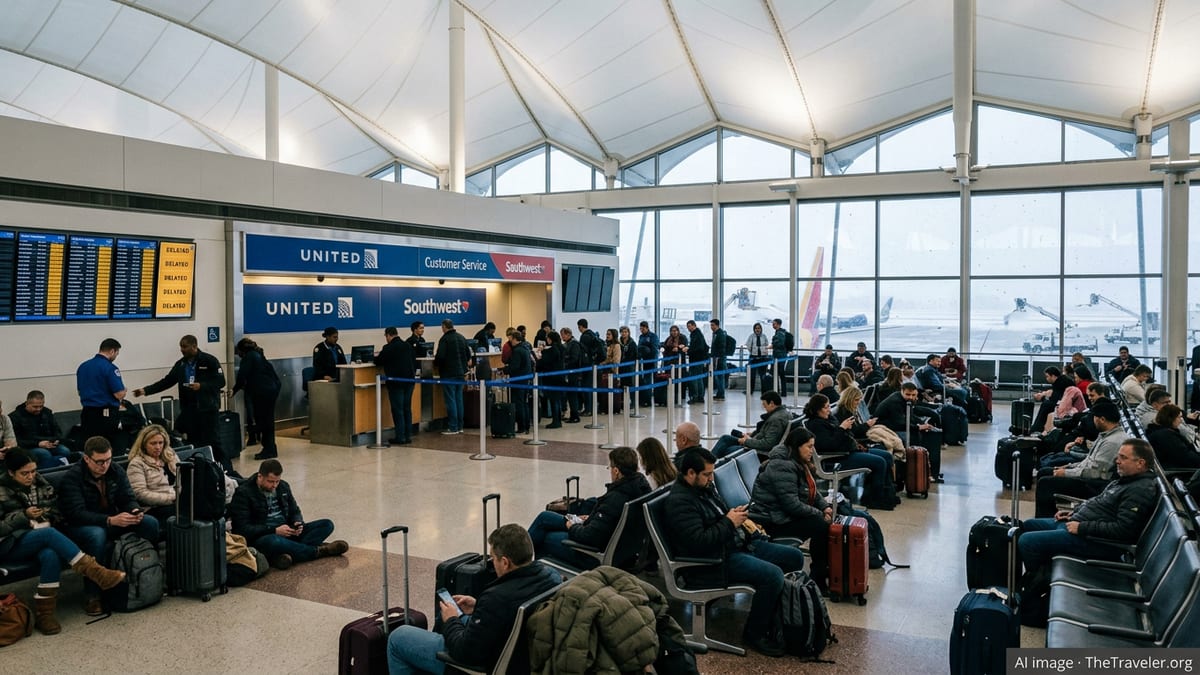
Passengers at Denver International Airport faced hours-long waits, missed connections and makeshift campouts on concourse floors on Friday, March 6, as a fast-intensifying snowstorm triggered 992 flight delays and at least 30 cancellations, snarling operations for United Airlines, Southwest Airlines and other major carriers and sending disruption ripples to hubs in New York, Los Angeles, Chicago and across the country.
Snowstorm Hammers Denver Hub and Ripples Nationwide
The powerful March system moved into Colorado’s Front Range before dawn on Friday, bringing heavy, wet snow and gusty winds that quickly forced Denver International Airport to shift into de-icing mode for departing aircraft. Federal aviation officials reported that arrival rates into Denver had to be reduced as visibility dropped and runway operations slowed, creating a bottleneck at one of the nation’s busiest connecting hubs.
By midafternoon, flight-tracking services showed 992 flights into and out of Denver delayed and at least 30 canceled, as aircraft waited for de-icing, taxi congestion built up and new snow bands pushed through the metro area. United Airlines, which uses Denver as a key hub, and Southwest Airlines, one of the airport’s largest domestic carriers, bore the brunt of the disruption.
The problems were most acute at Denver, but they did not stay there. Because the city serves as a central waypoint for coast-to-coast connections, the slowdown quickly spilled into major destinations such as New York, Los Angeles and Chicago, where passengers waiting to board outbound flights to Denver found their departures delayed for hours or canceled outright.
At Chicago O’Hare, where thunderstorms and volume constraints were already causing operational headaches this week, airlines layered Denver-related delays on top of local weather challenges. In New York and New Jersey, evening departures to Denver from Newark Liberty and other regional airports left late, stranding travelers with missed onward connections to the West Coast and Mountain West.
United Flight Clips De-Icing Truck as Ground Operations Strain
The wintry conditions at Denver contributed to at least one ground incident on Friday morning involving a United Airlines flight undergoing de-icing. Airport officials said a United Boeing 737 operating as Flight 605, bound for Nashville, made contact with a de-icing truck shortly after 8:20 a.m. local time while maneuvering away from a de-icing pad on the airfield.
The driver of the de-icing vehicle was taken to a local hospital for evaluation, according to local authorities, while passengers on the aircraft were deplaned and returned to the terminal. There were no immediate reports of serious injuries among those on board, but the incident further constrained ground movements at a time when de-icing demand was already high and taxiways were crowded.
The Federal Aviation Administration confirmed that de-icing procedures for all departing flights from Denver began around 7:30 a.m., adding critical minutes to every departure as crews worked aircraft through the system. Each delay compounded the next, contributing to the nearly one thousand late operations recorded at the airport by late day.
United, which accounts for a substantial share of Denver’s daily departures, rerouted aircraft and crews where possible, but the combination of weather, de-icing queues and the morning ground incident limited its ability to recover. Travelers on United routes connecting through Denver reported rolling gate changes and pushback times that repeatedly slipped as the day wore on.
Passengers Face Long Lines, Missed Connections and Overnight Stays
Inside the terminal, the operational strain translated into long customer-service lines and crowded gate areas. With so many Denver-bound flights delayed at their origin cities, boarding times fluctuated and some aircraft arrived too late for travelers to make their onward connections to cities across the Midwest, South and West Coast.
Families heading to spring break vacations packed into concourses alongside business travelers trying to return home before the weekend. Some stretched out on the floor near charging stations, improvising camps as they waited for rebooked itineraries or hoped their flights would eventually be cleared for departure. Others queued at ticket counters seeking hotel vouchers or meal assistance.
Airlines reminded passengers through app alerts, text messages and social media posts to check flight status frequently and avoid heading to the airport before confirming that their flight was still scheduled to depart. But the fast-changing nature of both the storm bands and recovery operations meant that even recently updated departure times were subject to change.
Travelers with tight connections through Denver were particularly vulnerable. Those connecting from the East Coast to smaller Western cities such as Bozeman, Spokane or Santa Fe often discovered that the last flight of the evening had already left or been canceled, forcing unexpected overnights in Denver or in their originating city and prompting a run on airport-area hotel rooms.
New York, Los Angeles and Chicago Feel the Knock-On Effects
As Denver’s delays mounted, major coastal and Midwestern hubs began to see their own schedules buckle under the strain. At New York-area airports, flights scheduled to turn quickly on Denver routes were held at the gate awaiting updated arrival and departure slots. Passengers connecting through Newark to international services reported anxiously watching the clock as their delayed Denver flights taxied to the runway.
In Los Angeles, some early afternoon departures to Denver left hours late, leaving travelers bound for cities like Minneapolis, Kansas City and Omaha stranded in California. Gate agents worked to rebook passengers onto later connections where seats were available, but with Denver acting as a funnel for so many cross-country itineraries, alternatives were limited.
Chicago O’Hare, already one of the most congested hubs in the country, was hit with additional schedule pressure as aircraft and crews scheduled to route through Denver fell out of position. Delays at O’Hare and at Chicago Midway grew as carriers including United and Southwest adjusted aircraft utilization and crew assignments on the fly to maintain as much of their network as possible.
Secondary hubs such as Houston, Phoenix and Las Vegas were not spared either. With Denver acting as both an origin and destination for travelers across these cities, disruptions radiated across the national grid, causing missed connections and extended onboard waits for gates to open.
What Travelers Can Expect as Operations Recover
Airline operations experts warned that the effects of Friday’s disruptions would likely continue into the weekend, even if snow totals at Denver ease and runway conditions improve overnight. With aircraft and crews scattered across the country and some planes out of service following minor incidents or extended de-icing cycles, it can take 24 to 48 hours or more for schedules to fully normalize.
Passengers scheduled to fly through Denver, Chicago, New York or Los Angeles over the next one to two days were urged to build in extra time, expect longer lines at security and customer-service counters, and be prepared for potential gate or time changes right up to boarding. Flexibility with routing, including accepting connections through alternative hubs, may improve the chances of reaching a destination on the same day.
Most major U.S. airlines offer travelers the option to rebook within a limited date range when severe weather disrupts operations, often waiving change fees and fare differences within the affected period. Customers were advised to use airline mobile apps and websites first to modify itineraries, reserving in-person and phone support for more complex situations where automated tools cannot find workable alternatives.
With winter weather still a threat across much of North America in early March, Friday’s events at Denver International Airport underscored the outsized role that a single storm at a major hub can play in the broader U.S. air travel system, turning a local snow event into a nationwide day of delays.