

More news on this day
A sudden spring snowstorm and subsequent ground stop at Calgary International Airport triggered major travel disruption on Thursday, with publicly available flight-tracking data indicating that at least 67 flights were cancelled and 173 delayed, affecting passengers on WestJet, Air Canada, Flair Airlines, WestJet Encore and other carriers across Canada and into the United States.
Get the latest news straight to your inbox!
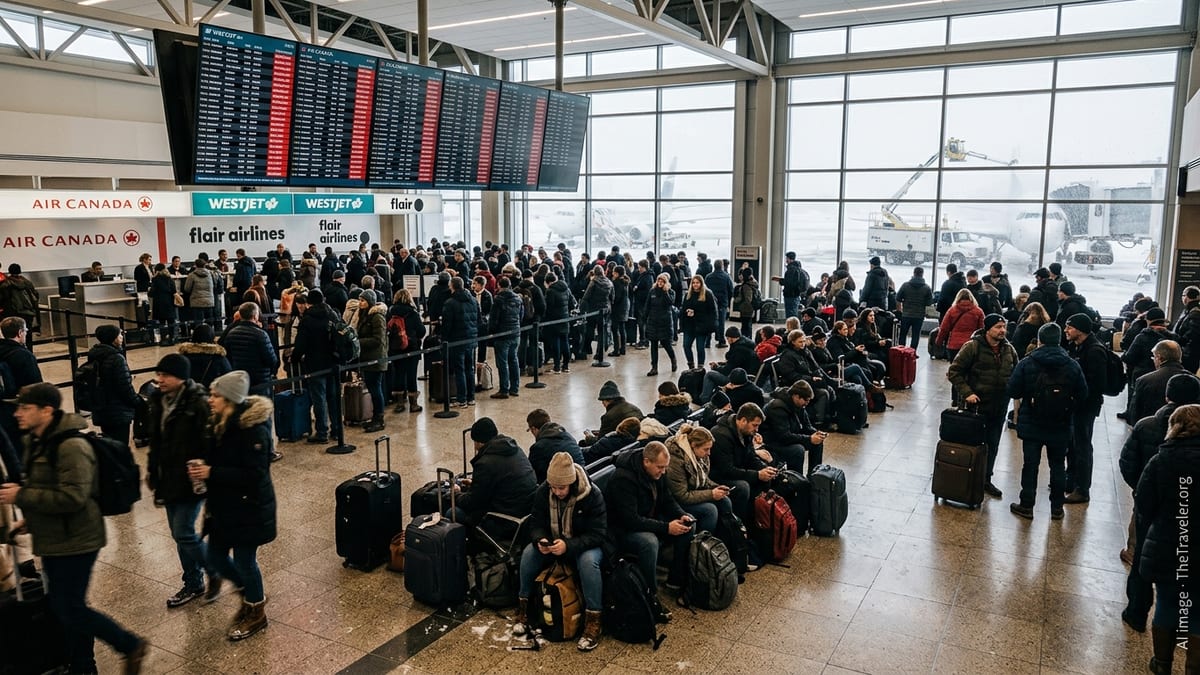
Snowstorm and Ground Stop Paralyze Operations at Calgary
Reports from aviation forums and operational updates indicate that a fast-moving storm dropped roughly 15 to 25 centimetres of snow over Calgary, sharply reducing visibility and forcing intensive snow removal at Calgary International Airport. The conditions led to ramp congestion, limited gate availability and intermittent runway access as airport teams worked to clear snow and manage aircraft already on the ground.
Publicly shared operational summaries suggest that a formal ground stop was issued for Calgary, halting most departures for several hours and limiting arrivals to a small number of aircraft per hour. In practice, observers noted that no departures had left Calgary for an extended period during the height of the storm, while arriving flights faced lengthy waits for available gates and cleared taxiways.
Passenger accounts posted online describe aircraft sitting on de-icing pads or taxiways for three to four hours or longer, as crews waited for improved runway conditions and clearance to depart or return to gates. Several flights ultimately returned to the terminal and were later cancelled, adding to the day’s mounting disruption.
The combination of rapid snowfall, poor visibility and ramp congestion significantly reduced Calgary’s capacity, turning one of Canada’s largest hubs into a chokepoint that quickly affected airlines’ wider domestic and transborder networks.
WestJet, Air Canada, Flair and Regional Operations Hit Hard
Calgary is a major hub for WestJet and also an important base for Air Canada, Flair Airlines and regional affiliates such as WestJet Encore. With the ground stop and deteriorating ramp conditions, publicly available flight-tracking boards showed dozens of WestJet and WestJet Encore departures and arrivals scrubbed or heavily delayed, particularly on short-haul routes across Alberta and the Prairies.
Air Canada and its regional operations also recorded a spike in cancellations and diversions involving Calgary. In at least one case highlighted by travelers, an inbound flight from the United States diverted rather than attempt a landing during the worst of the storm, reflecting the operational constraints facing carriers as visibility dropped and runway clearing fell behind the pace of arrivals.
Flair Airlines, which operates a mix of domestic and leisure routes via Calgary, was similarly affected, with flights either held for extended periods, rescheduled or cancelled outright. The knock-on effect across airline schedules meant that even aircraft not initially based in Calgary were drawn into the disruption as rotations collapsed and crews approached duty-time limits.
For regional operations in particular, the loss of multiple Calgary turns in a single day can leave aircraft and crews out of position, complicating recovery efforts into the following days and increasing the risk of further delays beyond the immediate weather event.
Ripple Effects Across Western Canada and Cross-Border Routes
The immediate impact at Calgary quickly spread to other Canadian cities as cancellations and delays accumulated on connecting services. Publicly visible schedules showed disrupted links to Vancouver, Edmonton, Winnipeg and Kelowna, with many flights either cancelled from Calgary or experiencing multi-hour delays that jeopardized onward connections.
Travelers on routes between Calgary and Vancouver reported extended tarmac waits followed by late-day cancellations, while those headed for Edmonton and Winnipeg described last-minute schedule changes and rebookings onto later flights. At smaller destinations such as Kelowna, reduced frequencies meant that a single cancelled leg could leave passengers waiting many hours or until the next day for available seats.
Transborder routes were not spared. Services linking Calgary with Los Angeles and other U.S. cities encountered delays and cancellations as aircraft and crews became stranded in Alberta. Some flights were rerouted or rescheduled, while others disappeared from departure boards entirely as airlines recalibrated their networks in response to the unexpected shutdown.
Because Calgary functions as a key connecting point between Western Canada and U.S. destinations, the disruption had an outsized impact on cross-border itineraries, with passengers reporting missed onward flights and complex rebooking scenarios involving multiple carriers and airports.
Passenger Frustration Grows Amid Long Waits and Uncertain Rebookings
While winter-weather disruptions are not uncommon in Calgary, many passengers expressed frustration at the length of onboard delays and the perceived lack of timely communication as conditions deteriorated. Accounts shared on social platforms describe travelers boarding in the morning, remaining on aircraft for five to six hours, and then being instructed to deplane when flights were finally cancelled.
In several cases, travelers reported boarding and deplaning multiple times as airlines attempted to navigate changing forecasts, de-icing queues and shifting runway availability. Some passengers described closed service counters and long telephone wait times while trying to secure new itineraries, adding to the stress of an already difficult travel day.
Rebooking challenges were compounded by the concentration of cancellations at one major hub. Once the 67 cancelled and 173 delayed flights were absorbed into the system, remaining seats on later departures from Calgary and other affected airports became scarce, especially on high-demand routes linking major cities in Western Canada.
Public information on Canada’s air passenger regulations has led some travelers to examine their eligibility for compensation or assistance, but outcomes vary depending on whether a cancellation is attributed to weather-related safety constraints or other operational factors. With heavy snow and visibility issues clearly documented at Calgary, many of the day’s disruptions are expected to fall into categories where compensation is more limited.
Ongoing Recovery Efforts and What Travelers Can Expect Next
As snow clearing progresses and visibility improves, airlines are gradually working to resume normal operations at Calgary and restore disrupted schedules across Western Canada and affected U.S. routes. However, aviation observers note that the operational consequences of such a large, sudden weather event can linger for at least one to two days, as aircraft and crews are returned to their intended rotations.
Travelers scheduled to fly through Calgary, Vancouver, Edmonton, Winnipeg, Kelowna, Los Angeles and other connected cities in the short term are being advised, through airline alerts and publicly available travel advisories, to monitor their flight status closely and allow extra time for connections. Additional last-minute adjustments remain possible as carriers manage residual backlogs in de-icing, runway access and crew availability.
For those already caught in the disruption, experience from past events suggests that recovery flights, larger aircraft substitutions on busy routes and expanded standby lists may form part of the strategy to move stranded passengers. Nonetheless, the scale of Wednesday’s and Thursday’s cancellations means that not everyone is likely to reach their destinations on their original travel date.
The latest disruption underscores the continuing vulnerability of hub operations in Canada to fast-changing winter and early-spring weather, even as airlines refine contingency plans and invest in de-icing, snow-removal and schedule-planning tools designed to better withstand sudden storms.