

More news on this day
Winter weather chaos, cartel gunfire and a sudden shift in US border processing collided this week to create a perfect storm for travelers, leaving thousands stranded in airports, resorts and border towns from Toronto to Puerto Vallarta and Tijuana.
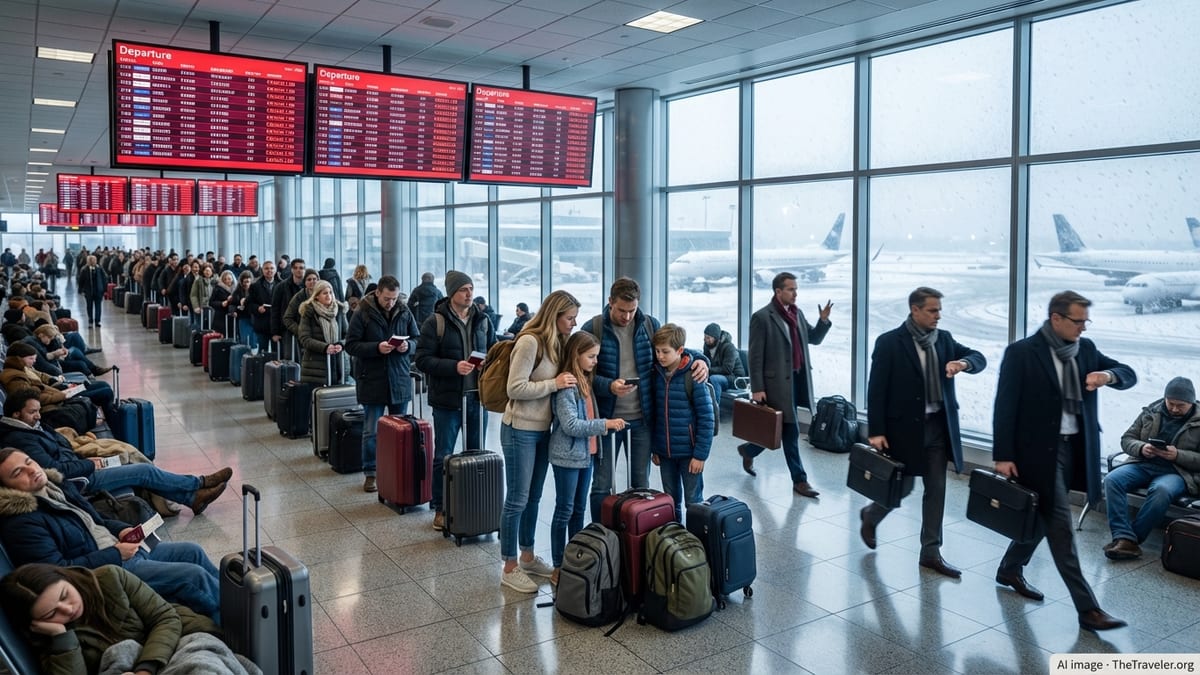
Snowstorms Grind North American Air Travel to a Halt
A powerful winter storm sweeping across the northeastern United States on Monday snarled operations at some of the country’s busiest hubs, compounding an already fragile air travel system and triggering cascading disruptions nationwide. Airlines scrubbed and delayed thousands of flights as crews and aircraft were knocked out of position, forcing passengers to sleep on terminal floors or scramble for last-minute hotel rooms as the weather closed in.
At Hartsfield–Jackson Atlanta International Airport, the world’s busiest hub and a key artery for domestic connections, hundreds of flights were delayed or canceled as carriers adjusted to the storm walloping major cities in the Northeast. Travelers who had rebooked through Atlanta to dodge the weather found themselves trapped there instead, as gate agents announced rolling cancellations over terminal loudspeakers and departure boards flickered with red alerts.
Similar scenes played out in Chicago, New York and Boston, where airlines preemptively grounded large portions of their schedules, citing passenger safety and the need to protect already stretched operations. For many travelers, the storm marked the second or even third time their flights had been rescheduled in recent days, as carriers continued to recover from earlier technical glitches and staffing shortages.
The impact rippled far beyond the snowbelt. Flights to sun destinations in Mexico and the Caribbean backed up as aircraft were stranded in storm-affected cities, leaving vacationers in southern resorts unable to depart and would-be holidaymakers stuck in cold northern airports watching the clock run out on their trips.
Cartel Violence Turns Mexican Resorts into No-Go Zones
Even where the skies were clear, travelers were grounded by a different kind of storm. In western Mexico, the killing of Jalisco New Generation Cartel leader Nemesio “El Mencho” Oseguera Cervantes in a military operation on Sunday triggered a wave of retaliatory violence across several states, upending tourism at some of the country’s most popular vacation spots.
In Puerto Vallarta and along stretches of the Jalisco coast, roads were blocked by burning vehicles and armed groups, taxis and ride-hailing services were suspended, and plumes of smoke darkened the skyline. Airline schedules quickly unraveled as carriers from the United States and Canada canceled flights into the region and urged passengers to remain in their hotels, turning beach resorts into de facto shelters for families who had expected to be home by now.
At Guadalajara International Airport, Mexico’s second-busiest, frightened passengers fled onto the tarmac amid reports of gunfire outside the terminals. The National Guard and military forces were deployed to secure the airfield as commercial operations were curtailed and outbound flights thinned to a trickle. Travelers arriving from the United States described driving to the airport on eerily empty highways lined with burned-out cars and shuttered gas stations.
Further east in Quintana Roo, where Cancún, Cozumel and the Riviera Maya draw millions of tourists each year, the US Embassy’s shelter-in-place guidance remained in effect for American government staff and many private travelers opted to hunker down. While Cancún’s airport technically remained open, waves of delays and cancellations rippled through its schedule as airlines struggled with crew movements, security concerns and a patchwork of road closures.
Airlines, Embassies and Tourists Scramble for Options
With the dual crises unfolding simultaneously, airlines found themselves juggling weather diversions with security-driven ground stops across two countries. Major US carriers introduced temporary travel waivers for Mexico routes, allowing passengers to change dates without fees if they were scheduled to fly into affected airports such as Puerto Vallarta and Guadalajara. Several low-cost airlines simply suspended operations to western Mexico for days at a time, leaving aircraft and crews parked rather than risk flying into volatile conditions.
The US State Department and foreign ministries in Canada and Europe issued or updated travel advisories for western Mexico, warning citizens to avoid non-essential travel, stay indoors where possible and maintain direct contact with their airlines for real-time information. Consular officials fielded calls from families desperate to know when loved ones might be able to leave resorts ringed by burning vehicles or return home from airports where services were reduced to the bare minimum.
On the ground, tour operators and hotel managers scrambled to keep stranded guests safe and housed. Some resorts extended stays at discounted rates or waived change fees, while others struggled with staff shortages as local workers were unable to navigate barricaded roads. In coastal cities, supermarkets saw sudden rushes on essentials as residents and tourists alike stocked up in case roadblocks and clashes dragged on.
For individual travelers, the experience has been harrowing. Families from US states such as Minnesota, Colorado and Louisiana reported watching fires burn on the horizon as they were turned back from closed highways or diverted from shuttered airports. Many said they had little choice but to shelter in condominiums or all-inclusive resorts, refreshing airline apps every few minutes and hoping that the next notification would finally bring a firm departure time.
Border Hopes Derailed as US Processing Rules Shift
The week’s travel turmoil was not confined to tourists and business travelers. Along the US-Mexico border, the abrupt shutdown of a key digital appointment system used to manage asylum seekers’ crossings has created another form of stranding, leaving tens of thousands of people stuck in limbo just as security conditions deteriorate further south.
Until recently, the CBP One mobile application had served as the primary gateway for many asylum seekers hoping to enter the United States at official ports of entry. Its sudden cancellation under the new US administration wiped out thousands of scheduled appointments almost overnight, forcing migrants who had waited months in Mexican border cities to reassess their plans or risk more dangerous irregular crossings.
Shelters in cities such as Tijuana, Ciudad Juárez and Matamoros, which had seen some relief as the app spread arrivals more evenly across the country, are once again filling with families unable to move forward or back. Aid groups say they are contending with a surge in demand for beds, food and legal assistance at the same time that other parts of Mexico are being convulsed by cartel violence and road blockades.
For those caught in the middle, the combined effect of policy whiplash and security breakdowns has been devastating. Travelers who once hoped to cross borders for safety or opportunity now find themselves hemmed in by closed roads, suspended border programs and shrinking flight options, with little clarity about when conditions will stabilize enough for their journeys to resume.
A Perfect Storm for a Fragile Travel System
The convergence of a major snowstorm, cartel-fueled violence and sudden shifts in US border policy has exposed the fragility of the modern travel ecosystem, in which a disruption in one region can quickly ricochet across continents. Airlines and airports, already operating on thin margins of time and staffing, have struggled to adapt to shocks arriving from multiple directions at once.
Travel experts say the events of this week underline how climate change, political volatility and organized crime increasingly intersect with tourism and migration. A blizzard closing runways in the Northeast can, within hours, leave vacationers trapped on tropical beaches, while a gun battle thousands of miles away can strand spring breakers and business travelers, as well as asylum seekers whose futures hinge on a single canceled appointment.
For now, carriers are focusing on clearing backlogs as weather conditions improve and Mexican authorities work to reassert control over key highways and airports. Yet for many of those left sleeping in terminals, confined to resorts or stuck in crowded shelters along the border, the damage has already been done. Vacations have been lost, savings drained and long-laid plans shattered, underscoring how quickly travel dreams can unravel when multiple crises collide.