

More news on this day
Severe winter weather and mounting operational pressures have triggered widespread flight disruptions across Japan, with more than a hundred flights cancelled or heavily delayed in recent days on routes linking major hubs such as Tokyo and Osaka with regional destinations including Okinawa, Ishigaki, Miyako and Akita, as well as long-haul services to cities like Boston.
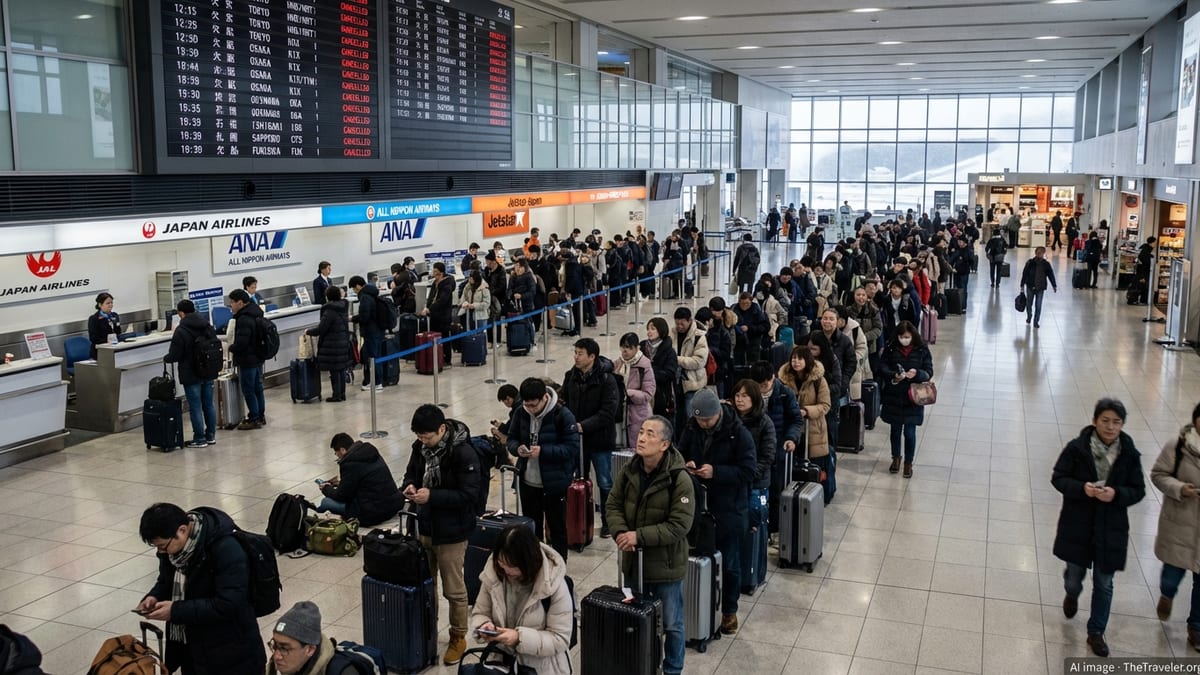
Heavy Snow and Strong Winds Batter Japan’s Air Network
Japan’s winter has tightened its grip on air travel, as heavy snow and strong winds forced airlines to ground scores of flights nationwide in recent weeks. Broadcasters and local authorities reported that carriers including Japan Airlines, All Nippon Airways and several regional and low cost operators collectively scrubbed more than 100 flights on one recent Tuesday alone, primarily affecting northern and coastal areas where blizzard conditions reduced visibility and snarled ground operations.
Weather officials have warned that intense snow bands and gusty winds, particularly across Hokkaido and the Tohoku region, are likely to continue causing disruptions whenever new systems move through. That has translated into intermittent shutdowns of runways, restrictions on take offs and landings, and knock on delays as aircraft and crew fall out of position for subsequent rotations across the country.
Airlines have urged passengers to monitor flight status closely on official channels and to arrive early at airports, noting that additional cancellations remain possible at short notice if conditions deteriorate. Rail and road networks in affected areas have also been hit by the same storms, leaving many travelers with limited alternatives when flights are grounded.
Japan Airlines and ANA Cancel Dozens of Domestic Services
Japan’s two largest carriers, Japan Airlines and All Nippon Airways, have shouldered a large share of the disruption as they operate dense domestic networks linking Tokyo and Osaka with regional airports. On one recent storm day, Japan Airlines cancelled 37 services while ANA dropped 52 flights, according to local reports, with many of the affected sectors connecting northern cities and snow prone regions with the capital’s Haneda and Narita airports.
These cancellations came on top of routine schedule adjustments that already account for winter weather risks, underlining the severity of the recent systems. Flights to and from airports such as New Chitose near Sapporo, Akita on the Sea of Japan coast, and other smaller regional fields have been particularly vulnerable when crosswinds exceed operational limits or when snow clearing cannot keep up with heavy falls.
The knock on effects have rippled into southern and central Japan, as aircraft due to operate onward sectors to destinations including Osaka, Okinawa, Ishigaki and Miyako have arrived late or not at all. That has forced airlines to consolidate services, rebook passengers on remaining flights and in some cases accommodate travelers overnight near major hubs.
New Chitose Operations Strained as Services Suspended
New Chitose Airport, the primary gateway to Hokkaido, has been one of the focal points of disruption. Japan Airlines acknowledged that “many flights arriving at and departing from New Chitose Airport are experiencing delays and cancellations” during a recent snow event, prompting the carrier to suspend same day standby and departure date upgrade services for all its domestic flights at the airport for a full day.
The suspension meant that passengers could no longer wait at the airport for last minute seats or pay to move to earlier or later flights, a common practice for domestic travelers in Japan. JAL described the step as necessary to manage the unusually high volume of disrupted reservations and to prioritize rebooking customers who had already lost their original flights.
Other airlines have taken similar measures informally, limiting the flexibility normally offered to frequent flyers and same day changers in order to stabilize operations. The focus at New Chitose and other snow hit airports has shifted to moving stranded travelers out in an orderly fashion once weather windows open, rather than catering to discretionary schedule tweaks.
International Routes to and from Boston and Tokyo Affected
Japan’s flight disruptions have not been confined to domestic routes. International schedules linking Tokyo with North America and Europe have also seen interruptions tied to winter weather and follow on operational challenges. United Airlines activated a Tokyo winter weather travel waiver earlier in February, allowing customers booked through Tokyo’s Haneda and Narita airports to change flights without fees over several days as storms impacted the region.
Long haul services connecting Tokyo to North American cities such as Boston, as well as West Coast gateways, have faced periods of delay and sporadic cancellation when strong crosswinds or low visibility reduced runway capacity. In some cases, aircraft originating in Japan have been held on the ground, preventing them from operating their return legs back from the United States on schedule and further complicating crew rotations.
All Nippon Airways has simultaneously dealt with operational incidents unrelated to weather, including a highly publicized “flight to nowhere” from Tokyo to Frankfurt that returned to Japan after many hours in the air. While that event primarily affected a single group of passengers, it underscores the fragility of long haul rosters when disruptions cascade and equipment is not where it is needed for subsequent departures.
Island Routes to Okinawa, Ishigaki and Miyako Under Pressure
Routes linking mainland Japan with Okinawa and its outlying islands have also felt the impact of the broader disruption. While Okinawa itself is far from the heavy snows blanketing northern Japan, cancellations and delays at Tokyo and Osaka have affected flights continuing south to Naha, Okinawa’s main airport, and onward to island destinations such as Ishigaki and Miyako.
These sectors are lifelines for local residents and tourism driven economies, and they operate on relatively tight schedules with limited spare capacity. When aircraft are delayed out of Haneda or Kansai due to flows elsewhere in the network, same day connections to the islands can be lost, forcing passengers to overnight in transit or rebook on later dates.
Regional airlines based in Okinawa have responded by selectively increasing capacity on certain routes on peak days to absorb displaced travelers, adding extra rotations between Naha, Miyako, Tarama and Ishigaki over a short period. However, those measures provide only partial relief when inbound flights from Tokyo and Osaka are disrupted, since many visitors still rely on through itineraries from Japan’s main hubs.
Low Cost Carriers and Jetstar Japan Navigate Weather and Transition
Low cost carriers have not been spared by the spate of cancellations. Jetstar Japan, which operates an extensive domestic and short haul international network from its base near Tokyo, has been listed among airlines cancelling flights on severe weather days, alongside Peach Aviation, Air Do and others. On at least one recent storm day, Jetstar Japan cancelled a small number of services, contributing to the nationwide total of more than 100 grounded flights.
The disruptions come as Jetstar Japan prepares for a significant ownership transition. Qantas has announced plans to sell its stake in the carrier to its Japanese partner, with a full rebrand of the airline expected over the next year. Officials stress that day to day operations and existing bookings will continue as normal throughout the transition, but the combination of winter weather and corporate change has placed the airline under heightened scrutiny from passengers and regulators.
Other low cost airlines have sought to entice travelers back with aggressive fare sales for the upcoming spring and summer travel seasons, even as they caution that winter operations remain subject to change. Carriers are balancing the need to fill seats in the shoulder months with investments in resilience, such as additional reserve crews and more flexible rostering around known high risk weather windows.
Travelers Face Full Flights, Rebooking Headaches and Limited Alternatives
For passengers, the immediate impact of the disruptions has been felt in crowded terminals, lengthy queues at service counters and difficulty securing alternative flights. With Japan’s domestic networks typically operating at high load factors even in winter, cancelled flights quickly push remaining services close to or beyond capacity, particularly on popular routes linking Tokyo with Osaka, Okinawa and major regional cities.
Many travelers who missed connections to island destinations like Ishigaki and Miyako have reported needing to split groups across multiple flights or accept routings that add substantial travel time. In some cases, seats have not been available for several days on the most popular departures, forcing changes to hotel bookings and planned tours.
Rail offers a reliable alternative on some corridors, particularly between Tokyo, Osaka and select northern cities, but high speed services do not reach Okinawa or the more remote islands. As a result, travelers heading to or from those destinations have had little choice but to wait for the next available flight or, where possible, shift their plans to mainland destinations less exposed to knock on effects from weather.
Airlines Offer Fee Waivers and Urge Flexible Itineraries
In response to the widespread disruption, airlines serving Japan have introduced flexible policies to help passengers adjust their travel plans. United’s winter weather waiver around Tokyo allowed customers to change itineraries without incurring change fees or fare differences, provided they rebooked within a set window and kept the same origin and destination cities. Similar measures have been adopted by Japanese carriers for specific storm periods affecting major hubs.
Japan Airlines and ANA have also reminded customers that online self service tools can handle a wide range of schedule changes and refund requests in the event of cancellations, reducing the need to queue at airports during peak disruption. Both airlines have advised travelers to update contact information on their profiles so that alerts about last minute changes can be delivered quickly by email or text message.
Travel agents and corporate travel managers are echoing calls for flexibility, recommending that passengers build additional buffer time into itineraries that rely on winter connections through Tokyo, Osaka or key regional airports. They also advise considering earlier or later departures on the same day to improve the odds of reaching onward flights should delays begin to cascade.