

More news on this day
Snowstorms sweeping across Canada are causing massive disruption to air travel today, with airlines reporting 105 cancellations and 428 delays across major airports including Montreal, Calgary, Toronto, Vancouver, Ottawa, Halifax, St. John’s, Saskatoon and Regina.
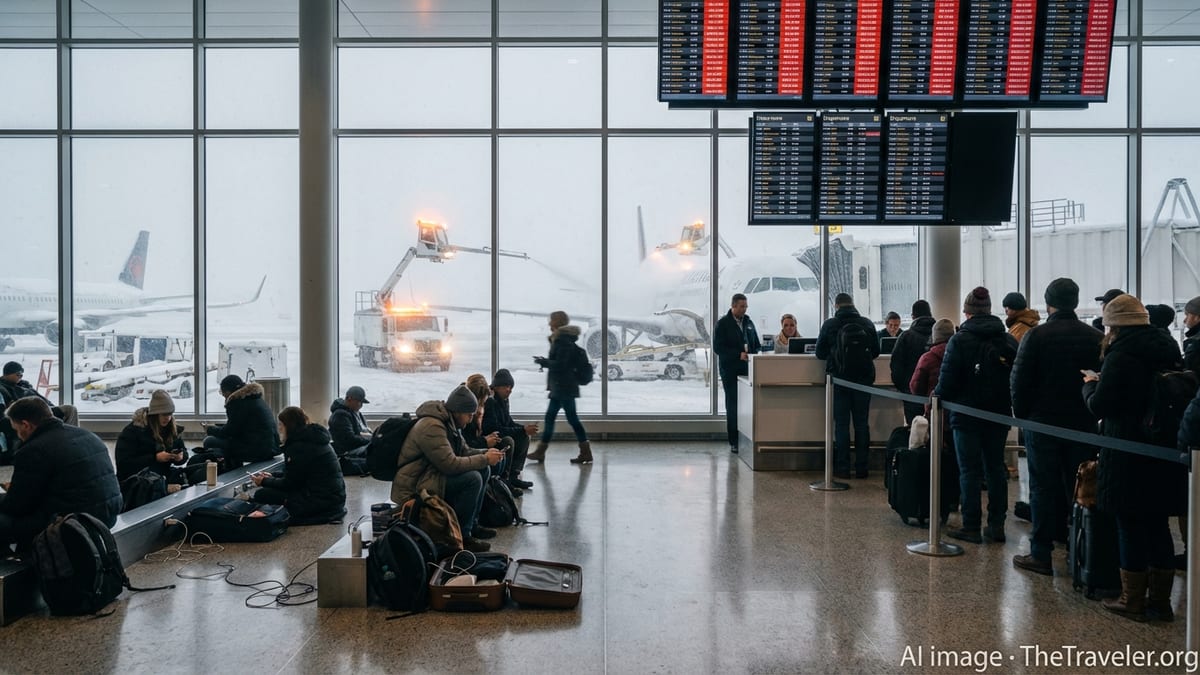
Storm System Snarls Operations Coast to Coast
The latest winter system has struck a broad swath of the country, combining heavy snow, gusty winds and periods of freezing rain that have sharply reduced visibility and complicated runway clearing. Aviation authorities and airport operators from British Columbia to Atlantic Canada are reporting sustained operational pressure as crews race to keep taxiways and de icing pads functioning.
Environment and airport meteorologists describe a highly dynamic pattern, with fast moving squall lines in the Prairies and more persistent, moisture rich snowfall in central and eastern Canada. The result is a patchwork of closures, rolling delays and ground holds that are rippling through airline schedules and affecting both domestic and transborder routes.
Travel data from Canada’s major hubs show that many delays are cascading from earlier disruptions in the day, as aircraft and crews struggle to return to position. With runway capacity reduced at times by plowing and de icing requirements, airlines have had to trim frequencies, consolidate services and prioritize long haul and connecting bank flights.
Officials cautioned that even short lived bursts of heavier snow can trigger new waves of disruption, particularly during peak morning and late afternoon departure banks, when runway throughput is most critical and gate space is tight.
Major Hubs in Toronto, Montreal and Vancouver Hit Hard
Toronto Pearson, Canada’s busiest airport, has borne a large share of the impact, with scores of delayed departures and arrivals and more than a dozen cancellations. Ground handlers there are contending with accumulating snow, slick ramp conditions and the added time needed for intensive de icing on narrowbody and widebody aircraft alike.
In Montreal, heavy snow and gusty crosswinds have slowed operations at Montréal Trudeau, where a combination of instrument approaches, runway sweeping and traffic flow restrictions has forced airlines to push back departure times and trim flight frequencies. Some short haul regional services into Quebec and Atlantic Canada have been scrubbed outright as carriers focus resources on trunk routes.
On the West Coast, Vancouver International is dealing with intermittent snow and low cloud ceilings that have cut into on time performance for flights linking British Columbia with the rest of Canada, the United States and key leisure markets. Even brief disruptions there can quickly affect connections for transpacific and U.S. bound passengers who rely on tightly timed onward links.
Secondary hubs and focus cities such as Calgary and Ottawa are also experiencing mounting delays as the storm system shifts. Calgary, a critical node for western and northern services, has seen a series of schedule adjustments as crosswinds, blowing snow and cold temperatures complicate ramp and runway conditions.
Airlines Struggle to Maintain Schedules
Air Canada, WestJet, Jazz, United and several other carriers have together accounted for the 105 cancellations and 428 delays reported so far, underscoring how widely the disruption is being felt across the industry. Canada’s two largest airlines are contending with a mix of grounded flights, rolling delays and aircraft out of position at multiple hubs.
Air Canada has been forced to cancel and delay dozens of flights spanning domestic, transborder and international routes. The airline has emphasized safety as its overriding priority as it works with airport authorities to sequence departures around runway clearing and de icing windows, particularly at Pearson, Trudeau, Vancouver and Calgary.
WestJet and its regional affiliate operations have also reported significant schedule changes, particularly on routes linking western Canada with Toronto, Ottawa and Atlantic destinations. With aircraft and crews often overnighting in smaller markets such as Saskatoon, Regina and Halifax, early morning cancellations there can reverberate throughout the network for the rest of the day.
United and other U.S. carriers operating to Canadian gateways have trimmed some services and are facing knock on delays when Canadian originating flights arrive late into their American hubs. This has added another layer of complexity for travelers making cross border connections during an already challenging operating day.
Passengers Face Long Queues, Rebookings and Uncertainty
For travelers, the numbers on the departure boards translate into crowded terminals, long check in and customer service lines, and a scramble for scarce rebooking options. At Toronto, Montreal and Vancouver in particular, passengers have reported waiting hours to change itineraries after cancellations, with many opting to delay trips or reroute through less affected cities.
Families returning from school breaks, business travelers on tight schedules and international visitors transiting through Canadian hubs are among those hardest hit. With hotel inventory near major airports tightening as the day progresses, some travelers are choosing to remain airside in terminals in the hope of catching standby seats on later departures.
Airlines are urging passengers to check their flight status frequently before heading to the airport and to use digital tools to manage rebookings where possible. Many carriers have introduced flexible travel waivers for affected routes, allowing customers to change dates or destinations without additional fees, subject to seat availability.
Airport staff and volunteer ambassadors in cities including Halifax, St. John’s, Saskatoon and Regina have been deployed to help manage queues, direct passengers to updated information screens and provide basic amenities to those facing extended waits in departure lounges.
Outlook: Further Disruptions Possible as System Lingers
Meteorologists warn that as the storm system lingers and shifts across different regions, conditions could deteriorate again at some airports even as others begin to recover. Short periods of freezing rain or intensified snowfall can temporarily shut down runway operations, leading to additional ground holds and diversions.
Operational planners at airlines and airports are working with updated weather models to refine schedules on a rolling basis, but emphasize that recovery will likely extend into subsequent days as aircraft and crews are repositioned. The knock on effects may persist for some time on popular domestic routes and at major connecting hubs.
Travel industry analysts note that the latest disruption underscores the vulnerability of tightly banked hub schedules to winter weather in a geographically vast country. They point out that even with improved forecasting, expanded de icing infrastructure and more resilient airport operations, severe snow and wind events can still bring parts of the system close to a standstill.
With winter far from over in much of Canada, airlines and airports are urging travelers to build extra time into their journeys, remain flexible with their plans and stay closely attuned to evolving conditions at both departure and arrival airports.