

More news on this day
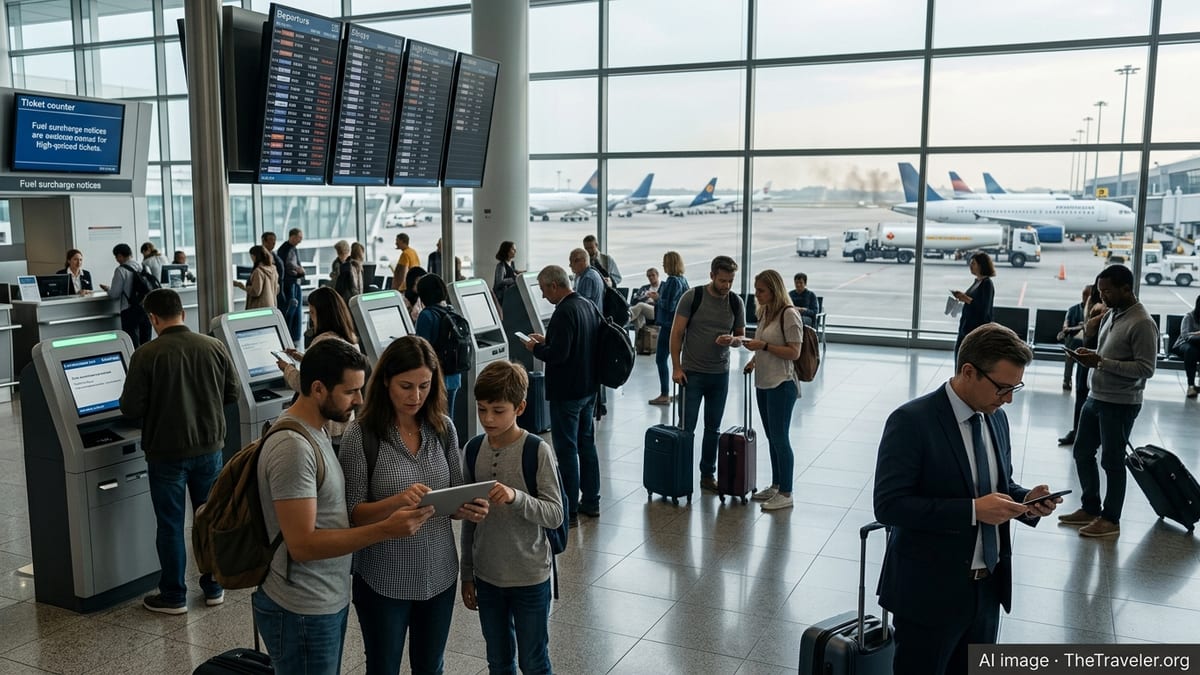
A renewed surge in jet fuel prices, driven by geopolitical turmoil and supply disruptions, is rippling through the global travel economy in early 2026, pushing airfares higher and adding fresh inflationary pressure to hotel rates just as travelers finalize peak-season plans.
Get the latest news straight to your inbox!
Fuel Shock Returns as Jet Prices Spike in 2026
After several years of relative stability, jet fuel has re-emerged as a major pressure point for airlines in 2026. Industry data compiled from energy market trackers and aviation bodies indicates that global jet fuel benchmarks have jumped sharply since late February as conflict in the Middle East has constrained crude supplies and forced widespread flight rerouting. Some estimates point to week-on-week increases of more than 50 percent in certain markets, with kerosene-based products such as aviation fuel more than doubling compared with pre-conflict levels.
Reports from market analysts show that rerouted long-haul flights are burning significantly more fuel as they avoid key air corridors, particularly around the Strait of Hormuz and adjacent Gulf airspace. The extra distance, combined with higher per-gallon prices, is amplifying airlines’ operating costs just ahead of the busy northern summer season. Jet fuel typically accounts for around one quarter of an airline’s cost base, leaving carriers limited room to absorb a sustained price spike without adjustments to fares or capacity.
Forward-looking assessments from aviation groups suggest that, even though underlying demand for air travel remains solid, volatility in energy markets is likely to continue through at least the first half of 2026. Forecasts prepared before the most recent escalation had assumed relatively stable or even slightly lower fuel costs this year, but those assumptions are now being revised as new supply risks are factored into airline and investor models.
Airlines Turn to Fares, Surcharges and Capacity Cuts
Published coverage of airline earnings updates in March indicates that carriers across regions are already responding to rising fuel bills by adjusting pricing strategies. In some Asian and Latin American markets, regulators have cleared higher fuel surcharges for tickets issued in April, while European trade associations are signaling average airfare rises that could approach high single digits if oil prices remain elevated. U.S. network airlines, which continue to report strong advance bookings, are expected to lean on dynamic pricing and yield management rather than broad-based surcharges, but several executives have warned that higher costs will ultimately be reflected in fares.
Industry analysis highlights that the impact of fuel inflation is uneven across route types. Long-haul intercontinental services, which consume far more fuel per trip than short domestic hops, are likely to see steeper price moves. Travel management companies tracking corporate itineraries are already projecting faster airfare growth on transatlantic and transpacific routes than on regional networks, suggesting that international business travelers may shoulder a larger share of the adjustment.
Capacity decisions are emerging as another lever. With fuel suddenly more expensive, marginal routes and thinner frequencies become harder to justify. Aviation forecasters note that some airlines are reevaluating seasonal expansions, particularly on leisure-heavy routes where price-sensitive demand may not withstand sizeable fare hikes. Any trimming of capacity, even if limited, tends to support higher load factors and can underpin fare levels, reinforcing the cost pressures faced by travelers.
Hotel Rates Edge Higher as Travel Costs Cascade
While jet fuel prices primarily hit airlines, the wider travel ecosystem is feeling the knock-on effects. Hotel analysts report that average daily room rates, already at historically high levels in many markets following post-pandemic recovery, are set to rise further in 2026. Forecasts from major hospitality data providers and corporate travel consultancies point to modest but persistent increases in global room rates this year, often outpacing broader consumer inflation in key urban centers and high-demand leisure destinations.
Higher airline costs contribute indirectly to these hotel trends. As long-haul tickets become more expensive, travelers who do commit to international trips are often higher-spend segments, including corporate travelers and affluent leisure guests. Hotels in major gateway cities are capitalizing on this demand profile, nudging rates higher even as they face their own escalating expenses from wages, utilities and insurance. In some regions, tourism-dependent economies are also attempting to recoup years of suppressed revenue, which further supports pricing power.
Travel price trackers that combine official statistics on airfares, lodging and other categories show that overall trip costs continue to climb. In the United States, for example, recent composite indexes indicate that travel prices are slightly higher than a year ago, with hotel room rates up by double digits compared with a decade earlier. Similar patterns are visible in Europe and parts of Asia, where occupancy remains robust and new hotel supply has lagged demand in many city centers, enabling operators to sustain or increase rates despite traveler concerns over affordability.
Corporate Travel Programs Confront Repriced Itineraries
Corporate travel buyers are among the first to feel the combined squeeze of higher airfares and hotel rates. Global business travel forecasts released in recent months had pointed to relatively modest cost increases in 2026, with average hotel rates projected to rise by around 1 to 2 percent and airfares by low single digits. Those projections, however, largely predated the latest fuel shock and may now understate the pressures on budgets for multinational firms with extensive flying and lodging needs.
Travel management companies report that many clients are revisiting their 2026 policies and negotiated agreements. Some are shifting more travelers into economy cabins on medium-haul routes, tightening approval thresholds for intercontinental trips, or consolidating preferred hotel partners in exchange for firmer rate caps. Others are accelerating the use of virtual and hybrid meetings as a partial substitute for long-distance travel, particularly for internal gatherings and routine supplier visits.
Even with these adjustments, analysts note that companies may have limited ability to fully offset the new cost environment. Long-term hotel contracts often include rate escalation clauses linked to inflation, while airline agreements typically focus on discounts relative to market fares rather than absolute price guarantees. As a result, many corporate travel managers are signaling that per-trip spending in 2026 is likely to exceed initial budget assumptions, raising the prospect of midyear funding revisions or reductions in trip volumes.
Leisure Travelers Reshape Itineraries and Expectations
For individual travelers, the turbulence in fuel and room prices is reshaping how trips are planned and prioritized. Consumer travel reports show that leisure demand remains resilient, but many households are reallocating budgets rather than canceling getaways outright. One common pattern is trading down on distance while trading up on experience: travelers opt for closer-to-home destinations or shorter stays, then spend more per night on higher-quality accommodations, dining and activities.
Budget-conscious travelers are also adjusting timing and flexibility. With airfares under upward pressure, demand is rising for shoulder-season departures, midweek flights and secondary airports where competition can still produce relative bargains. On the lodging side, dynamic pricing has become more pronounced, prompting travelers to monitor rates over longer windows and lock in cancellable reservations that can be rebooked if prices soften.
Advisers who track travel costs suggest that the traditional practice of basing a new vacation budget on the last big trip is becoming less reliable. With hotel rates, restaurant prices and entertainment costs trending higher over the past decade, travelers who recycle old assumptions may find themselves underestimating the total bill for 2026 itineraries. In response, many destination marketing organizations and travel platforms are emphasizing transparent price breakdowns and budgeting tools to help visitors prepare for the new cost realities.
Looking ahead, much depends on the trajectory of energy markets and geopolitics. If fuel prices stabilize or retreat, some of the most acute pricing pressure on airlines could ease later in the year, potentially slowing the pace of increases in both airfares and hotel rates. For now, however, publicly available data and forecasts portray a travel industry navigating renewed turbulence, with 2026 shaping up as a year when careful budgeting becomes essential for travelers and travel buyers alike.