

More news on this day
Travelers heading to Thailand for Songkran 2026 face mounting uncertainty as the Iran war and widespread Middle East airspace closures trigger rerouted flights, longer travel times and higher fares across key routes into Bangkok and other tourism hubs.
Get the latest news straight to your inbox!
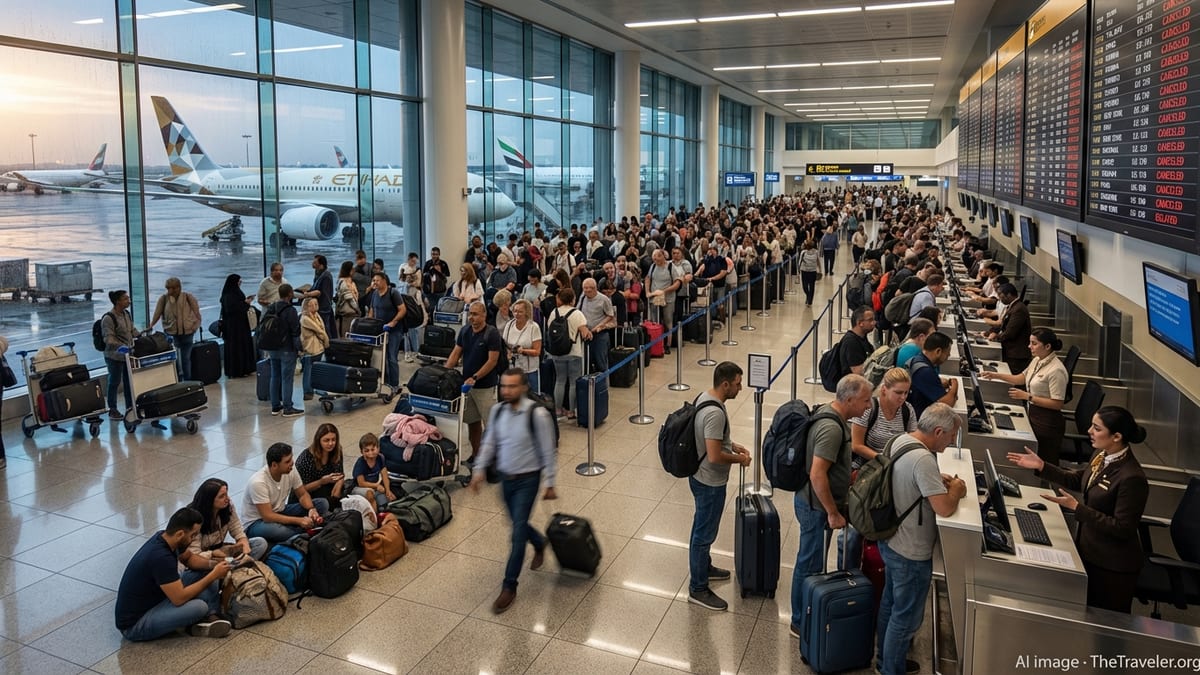
Songkran Demand Collides With a Turbulent Aviation Landscape
Songkran, Thailand’s traditional New Year water festival, will run over its core public holiday period from April 13 to 15 in 2026, with major events and spillover celebrations expected before and after those dates. Bangkok, Chiang Mai, Pattaya and Phuket anticipate strong arrivals as Thailand targets more than 34 million international visitors this year. The festival is one of the country’s most important tourism drivers, drawing long-haul visitors from Europe, North America and the Middle East alongside short-haul arrivals from across Asia.
This year’s celebration coincides with an unusually fragile aviation environment. Since late February, the Iran war has led multiple Middle Eastern states to restrict or close segments of their airspace, disrupting normal traffic flows on some of the world’s busiest long-haul corridors. Aviation intelligence published in late March indicates that flights to, from and within the Middle East have fallen sharply, with carriers forced to adopt longer routings that bypass conflict-affected skies.
The impact reaches far beyond the immediate region. Publicly available airline data and industry briefings show tens of thousands of flights worldwide either cancelled or rerouted since the conflict began, affecting several million passengers. For travelers planning to reach Thailand in time for Songkran, these network-wide adjustments are translating into tighter seat capacity, elevated prices on some routes and a greater risk of misconnecting through hub airports.
Thailand’s tourism and hospitality sectors remain committed to Songkran programming, with provincial authorities, event organizers and businesses proceeding with large-scale festivities such as Bangkok’s central city water zones and music festivals scheduled between April 11 and 13. The pressure point in 2026 is less on the ground in Thailand and more in the skies connecting festival-goers to the country.
Middle East Closures Reshape Key Long-Haul Routes to Thailand
The Middle East has long served as a critical bridge between Europe and Asia, and for many travelers from Europe, Africa and the Americas, Gulf and Levantine hubs are the fastest way to reach Bangkok, Phuket or Chiang Mai. The current conflict has sharply undermined that model. According to aviation analytics released on March 30, flight activity in the Middle East has dropped by close to 60 percent since airspace restrictions took hold, with airlines cutting frequencies and consolidating services across the region.
Travel analysis focused on the Iran war’s aviation impact points to more than 37,000 cancelled flights globally since February 28, with ripple effects across Europe–Asia, Middle East–Asia and transatlantic networks. Airlines that previously routed aircraft over Iran, Iraq, Syria and Israel are now diverting via the Caucasus, Central Asia or North African corridors, extending sector times by up to two hours or more on some long-haul services.
For Songkran-bound passengers, this is most visible in stretched itineraries and more complex connections. Routes that once involved a simple same-day transfer through hubs in Qatar, the United Arab Emirates, Bahrain or Kuwait may now require backtracking via secondary hubs, overnight layovers or mixed-carrier itineraries. Some regional carriers have temporarily suspended selected Asia-bound routes in order to prioritize core services and manage fleet constraints.
Operational briefings from regional aviation authorities in Asia highlight additional knock-on effects, including congestion at alternative hubs and limited spare capacity to absorb displaced passengers. While flights into Thailand itself continue to operate, the journey to those flights has become more circuitous for many long-haul travelers, particularly those originating in Europe and the Middle East.
Rerouting and Fuel Costs Push Fares Higher Around Peak Festival Dates
Beyond schedule complexity, the conflict is exerting new cost pressures on airlines that ultimately filter down to passengers. Industry presentations on global aviation trends in March outline how rerouting around restricted airspace requires longer flight paths, more fuel burn and additional crew duty hours. Analysis shared by aviation consultancies suggests that detouring a single long-haul flight can add one and a half to two hours of flying time, significantly increasing operating costs per sector.
These extra costs are feeding into higher fares, particularly over high-demand windows such as Songkran. Reports from airline and travel industry observers indicate that carriers are leaning on fuel surcharges and dynamic pricing to offset more volatile jet fuel bills and the expense of longer routes. In parallel, some Asian airlines, including those based in Northeast Asia, are introducing emergency cost-control measures and trimming marginal routes from April, tightening overall regional capacity as Thailand heads into its water festival peak.
Recent regional snapshots of flight operations across Southeast Asia describe days with more than one hundred delays and dozens of cancellations concentrated at key hubs including Bangkok. While many of those disruptions stem from aircraft and crew repositioning rather than direct security threats to Thailand, they still complicate travel plans. Travelers trying to arrive just before April 13 may find the narrow window drives up prices even further as remaining seats fill, especially in premium cabins and on non-stop services.
Analysts following Thailand’s tourism outlook had expected robust growth in 2026, but now caution that aviation-related headwinds could trim arrivals around the Songkran period. Higher travel costs from Europe and the Middle East, in particular, may encourage some potential visitors to postpone or shorten their trips, even as on-the-ground conditions in Thailand remain stable and welcoming.
What Songkran Travelers Should Expect in April 2026
For those still planning to travel, the emerging pattern suggests that flexibility will be essential. Publicly available airline advisories and independent travel trackers describe a patchwork of schedule changes, with some flights operating broadly on time, others retimed by several hours and a smaller but significant number cancelled outright. A growing share of long-haul itineraries into Southeast Asia now involve extended layovers as carriers pad schedules to accommodate longer routings and congested airspace.
Travel monitoring platforms and route-mapping tools show increased use of alternative waypoints outside traditional Middle Eastern corridors, including more frequent use of Central Asian, South Asian and Indian Ocean routings. This can mean earlier departures or later arrivals than originally booked, potentially affecting hotel check-in times, domestic connections within Thailand and the ability to reach festival areas for specific Songkran events such as opening ceremonies or headline concerts.
Some carriers serving Thailand from Europe and North Asia are reported to have relaxed change fees and fare rules temporarily during March and early April, allowing travelers to adjust dates or routings without penalties. However, these measures are not universal and may be time-limited. Prospective visitors are therefore encouraged, based on current public guidance, to review the latest fare conditions, monitor booking management tools and consider travel insurance products that explicitly address disruption in times of conflict.
On arrival in Thailand, Songkran visitors can still expect busy streets, organized water play zones and cultural ceremonies in temples and heritage sites, particularly in destinations such as Ayutthaya, Chiang Mai and central Bangkok. Local authorities and event organizers have been promoting Songkran 2026 as a showcase for Thailand’s culture and hospitality, even as global events introduce new complications for how visitors get there.
Medium-Term Outlook: Resilience Tested for Thailand’s Tourism Engine
Looking beyond April, the aviation challenges triggered by the Iran war underline how dependent Thailand’s tourism engine is on stable global air connectivity. Economic analyses of past conflicts and crises suggest that for every unit of airline revenue lost in a conflict corridor, multiple units of tourism and hospitality spending can disappear in destination markets, as potential visitors defer or cancel trips.
Forecasts prepared ahead of the current crisis projected that Thailand could welcome more than 34 million foreign visitors in 2026, building on steady recovery from the pandemic years. Whether that target is fully met now depends partly on how long Middle Eastern airspace remains constrained and how quickly airlines can restore efficient routings between Europe, the Middle East and Asia.
Industry briefings highlight that airlines and route planners are rethinking their dependence on any single corridor or group of hubs, exploring more diversified network strategies to reduce exposure to sudden airspace closures. For Thailand, this may ultimately bring opportunities such as new non-stop links from secondary European cities or expanded services through alternative hubs in South Asia and Northeast Asia, although such adjustments typically take months or years rather than weeks.
In the immediate term, Songkran 2026 is becoming a test of how resilient Thailand’s tourism infrastructure can be in the face of external shocks. If flight disruptions are managed and travelers remain confident in their ability to reach and enjoy the festival, the water-splashing streets of April could still mark another step in Thailand’s post-pandemic tourism rebound, even as conflict far away continues to reshape the global map of air travel.