

More news on this day
South Africa is rapidly positioning itself alongside Uganda, Rwanda, Kenya, Ethiopia, Morocco and Egypt as one of the key forces driving Africa’s aviation transformation, with fresh infrastructure investment, new routes and policy reforms expected to supercharge tourism and regional connectivity by 2026.
South Africa Steps Up as a Continental Air Hub
After several years of recovery, South Africa’s aviation and tourism sectors are now in expansion mode, with government data showing 8.92 million international arrivals in 2024 and strong momentum through late 2025. Officials and industry leaders are increasingly aligning airport upgrades, new routes and visa reforms around an explicit goal of reaching more than 15 million international visitors annually by 2030, a target that hinges on expanded air capacity and smoother regional links.
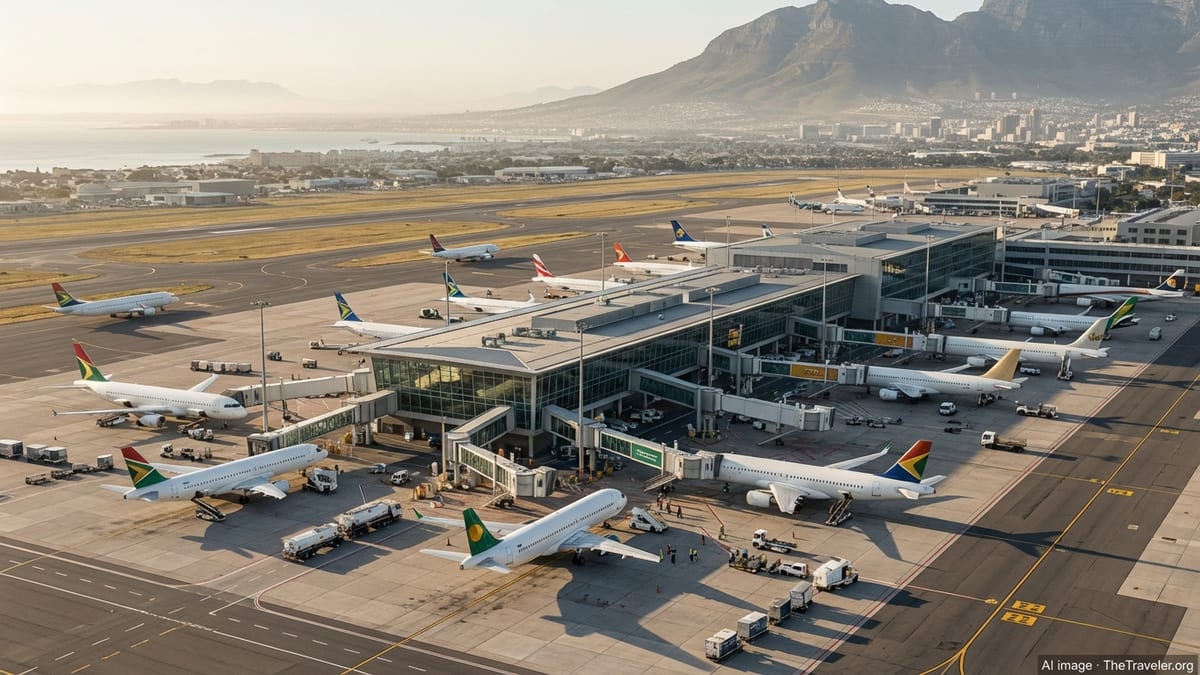
Airports Company South Africa has announced a multibillion‑rand upgrade program anchored by a major expansion of Cape Town International Airport, which has emerged as one of the country’s fastest‑growing gateways. From 2027, phased terminal and runway improvements are set to increase capacity, expand aircraft parking and modernise passenger processing, reinforcing Cape Town’s role as a long‑haul entry point for European, Middle Eastern and North American tourists.
Johannesburg and Durban are also consolidating their positions within this emerging network. King Shaka International Airport near Durban handled just over 5 million passengers in the 2024–2025 financial year, cementing its status as South Africa’s third‑busiest airport and a growing gateway to the Indian Ocean corridor. New and revived routes from regional and international carriers into Johannesburg, meanwhile, are turning Gauteng into an even more critical transfer hub for southern Africa.
New Routes, New Airports and a Race for Regional Connectivity
South Africa’s ramp‑up is unfolding alongside an airport building and modernisation drive across the continent. Uganda is preparing to operate three international airports, led by the near‑completion of Kabalega International Airport in Hoima and a planned upgrade of Arua Airport on the country’s north‑western frontier. Entebbe International Airport is undergoing an extensive expansion, including a new terminal designed to lift capacity to about 3.5 million passengers a year, positioning Uganda to channel more safari and business traffic through its national gateways.
Rwanda is pressing ahead with Bugesera International Airport outside Kigali, a new greenfield facility being developed with Qatari investment and targeted to open its first phase around 2026. The project is intended to dramatically increase passenger and cargo handling capacity and give flag carrier RwandAir a more powerful base as it chases transfer traffic between Africa, the Middle East and Europe.
Kenya and Ethiopia, already home to established hubs in Nairobi and Addis Ababa, are layering new investments onto their existing strengths. Nairobi’s Jomo Kenyatta International Airport remains a springboard for East African tourism circuits that link safari, beach and business destinations, while Ethiopian Airlines continues to knit together an extensive intra‑African and intercontinental network. In North Africa, Morocco and Egypt are using airport upgrades and aggressive airline expansion to capture transatlantic, European and Middle Eastern flows, further tightening the web of routes that feed into the continent’s tourism hotspots.
For South Africa, this continental race to build capacity is both competitive and complementary. As more secondary African cities gain direct links to Kampala, Kigali, Nairobi, Addis Ababa, Casablanca and Cairo, Johannesburg, Cape Town and Durban are increasingly positioned as end points or transfer options on multi‑stop leisure and business itineraries, especially for long‑haul travellers from Europe, Asia and the Americas.
SAATM and Policy Reforms Open Africa’s Skies
Infrastructure alone will not unlock the forecast tourism boom. Central to the continent’s aviation push is the Single African Air Transport Market, a flagship African Union initiative that aims to create a unified, liberalised aviation space and dismantle longstanding barriers to cross‑border flights. South Africa, Kenya, Ethiopia, Rwanda, Morocco and Egypt are among 30‑plus signatory states representing more than 80 percent of Africa’s existing aviation market.
Industry bodies argue that fully implementing the market could add hundreds of thousands of jobs and billions of dollars in annual GDP by allowing airlines to freely add routes, increase frequencies and reduce fares. For travellers, that would translate into more non‑stop services between African cities, better timed connections and, crucially, lower ticket prices on popular leisure corridors such as Cape Town–Nairobi, Johannesburg–Kigali or Durban–Marrakesh.
South Africa is also aligning domestic policy with this liberalisation agenda. Recent moves include targeted visa waivers and e‑visa rollouts for select African and long‑haul markets, as well as renewed efforts to streamline security, customs and health procedures at major gateways. Officials argue that these softer reforms, layered on top of physical expansion at airports, are essential to make it as easy to fly between African tourism centres as it is within Europe or parts of Asia.
Tourism, Trade and Jobs Ride the Aviation Wave
The emerging aviation revolution is already reshaping Africa’s tourism landscape. In South Africa, African travellers account for more than three quarters of international arrivals, and growth has been particularly strong from neighbouring markets that benefit from improved airlift and relaxed entry rules. Long‑haul markets such as the United States, China and Brazil are also rebounding, helped by additional frequencies from major Gulf and European carriers and the gradual rebuilding of South African Airways’ regional and intercontinental network.
In Uganda, officials expect the new Hoima airport to support both oil sector logistics and tourism, opening faster access to the country’s western national parks and the Murchison Falls area. Rwanda is betting that Bugesera will underpin its strategy to become a meetings, incentives and conferencing hub, while Kenya and Ethiopia are marketing their hubs as ideal gateways for multi‑country safaris and business travel across East and Horn of Africa economies.
Beyond tourism receipts, governments are counting on aviation to stimulate trade and investment. Expanded cargo facilities in South Africa, Ethiopia, Kenya, Egypt and Morocco are aimed at moving perishables such as flowers, fresh produce and seafood more quickly to global markets. Free‑trade zones and logistics parks around airports are designed to attract manufacturers and service firms, creating jobs that reach well beyond the runway perimeter.
Analysts caution that bottlenecks remain, from high fuel costs and airport charges to uneven progress on regulatory harmonisation. Yet with multiple African states now racing to launch or expand airports, and with South Africa newly assertive in its aviation ambitions, the continent is on track to offer far denser, more affordable air links by 2026, laying the foundation for unprecedented tourism growth and deeper regional prosperity.