

More news on this day
South Africa’s visitor economy is entering a new phase of recovery, with fresh data showing tourism’s contribution to national output and employment climbing above pre‑pandemic benchmarks on the back of robust domestic and regional travel.
Get the latest news straight to your inbox!
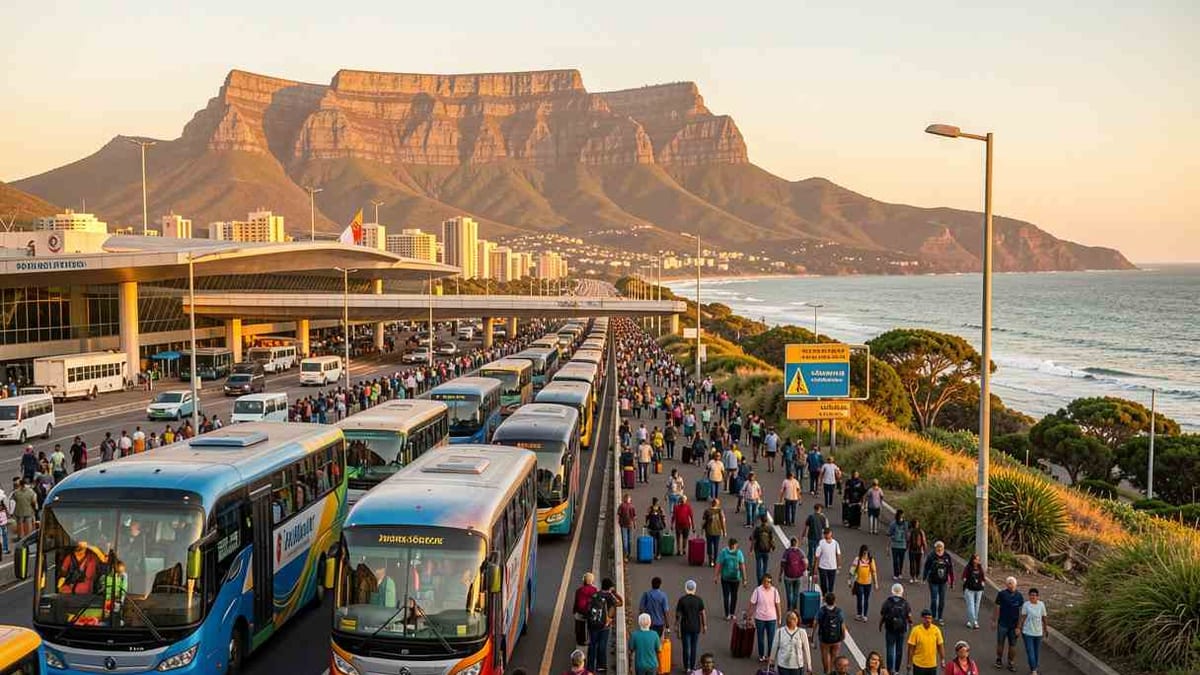
Image by Travel and Tour World – Tourism, Airline, Destination, MICE, Gobal Travel Market, Hotel news that you will find only over here.
Tourism Nears One Million Direct Jobs as Recovery Deepens
Recent assessments of South Africa’s visitor economy point to tourism solidifying its place as one of the country’s most important employers. World Travel and Tourism Council estimates cited in government budget and impact documents indicate that the sector supported about 1.46 million jobs in 2023 and was on track to approach 1.7 million positions in 2024, when indirect and induced employment are included. Within that total, industry strategies released for the 2025 to 2030 period set an explicit target of one million direct jobs sustained by tourism activity, underscoring the scale of the sector’s labour footprint.
These figures mark a sharp turnaround from the pandemic trough, when stringent travel restrictions and a collapse in global mobility forced the closure of many hospitality and travel businesses. Policy papers prepared for Parliament and for the national tourism strategy describe the sector as having moved from stabilisation into a growth phase, with employment steadily rebuilding in accommodation, food services, transport, attractions and community-based tourism ventures across the provinces.
The job gains are broad-based. Analysis by national and provincial tourism bodies notes that major urban centres are again drawing large numbers of visitors, while smaller towns and rural destinations are benefiting from targeted marketing of cultural, nature and township experiences. As the recovery matures, officials and analysts highlight tourism’s relatively high employment intensity compared with other industries, which means each percentage point of GDP generated by travel tends to support more jobs than equivalent output in capital-heavy sectors.
GDP Contribution Climbs to New Post Pandemic Highs
Tourism’s contribution to South Africa’s gross domestic product has also advanced strongly. Figures cited in government budget speeches and recent analytical reports indicate that the combined direct and indirect impact of the sector rose from roughly 6.8 percent of GDP in 2022 to about 8.2 percent in 2023. Subsequent updates for 2024 point to an even higher share, near 8.8 percent of GDP, supported by growing visitor spending and renewed capital investment in tourism infrastructure.
In monetary terms, assessments of the sector’s total value added suggest that tourism generated in the region of 600 billion rand to more than 618 billion rand for the economy in 2024, narrowing the gap with 2019’s record levels despite a more challenging global environment. Independent commentary on tourism trends notes that the industry’s output in the first quarter of 2024 outperformed several traditional sectors such as mining, transport and construction, highlighting its role as a modern growth engine.
Forward-looking plans are even more ambitious. The national tourism growth framework, aligned with medium-term development priorities, sets a goal of lifting tourism’s combined contribution to around 10 percent of GDP in the coming years. This would take the sector beyond its 2019 share and position South Africa as one of the stronger tourism-led economies in its peer group, supported by diversified source markets and a deeper domestic travel base.
Domestic Travel Emerges as the Backbone of the Rebound
Behind the headline GDP and jobs numbers is a sustained surge in South Africans travelling within their own country. The latest Domestic Tourism Survey for 2024 from Statistics South Africa shows tens of millions of day trips and overnight journeys undertaken by residents, with volumes now surpassing pre‑COVID benchmarks in several categories. Separate analyses by tourism economists describe domestic travel as the “bedrock” of the sector’s resilience during and after the pandemic shock.
Provincial tourism agencies report significant year‑on‑year increases in local trips, with one major province citing more than 6 million domestic journeys and around 21 billion rand in spending in the latest period. Nationally, overnight domestic trips in 2024 are estimated to have climbed above 40 million, while domestic spending rose by double digits to well over 130 billion rand. These patterns suggest that South Africans are continuing to prioritise local getaways, family visits and shopping trips even in the face of cost‑of‑living pressures.
Industry strategies emphasise that a strong home market helps smooth volatility in international demand and spreads tourism benefits more evenly across the country. Campaigns focused on affordable travel packages, off‑peak deals and lesser-known destinations aim to keep residents on the road, while improvements in road networks, digital booking platforms and safety initiatives are designed to make domestic trips more attractive and accessible for a wider range of travellers.
International Arrivals Rebuild, Led by African Visitors
While domestic tourism has been the immediate shock absorber, international arrivals are also steadily rebuilding. Statistics South Africa’s latest data indicate that the country welcomed about 8.9 million visitors in 2024, an increase of just over 5 percent compared with 2023. Independent analyses highlight that this places South Africa within reach of its pre‑pandemic volumes, with several markets already exceeding 2019 levels.
Regional travel remains the backbone of international demand. More than three quarters of foreign arrivals now come from elsewhere on the African continent, led by neighbouring Southern African Development Community states. Analysts point out that this regional strength has provided a stable foundation during periods of weaker long‑haul demand from Europe and North America, while new air routes and land border improvements are expected to deepen cross‑border tourism flows.
The long‑haul segment is also showing signs of renewed momentum. Industry commentary notes that arrivals from the Americas grew at double-digit rates in 2024, while key European markets continued to recover, supported by improved air seat capacity and the international profile generated by events, wildlife attractions and cultural tourism. However, aviation data show that overall seat capacity to and within South Africa remains below 2019 levels, suggesting additional room for growth if planned route expansions and airline partnerships are realised.
Strategic Plans Look to Lock In Tourism-Led Growth
Policy documents released for the 2025 G20 tourism working process and South Africa’s 2025–2030 tourism strategic plan present a clear intent to cement tourism as a long‑term growth pillar. Targets include lifting direct tourism GDP to more than 300 billion rand, raising the total GDP contribution close to one trillion rand, and supporting at least one million direct jobs and 2.2 million total jobs across the value chain.
To reach these goals, the strategy highlights several priority areas. These include accelerating visa and border process reforms, expanding air connectivity, strengthening safety and security measures, and investing in digital marketing and data capabilities. There is also a strong focus on inclusive growth, with programmes aimed at township and village tourism, small business support and skills development so that more communities can participate in and benefit from visitor spending.
Analysts note that the sector’s recent performance has occurred despite headwinds such as energy constraints, global economic uncertainty and competitive pressures from other destinations. If infrastructure bottlenecks can be eased and investor confidence maintained, the combination of a large domestic market, strong regional links and distinctive natural and cultural assets positions South Africa’s tourism industry to keep roaring back, with jobs and GDP gains that extend well beyond the country’s most famous attractions.