

More news on this day
South Africa’s tourism sector is entering a new phase of expansion, with recent data showing surging domestic trips, strong international arrivals and employment closing in on the one million mark for direct tourism jobs, helping to lift the wider visitor economy to its strongest performance since the pandemic.
Get the latest news straight to your inbox!
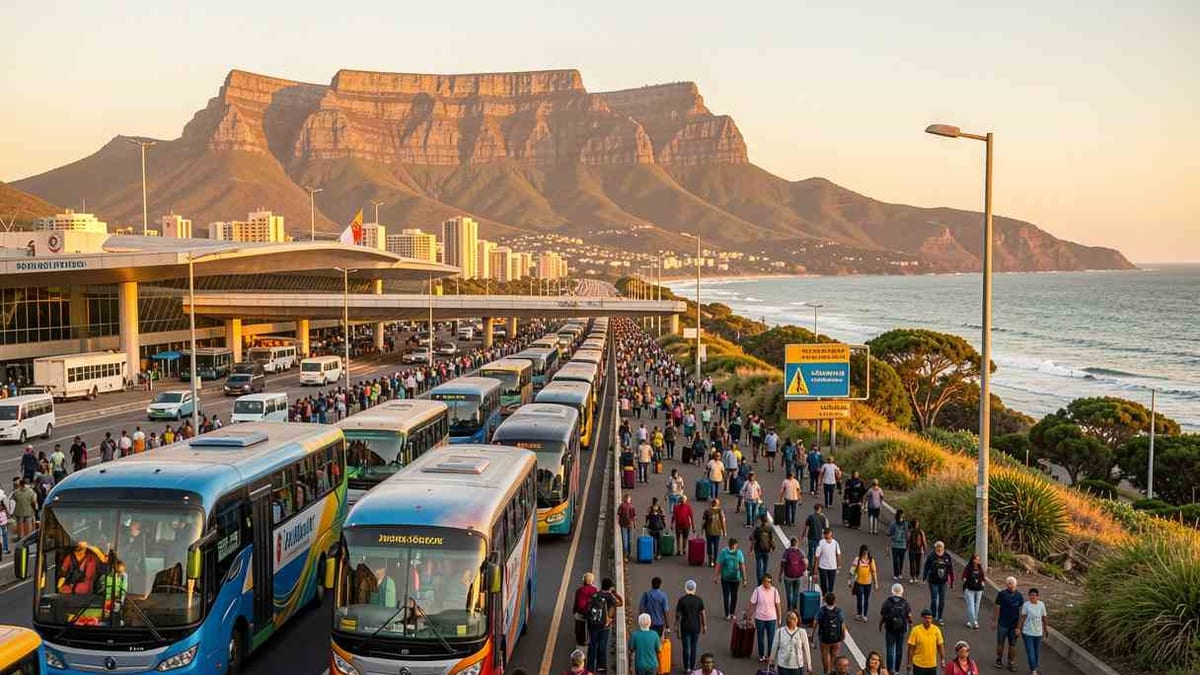
Image by Latest International / Global Travel News, Breaking World Travel News
Tourism Contribution to GDP Climbs Above Pre-Pandemic Benchmarks
Publicly available information from Statistics South Africa, the World Travel and Tourism Council and government briefings indicates that tourism’s overall footprint in the national economy has climbed to some of its highest levels on record. Various estimates suggest that when direct and indirect impacts are combined, travel and tourism now account for close to 9 percent of South Africa’s gross domestic product, narrowing the gap with, and in several measures edging above, pre‑Covid benchmarks.
World Travel and Tourism Council economic impact research points to sector output in 2024 that is only a single‑digit percentage below 2019 in real terms, even as broader South African growth has remained subdued. The visitor economy’s relative outperformance means tourism is exerting a larger proportional pull on GDP than before the pandemic, with spending on accommodation, food services, transport and entertainment rising faster than many other industries.
Statistics compiled by the national tourism department further show that the rebound has been broad based, spanning city‑break tourism, coastal leisure, safari itineraries and the meetings and events business. Major destinations such as Cape Town, Durban and Johannesburg have reported hotel occupancy and visitor‑spend levels that match or, in peak months, surpass those seen in the last full year before the health crisis disrupted travel.
Analysts tracking the sector note that this renewed momentum is particularly significant given South Africa’s broader economic headwinds. Tourism’s growing GDP share is helping to offset weaknesses in energy‑intensive and export‑driven sectors, underlining its value as a relatively quick‑to‑scale engine for job‑rich growth.
Employment Nears One Million Direct Jobs, With Wider Tourism Supporting Millions More
Employment data highlights how the recovery is translating into livelihoods. Tourism satellite accounts and industry studies indicate that direct jobs in tourism related activities, such as hotels, guesthouses, restaurants, tour operations and attractions, are approaching the one million mark. When indirect and induced roles in supply chains, construction, retail and other linked services are included, estimates from international tourism bodies place total travel and tourism employment in South Africa at roughly 1.7 to 1.8 million jobs.
Comparisons with pre‑pandemic levels show that the sector has regained and, in some categories, surpassed its 2019 workforce. Recent projections published by global industry groups suggest that travel and tourism could support close to 1.9 million jobs nationally in 2025, which would be an all‑time high. That trajectory would mean tourism accounting for more than one in ten jobs in the country, a sizeable share in a labour market where unemployment remains structurally elevated.
Government publications and provincial annual reports describe tourism as one of the most employment‑intensive components of South Africa’s economy, particularly for youth and women. New hiring is being reported not only in headline destinations, but also in secondary cities, small towns and rural areas that anchor wildlife, heritage and agritourism routes. Expanded staffing at lodges, community‑run attractions and transport providers is helping to spread the gains of recovery beyond traditional urban cores.
Industry observers also point to significant informal and seasonal work that is not fully captured in headline statistics. Street vendors, freelance guides, craft producers and short‑term event workers benefit when visitor numbers climb. As the sector moves toward and beyond the one million threshold for formal and semi‑formal tourism jobs, these ancillary roles further amplify the employment impact.
Domestic Tourism Emerges as a Pillar of Resilience
While international arrivals draw most global attention, domestic travel has been one of the defining drivers of South Africa’s tourism resurgence. According to published coverage drawing on national tourism data, residents undertook close to 38 million domestic trips in 2023, a level around one‑third higher than in 2019. Subsequent updates from the tourism department indicate that domestic volumes and spend remained elevated into 2024.
This surge in resident travel has translated into robust in‑country tourism expenditure. Official briefings refer to domestic trips generating more than R120 billion in spending in 2023 alone, with further nominal growth in 2024 as inflation and higher‑value travel combined to lift receipts. That spending cushions the sector against global shocks and currency volatility, providing a dependable revenue stream for operators catering primarily to South Africans.
Policy initiatives appear to be reinforcing the domestic upswing. Incentive schemes, marketing campaigns targeted at local travellers and investments in road and regional air connectivity have reduced barriers to exploring different parts of the country. Reports indicate that more South Africans are opting for multi‑night stays in smaller towns, nature reserves and coastal areas, diversifying the geography of tourism income.
Travel analysts say the strength of the domestic market has been critical in sustaining businesses during periods when international demand lagged. Many accommodation providers that pivoted toward South African guests during the pandemic have retained that focus, now balancing overseas visitors with a solid home‑market base.
International Arrivals Rebound to Near Pre-Covid Levels
On the international front, South Africa’s border statistics show a steep climb from pandemic lows. According to Statistics South Africa data referenced in recent media reports, total inbound arrivals reached about 8.5 million in 2023, up nearly 50 percent on 2022. Preliminary counts for 2024 put the figure at roughly 8.9 to 8.92 million visitors, a further increase of just over 5 percent year on year and close to pre‑Covid benchmarks.
Regional markets remain fundamental to this performance. Neighbouring African countries, including Zimbabwe and other members of the Southern African Development Community, continue to supply the largest share of visitors. At the same time, there are signs of renewed growth from long‑haul markets in Europe and North America, helped by expanded air connectivity and a weaker local currency that enhances value for foreign travellers.
Sector overviews suggest that international tourist spending surpassed R90 billion in 2024, with higher‑yield segments such as luxury safaris, wine tourism and city‑based business travel contributing disproportionately to receipts. Major events and conferences, from sports tournaments to industry gatherings, are adding further layers of demand in key hubs.
Despite this progress, analysts caution that the recovery is not yet complete. In real terms, international arrivals and spending remain marginally below 2019 peaks, and competition from other African and global destinations is intensifying. Nonetheless, the direction of travel is positive, and forward bookings for the 2025 high season reported in trade publications point to continued momentum.
Infrastructure Investment and Policy Support Underpin Future Growth
Looking ahead, planners and industry bodies are positioning tourism as a central pillar of South Africa’s medium‑term growth strategy. Policy documents released by the national tourism department outline targets to lift tourism’s GDP contribution to around 10 percent over the coming years and to expand total travel and tourism employment toward 2.5 million jobs by the end of the decade.
Meeting these goals is expected to require sustained investment in infrastructure, including airport capacity, regional air links, road upgrades and digital connectivity in remote destinations. Urban regeneration projects in Cape Town, Durban, Johannesburg and smaller cities are also framed as tourism enablers, drawing private capital into hotels, restaurants, cultural venues and mixed‑use developments that appeal to both visitors and residents.
At the same time, publicly available strategies emphasise the importance of addressing constraints that could slow the sector’s advance. Priorities include improving safety perceptions, streamlining visa processes, stabilising energy supply and enhancing skills development for tourism workers. Industry commentary stresses that converting today’s near‑record employment and GDP figures into long‑term, inclusive growth will depend on tackling these challenges.
Even with these caveats, the overarching trajectory is clear. South Africa’s tourism sector has emerged from the pandemic not only intact, but increasingly central to the country’s economic narrative. With nearly one million direct jobs and millions more livelihoods tied to the visitor economy, the roar of tourism’s comeback is reshaping national growth prospects.