

More news on this day
South Africa’s tourism revival is gathering pace, with new data showing the sector closing in on one million jobs, surging domestic travel and a rising share of national output as it pushes economic activity to its strongest levels since the pandemic.
Get the latest news straight to your inbox!
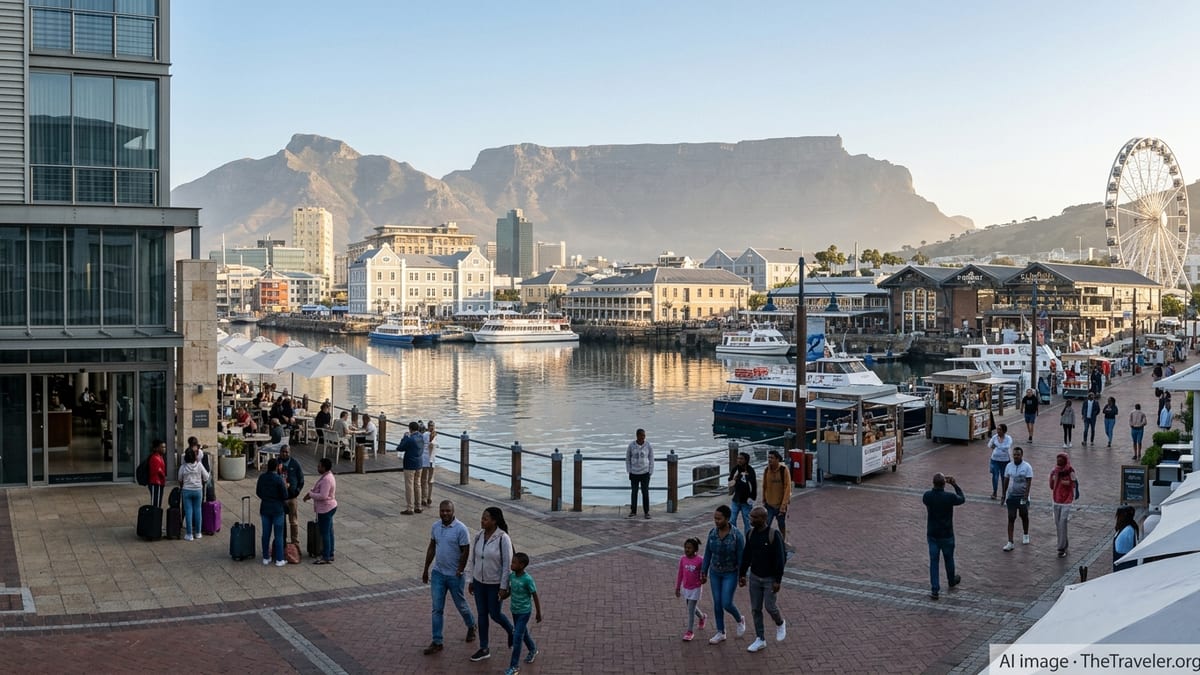
Tourism’s Growing Weight in South Africa’s Economy
Recent tourism accounts and industry assessments indicate that travel and tourism are once again among South Africa’s fastest-growing economic segments, helping to lift overall output after several sluggish years. Tourism Satellite Account figures for 2022 already showed tourism direct GDP rebounding sharply to well over R230 billion, a gain of more than 60 percent on 2021 as borders reopened and confidence slowly returned.
By 2023 and into 2024, publicly available summaries from industry bodies and research groups point to tourism’s wider contribution to GDP, including indirect and induced effects, recovering to a share in the mid-single digits and edging closer to pre-pandemic levels. Some estimates for the broader visitor economy suggest that travel-related activity accounts for roughly 8 to 9 percent of national output when accommodation, restaurants, transport, events and ancillary services are combined.
This economic footprint matters at a time when South Africa is grappling with power constraints, weak consumer confidence and high unemployment. Tourism’s relatively labour-intensive nature means that even modest gains in visitor spending can have an outsized impact on jobs and income across urban and rural areas.
Employment Rebound Nears the One Million Mark
Employment is where the sector’s recovery is most visible. Drawing on figures cited by the World Travel and Tourism Council, hospitality research platforms and government publications, the tourism and broader visitor economy in South Africa is estimated to support close to one million direct jobs and well over that number when indirect employment is included. Some analyses place the combined total for travel, tourism and hospitality at more than two million jobs, reflecting the long value chain from hotels and guesthouses to tour operators, airlines, conference venues and informal traders.
Industry commentary following the release of 2022 and 2023 data highlights that the country has largely regained the jobs lost during lockdowns, with projections indicating that pre-pandemic employment levels would be fully recovered by 2024. This trajectory aligns with broader African trends, where the continent’s tourism sector is estimated to support tens of millions of positions and is viewed as a major engine for youth and small-business employment.
Within South Africa, the jobs impact is broadly distributed. Provincial performance reports show tourism contributing meaningful shares of employment in destinations such as the Western Cape, where tourism-linked activities account for close to a tenth of regional jobs, and in coastal cities where visitor spending underpins large portions of the hospitality and events industry. As international arrivals climb and domestic travel deepens, analysts expect the sector to move firmly beyond the one million direct and indirect job threshold.
Domestic Travel Drives the Recovery
While international arrivals are steadily climbing back, homegrown travel has been the backbone of the rebound. South African Tourism’s domestic insights and research from provincial agencies show that local travellers propelled the first wave of recovery, with domestic trips surpassing 2019 levels as early as 2022 and continuing to grow through 2023. One widely cited domestic tourism analysis notes that by the end of 2023, South Africans were taking more than 130 percent of the number of trips recorded before the pandemic, with spending more than 80 percent higher than in 2019.
Domestic overnight trips in the 2023/24 financial year are reported to have reached well over 30 million, with additional tens of millions of day trips, reflecting a strong preference for local leisure, family visits and short city breaks. Average spending per domestic trip has climbed into the low thousands of rand, supported by pent-up demand and a shift toward experiences closer to home as international travel remains expensive for many households.
Regional breakdowns suggest that major tourism provinces such as the Western Cape, KwaZulu-Natal and Gauteng have benefited most from this surge in local demand, with rising hotel occupancy, higher revenue per available room and a fuller calendar of events. However, smaller towns and lesser-known rural destinations are also tapping into domestic travel through cultural festivals, nature-based tourism and self-drive routes, spreading the economic benefits more widely.
International Arrivals Edge Past Eight Million and Climbing
International tourism, which collapsed during the pandemic, is now firmly in recovery mode. Statistics South Africa’s arrival figures and subsequent media coverage show that South Africa welcomed around 8.5 million international tourists in 2023, before climbing to nearly 8.9 million in 2024. That represents annual growth of close to 50 percent between 2021 and 2023 and a further 5 percent increase from 2023 to 2024, leaving the country within sight of the roughly 10 million arrivals recorded before the pandemic.
Visitors from the rest of the African continent continue to dominate inbound travel, making up more than three quarters of total arrivals, according to recent government summaries. This reflects South Africa’s role as a regional hub for trade, shopping, medical tourism and education, in addition to leisure. Long-haul markets are also regaining ground, helped by improving air connectivity and targeted marketing campaigns. Industry reports point to especially strong growth from markets such as Brazil and selected European countries, where new routes and partnerships have made it easier to reach South African gateways.
The rebound in foreign tourism has translated into rising direct spend. Recent destination performance research cites foreign direct tourism receipts in South Africa approaching or exceeding R90 billion in 2023, with a further increase expected for 2024 as visitor numbers and average spend continue to rise. This inflow of foreign currency provides a valuable buffer for the country’s balance of payments and supports jobs across accommodation, transport and attractions.
Policy Support and Infrastructure Underpin Continued Momentum
The sector’s resurgence has been supported by a mix of policy measures, marketing efforts and infrastructure investment. Tourism strategies at national and provincial level have focused on improving air access, promoting lesser-known regions and enhancing safety and service standards. South Africa’s strong showing in the 2024 Travel and Tourism Development Index, where it ranks as the top destination in Africa, underscores the country’s relative strengths in enabling conditions, natural and cultural resources, and tourism infrastructure.
At the same time, business events and conferencing have emerged as important pillars of the recovery, with major convention centers reporting rising delegate numbers and a return of large-scale exhibitions and trade shows. These events generate high levels of spend per visitor and support a broad ecosystem of suppliers, from catering and audio-visual services to transport and logistics, adding stability to the tourism jobs base.
Despite this progress, analysts caution that the outlook is not without risks. Load shedding, transport bottlenecks, perceptions of safety and global economic uncertainty all have the potential to weigh on growth. However, with domestic travel entrenched at above pre-pandemic levels, international arrivals steadily rebuilding and employment in the sector approaching and in some assessments exceeding the one million mark, tourism is once again a central driver of South Africa’s post-pandemic economic story.